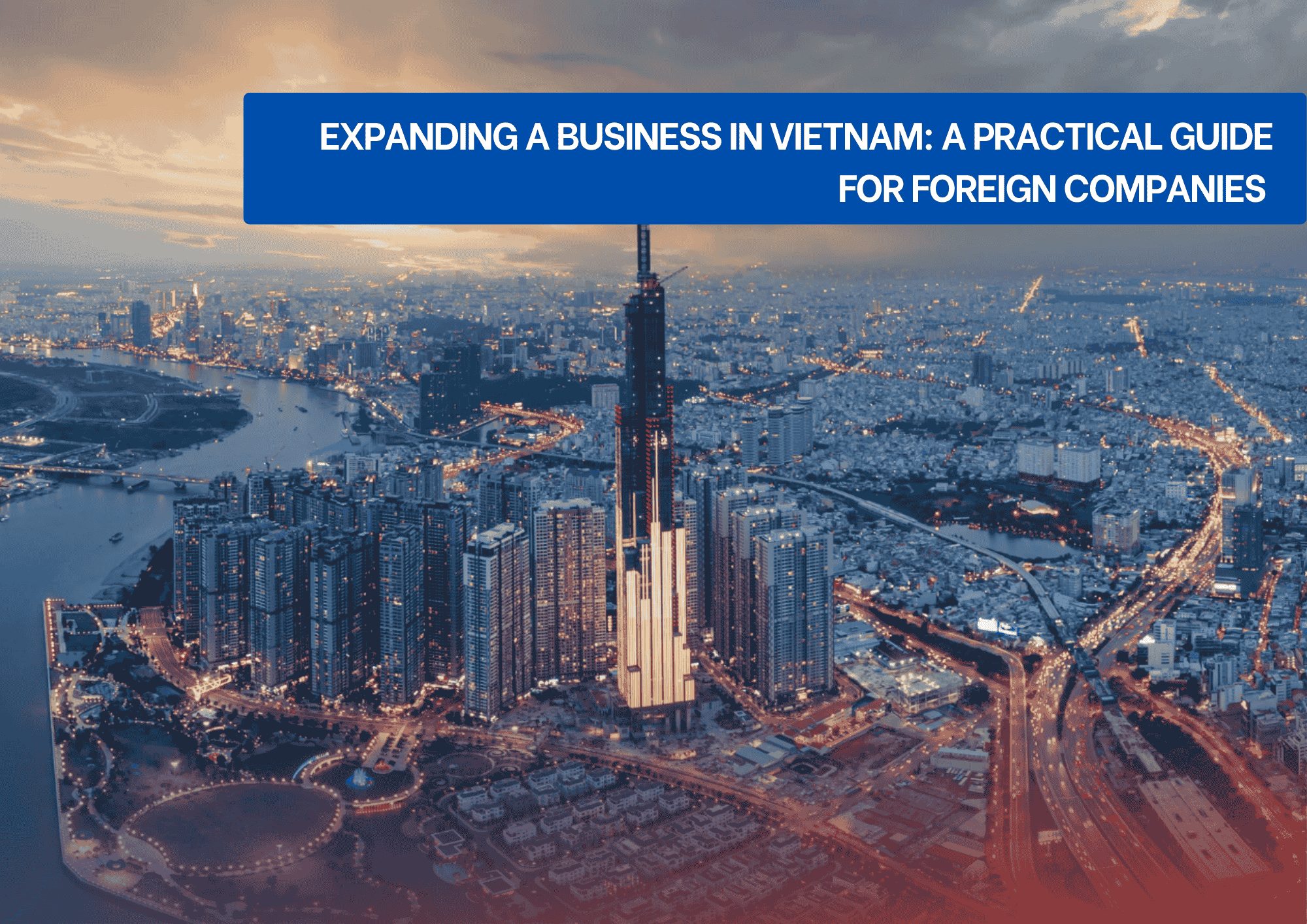
Expanding a business into Vietnam offers real growth potential, but success depends on more than funding or ambition. In 2026, Vietnam has become a practical choice because growth remains steady and the business environment is more structured than before, particularly in licensing processes, industrial zones governance for foreign-invested firms. In this guide, we – Source of Asia will explain why Vietnam remains a strong option in 2026 and share a practical path to enter the market with better control and fewer avoidable risks.
Key Insights
- Vietnam’s location gives fast access to ASEAN, China, and Northeast Asia without rebuilding supply chains.
- Companies choose Vietnam for balanced labor costs, adaptable talent, and growing local management.
- Entry success depends on selecting the right structure, beside speed or budget.
- Partners can accelerate entry but require clear control and governance.
- Early execution risks often come from licensing delays, compliance gaps, and misaligned decisions.
Why Vietnam Is A Viable Market For Expanding A Business 2026
Vietnam economic performance in 2025
Vietnam’s economy continues to grow and integrate into global markets. Data from the Vietnam Briefing shows that, by 2025, total export turnover reached around $475 billion, an increase of 17% year-on-year, driven strongly by foreign-invested firms that accounted for over 77% of exports.
At the same time, foreign direct investment remains active. In the first ten months of 2025, Vietnam attracted $31.5 billion in FDI, with manufacturing and processing capturing the largest share of new investment.

Vietnam’s economic performance in 2025 reflects steady growth and continued investor confidence.
Balanced cost with market and trade access
Vietnam’s trade access makes the country attractive to companies that serve ASEAN, East Asia, and global markets. The country’s open trade policies and extensive free trade agreements allow factories in Vietnam to connect more easily with regional and global supply chains.
In addition, according to OECD, Vietnam has a young and affordable workforce, with wages below those of many neighboring countries. This combination helps companies manage expenses while maintaining performance.
Who Vietnam Fits Best For Expanding A Business
Vietnam tends to align well with the following types of businesses:
- Manufacturing companies focused on export- oriented production, particularly those adopting a China+1 strategy to diversify capacity and regional distribution.
- Supply chain hubs requiring multi-country distribution where location and logistics connectivity matter for goods movement.
- Service and support operations linked to manufacturing, sourcing, or regional headquarters that benefits from growing domestic demand and expanding trade links.

Vietnam suits companies seeking scalable growth, cost balance, and regional market access.
Choosing The Right Entry Model For Expanding A Business Vietnam
Before entering Vietnam, many companies pause at the same point: how do we move in without making costly mistakes? Choosing the right entry model helps you stay in control, move at the right pace, and avoid surprises later.
Representative office vs legal entity
Many companies prefer to move step by step when entering a new market. At the start, the key choice is whether to focus on learning or operating.
- A representative office supports early exploration. It helps with market research, partner meetings, and local communication. However, it cannot generate revenue, sign sales contracts, or issue invoices. Because of this, it works well for learning but becomes limiting once growth matters.
- On the other hand, a legal entity allows full business operations. Companies can sell, hire, sign contracts, and invoices. The setup requires more time, but as a result, it supports long-term expansion.
Wholly foreign-owned entity vs joint venture
Once a legal entity is in place, the focus naturally shifts ownership, because it shapes control and decision-making.
- A wholly foreign-owned entity gives you full control. This makes it easier to set direction, manage operations, and keep standards consistent. However, setup can take longer, and you must manage compliance and local rules on your own.
- A joint venture means sharing ownership with a local partner from the start. As a result, entry can be faster, especially in regulated sectors. At the same time, shared decisions may slow progress if priorities are not aligned.
Partner-led entry vs in-house setup
Even after choosing the right structure, the real challenge often comes down to execution. At that point, companies usually move in one of two directions, depending on how much control they need early on.
- Some start by working with local partners. This approach helps them move faster, keep costs lower, and rely on existing local know-how. At the same time, daily operations are not fully in their hands, which can affect consistency over time.
- Others choose to build their own team from the start. This takes more effort upfront, but in return, it brings clearer processes and closer alignment with global standards.
In some cases, companies combine both paths. They begin with partners to learn about the market, then gradually build in-house once operations feel stable and clear.
Partnering Vs Building In-house: Which Model Fits Your Company?
Even with the right setup, results depend on how the operating model fits your business. Choosing between a partner and an in-house team affects speed, control, and daily execution.
A local partner can help when local rules, relationships, or supplier networks take time to understand. This is especially true in regulated sectors or government-facing activities, where experience and access matter early on.
That said, a partner works best when they fill clear gaps, not when they replace oversight. Companies still need direction, goals, and accountability to stay on track.
It is also important to recognize that not every partnership reduces risk. Some add complexity instead. Problems often start with misaligned incentives or informal decision-making, where roles and authority are unclear.
Over time, weak reporting and limited transparency can surface. By then, fixing these issues often costs more than building the right structure from the start.
For these above reasons, control should be designed early, even without full ownership. Clear KPIs, regular reporting, and defined decision rights help maintain alignment. Many companies also plan by using partners to move quickly first, then gradually building in-house capabilities once operations stabilize, and the market becomes clearer.
Step-by-step: How To Expand A Business In Vietnam
Once your entry model is clear, the focus shifts to execution. At this point, each step matters because early decisions shape daily operations later. Following a clear pathway to setup a business in Vietnam helps many companies reduce friction and keeps the expansion process controlled and predictable.
Market validation and internal readiness
Before moving forward, it helps to slow down and test assumptions. Many issues come from rushing to this stage. You want to confirm that the market is real and that your team is ready to support it.
This usually means checking customer demand and pricing, reviewing internal capacity and decision speed, and stress-testing budget and cash flow tolerance. When this groundwork is solid, later steps become smoother and more predictable.
Entity setup or partner onboarding
At this stage, the expansion moves from planning to formal execution. The company needs to set up the legal structure, apply for licenses, and confirm ownership details. Each industry has different rules, and approvals can take longer than expected if information is missing or unclear.
For companies working with local partners, a clear agreement on roles, decision rights, compliance responsibilities, and reporting lines is essential to avoid operational friction once activities begin.
Hiring, operations, and supplier coordination
Once operations begin, people and processes drive results. Hiring practices vary by region, and local expectations can differ from headquarters norms. At the same time, suppliers often require on-site coordination to meet quality and timing standards.
Just as important, compliance routines should start early, not after issues appear. To support this phase, many firms use a simple checklist. You can download our full guide “Set Up Your Business in ASEAN” for practical comparisons, on-the-ground insights, and a clear, step-by-step expansion roadmap.

Business expansion in Vietnam follows a structured, step-by-step process.
EU Vs U.S Companies: Different Expansion Paths In Vietnam
European and U.S. companies often follow distinct expansion paths in Vietnam, shaped by regulatory exposure, trade frameworks, and internal decision models. These differences are structural rather than tactical and tend to remain consistent over time.
| Dimension (*) | EU Companies | U.S. Companies |
| Main focus | Long-term presence and stability | Speed, flexibility, risk spread |
| Trade influence | Strong use of EVFTA benefits | Less tariff-driven |
| Entry structure | Wholly foreign-owned entities | Partner-led or hybrid models |
| Compliance style | High documentation and audit focus | More practical, partner-supported |
| Decision style | Careful, step-by-step | Fast, execution-driven |
| Time horizon | Long-term investment | Test first, scale later |
(*) These patterns reflect common tendencies observed in practice, not fixed rules. Individual company strategies may differ significantly.
In practice, both approaches are viable when aligned with internal governance standards, risk tolerance, and capital strategy. Companies succeed in Vietnam by choosing an entry path that fits how they make decisions, not by copying another market’s model.
Key Execution Risks In The First 12 Months
When a company enters Vietnam, the first year often feels smooth on the surface. Yet many problems appear quietly and grow over time. Understanding these risks early matters because small delays or gaps can slow growth, raise costs, and strain local teams.
- Licensing and approval timelines: At the start, many leaders expect approvals to move quickly. In reality, timelines can change without warning. When licenses arrive late, hiring, sales, and contracts must wait. Planning extra time helps protect the launch schedule and avoid pressure decisions.
- Compliance and operational gaps: gaps often appear between written plans and daily practice. Local rules, reports, and processes must work together. If they do not, risks build quietly. Early checks reduce rework and protect long-term stability.
- Cultural and decision-making misalignment: Teams may move at different speeds or expect different approval styles. When roles are unclear, progress slows. Clear decision rules help teams move forward with confidence.
Final Thoughts
In conclusion, expanding in Vietnam offers strong opportunities when companies plan carefully and match strategy with local execution. The market rewards firms that move step by step, choose the right entry model, and address risks early rather than reacting later.
At Source of Asia, we support companies in market expansion, entity setup, partner structures, and operational execution across Vietnam and Asia, helping them build stable and compliant operations.
To deepen your preparation, you may also explore:
- A real partnership case study from Asia market expansion.
- Or contact us to discuss your specific market challenges.
Frequently Asked Questions
Not always. Some companies enter independently, while others work with local partners to move faster. The right choice depends on industry rules, internal experience, and how much control or speed you need.
Early on, support usually focuses on market understanding, licensing, setup, and hiring. Once operations begin, it shifts to compliance, supplier oversight, and local team management. These areas help prevent small issues from becoming long-term risks.
There is no single best model. Some companies start small, others launch fully from day one. The right model depends on goals, budget, and risk tolerance, and it directly affects how quickly and smoothly the business can scale.