Understanding Korean business culture is essential when working with South Korean partners, clients, or teams. Shaped by respect, hierarchy, and long-term relationships, it strongly influences communication, decision-making, and collaboration. In this guide, we at Source of Asia share practical insights into how Korean business works and communicate, helping international companies reduce misunderstandings and build lasting trust.
Key Insights:
- Respect and hierarchy strongly influence how people speak and make decisions at work in Korea.
- Silence in meetings often means people are thinking carefully, not agreeing or losing interest.
- Business communication depends on context and relationships, not just clear or direct words.
- Trust is built over time and often matters more than quick deals or written agreements.
- Team harmony is usually placed above personal opinions or individual visibility.
Business Etiquette in Korean Business Culture
South Korean business culture is rooted in respect and formality, shaped by Confucian values. Meetings are hierarchical and focused on building trust. Therefore, proper etiquette is essential for long-term success.
Formalities in Korean Business Meetings
Formality in Korean meetings helps people feel respected. Clear rules guide behavior and reduce the risk of discomfort or misunderstanding.
- Greetings often include a light bow and a handshake. Business cards are exchanged with both hands and read carefully, showing respect for the person and their role.
- Silence is common during discussions. It usually means reflection, not agreement. Speaking too quickly can feel rushed or impolite.
According to the Cultural Atlas, silence reflects careful listening rather than disengagement, while seniority strongly shapes how discussions and decisions unfold.
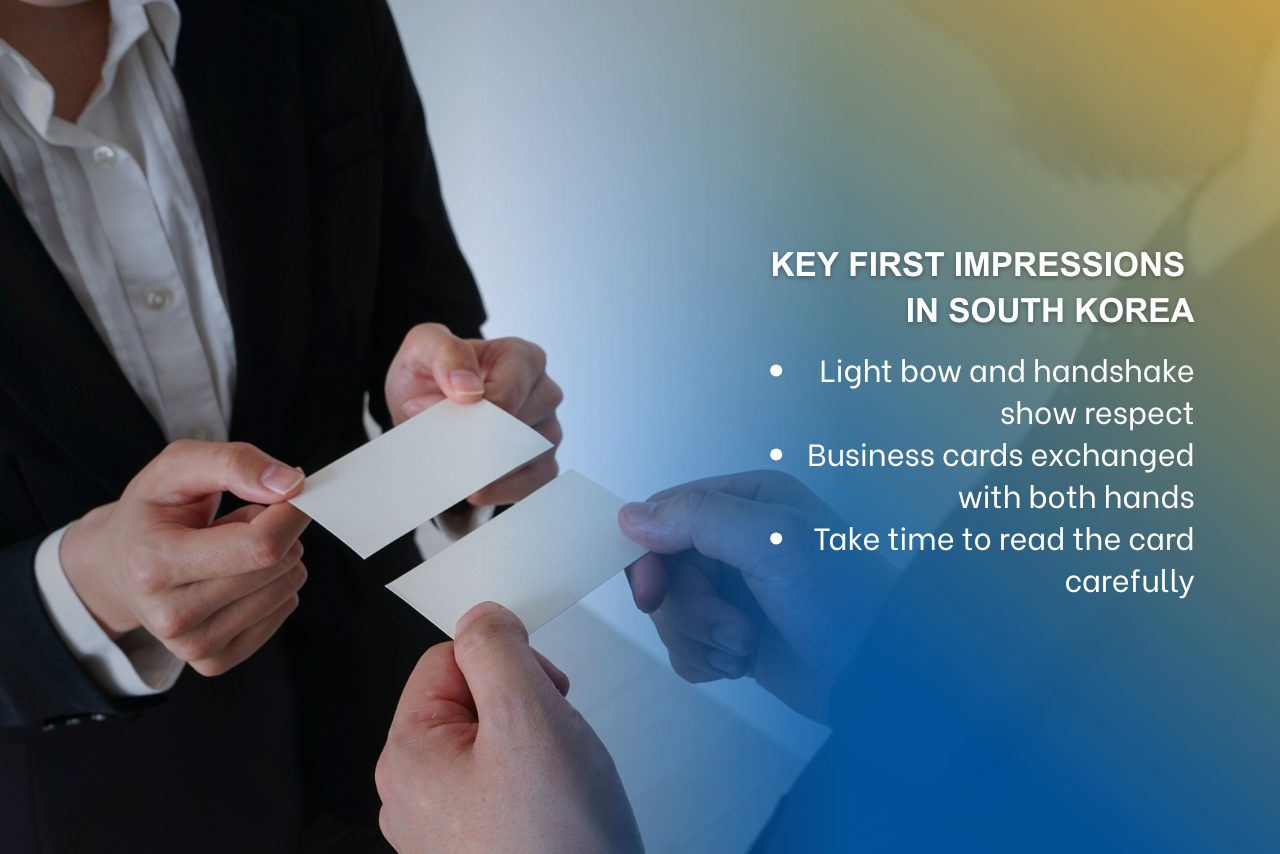
Korean Business Meeting Greeting And Business Card Exchange Cultural Etiquette
Hierarchy and Seniority in Decision-Making
Hierarchy in Korean companies reflects responsibility rather than authority. Senior staff protect group harmony and take responsibility for outcomes.
Junior employees often share ideas indirectly or in private. Public disagreement can cause discomfort, even when intentions are positive.
Decisions may seem slow, but many discussions happen outside meetings. Respecting this order helps your message land at the right time.
Communication Styles in South Korean Business Culture
Effective communication in South Korea is more than just exchanging information. It is about building trust and establishing rapport.
Indirect Communication in Korean Business Settings
In Korean business culture, people often communicate in a careful and indirect way. Instead of saying “no” directly, partners may use soft phrases like “we will review this” or “it may be difficult”.
Tone, pauses, and context matter as much as words. Paying attention to small signals helps you understand the real message without forcing clarity too early.
How Business Communication Differs Between the USA and South Korea
| Aspect | USA | South Korea |
| Communication style | Direct and clear, people say what they mean | Indirect and polite, words protect harmony |
| Decision-making | Decisions are often made during meetings | Decisions confirmed after internal talks |
| Meeting behavior | Open discussion and quick opinions are encouraged | Seniority guides who speak and discussion may continue later |
| Eye contact | Regular eye contact shows confidence and engagement | Prolonged eye contact with other people may feel disrespectful |
| Silence | Can feel awkward and is often filled quickly | Shows careful thinking, not disagreement or confusion |
| Body languages | Open gestures and relaxed posture are common | Controlled gestures and calm posture signal professionalism |
When working across cultures, slowing down helps. Asking gentle follow-up questions often works better than pushing for clear answers right away.
Negotiation Culture in South Korea
South Korean businesses prefer a careful, deliberate approach to negotiations and contracts. The aim is to reach an agreement that benefits all parties involved, with an emphasis on long-term relationships rather than immediate gains.
Negotiating with South Korean Business Partners
Negotiation in Korean business culture often moves more slowly than expected. The process focuses on building trust and shared comfort before discussing final terms or numbers.
Decisions are rarely made on the spot. Proposals may pass through several internal levels, so patience and clear follow-up help keep discussions moving forward.
Common Cultural Mistakes in Negotiation
Foreign companies often face challenges in Korea because small cultural signals are easy to miss, such as:
- Pushing too quickly for a final decision can create pressure and weaken trust.
- Assuming polite or vague responses mean agreement may lead to false expectations.
- Challenging ideas too directly in meetings can cause discomfort and silence.
- Ignoring internal hierarchy may block progress without clear feedback.
Negotiation Styles: USA vs South Korea
| Aspect | South Korea | USA |
| Decision-making | Collective and layered | Individual or role-based |
| Communication | Indirect and careful | Direct and explicit |
| Negotiation pace | Gradual and patient | Faster and goal-driven |
| Conflict handling | Avoid open disagreement | Accept open debate |
Understanding these differences helps you adjust expectations and avoid frustration. Successful negotiation often comes from alignment, not pressure.
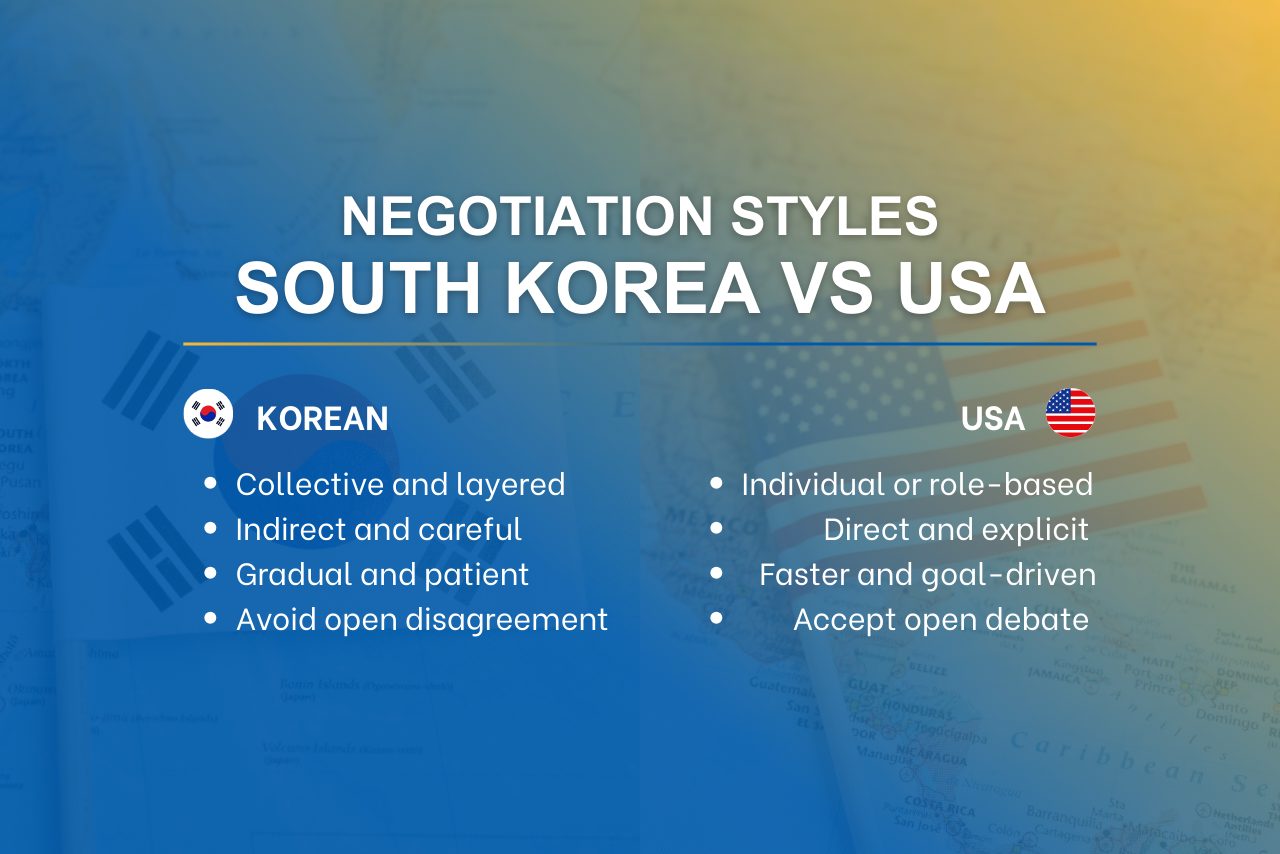
Business Negotiation Styles in South Korea and the USA
Building Relationships in Korean Business Culture
In Korean business culture, strong relationships often matter more than contracts or quick results, shaping trust, cooperation, and long-term decision-making.
Why Relationships Matter in Korean Business
Korean business culture tends to emphasize long-term relationships over transactional interactions. People prefer to work with partners they know well and feel comfortable over time.
A strong relationship reduces risk and uncertainty. When trust exists, decisions move faster, even if the early stages feel slow to outsiders.
This is why first meetings may focus less on deals and more on understanding values, attitudes, and long-term intentions.
Hoesik Culture and Informal Business Bonding Outside
Hoesik refers to after-work gatherings where colleagues eat, drink, and talk in a relaxed setting. These moments help break formal distance.
Important conversations often happen here, not in meeting rooms. Sharing time outside work shows commitment to the group, not just the task.
You do not have to drink alcohol. What matters is showing respect and staying engaged.
Work Culture and Values in South Korea
South Korea’s work culture emphasizes dedication, punctuality, and respect for authority. Here’s what you need to know about the work environment and practices in the country.
Commitment, Loyalty, and Teamwork at Work in Korean Organizations
In South Korean work culture, commitment is often shown through steady effort rather than personal visibility. Employees are expected to support the team and protect group harmony in daily work.
Loyalty to the company is closely tied to trust and long-term cooperation. When people feel respected, they tend to stay committed even during periods of high pressure or uncertainty.
Overtime Culture and Work Expectations in South Korean
Overtime in Korea is commonly linked to responsibility, not weak planning. Staying late can be a quiet way to show care for shared goals and unfinished team tasks.
However, this culture is slowly evolving. Many companies now encourage balance, clearer schedules, and respect for personal time, especially in international or younger teams.
Cultural Sensitivities and Customs in South Korea That Shape Daily Business Interactions
While South Korea is known for its modern business environment, traditional cultural practices still play a vital role in shaping the way business is conducted.
Gift-Giving Practices in Business as a Sign of Respect and Relationship Care
In Korean business culture, gift-giving is not about value but about intention and timing. Small, thoughtful gifts often express respect and help strengthen professional relationships.
Gifts are usually exchanged after meetings or during special occasions, not at the first contact. Presentation matters, and items linked to your home country are often well received.
Key Holidays and Their Impact on Work Schedules and Business Planning
Major holidays like Seollal and Chuseok strongly affect business schedules in South Korea, as many offices close and decision-making slow before and after these periods.
According to SyncmyTime, widespread travel and temporary closures during these holidays make early planning essential when scheduling work or meetings.
Understanding holiday timing helps you avoid delays and manage expectations with Korean partners more smoothly.
Korean Business Culture Tips for Americans entering the South Korean Market
For American companies, success in South Korea depends on cultural awareness as much as expertise. Small changes in communication and behavior help avoid misunderstandings and build relationships.
Adapting to South Korean Business Culture with Awareness and Flexibility
Adapting to Korean business culture starts with careful observation. Taking time to watch how people speak, decide, and respond helps you avoid early mistakes.
Showing respect for hierarchy, group harmony, and indirect communication builds trust. You do not need to change who you are, but you should adjust to how you express ideas.
Cultural Tips for Americans Working with Korean Partners Day to Day
Small actions often carry strong meanings in Korea. Being patient, consistent, and respectful creates long-term credibility with Korean partners.
Helpful tips to keep in mind include:
- Listen more than you speak in early meetings.
- Follow up gently instead of pushing for quick answers.
- Respect titles and senior roles, especially in group settings.
- Invest time in relationships outside formal meetings.
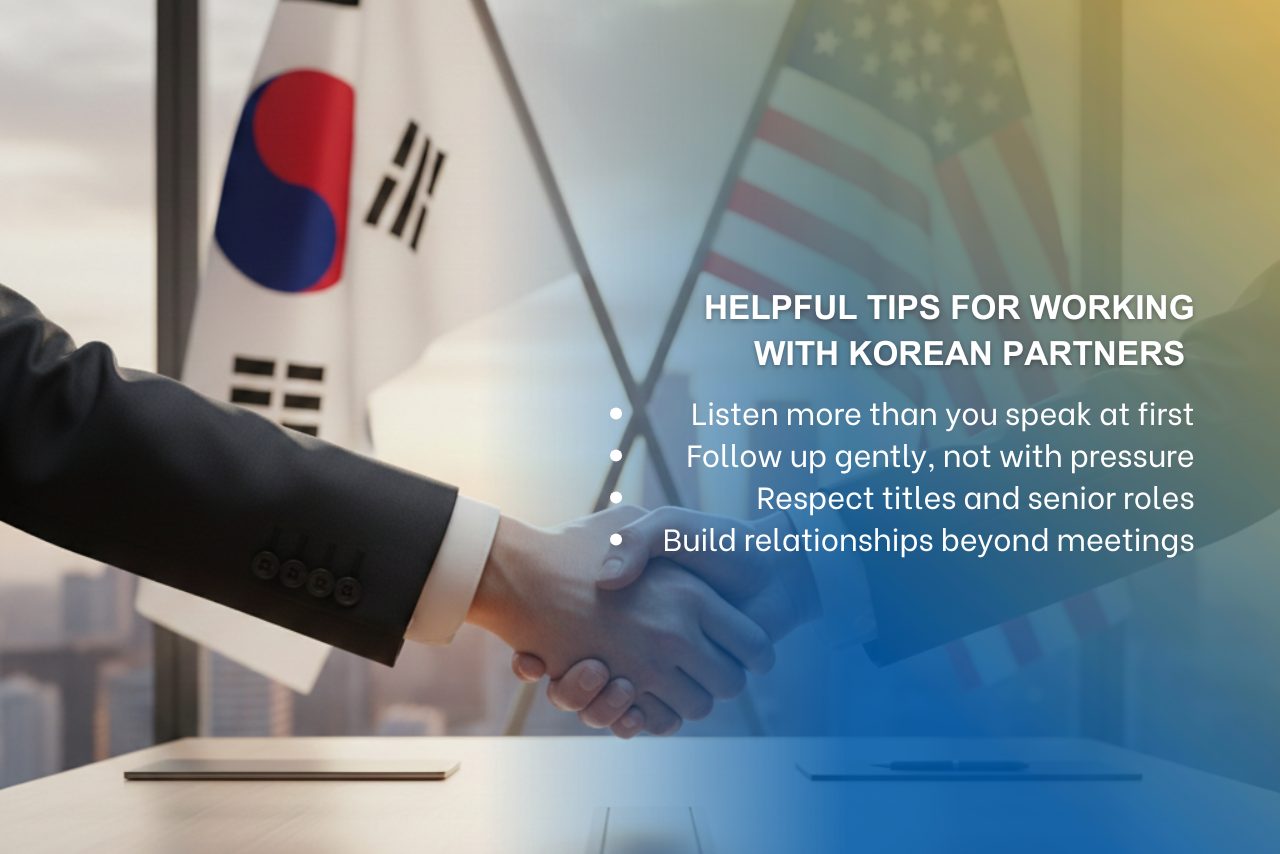
Helpful Tips For Working With Korean Business Partners
Final Thoughts
Understanding Korean business culture helps you communicate better, negotiate more smoothly, and build stronger relationships. Etiquette, hierarchy, communication style, and work values all shape how business is done in South Korea.
At Source of Asia, we believe cultural understanding is a key foundation for sustainable cooperation in the Korean market.
If you are exploring the South Korean market in more depth, you may find the following insights from Source of Asia useful for understanding market entry conditions, sector opportunities, and investment dynamics:
Frequently Asked Questions
Korean work culture values hierarchy, discipline, and teamwork. Employees respect seniority, prioritize group harmony, and focus on long-term commitment rather than quick results.
A business greeting usually includes a slight bow and a polite verbal greeting. Handshakes are common but often led by senior figures, and titles are used instead of first names.
Many business rules are unstated, such as avoiding confrontation and respecting hierarchy. Reading context and showing cultural awareness are essential for building trust.