Summary
As the world faces growing environmental challenges, the packaging industry Southeast Asia is under pressure to reduce its environmental footprint. The rise of plastic waste, overuse of resources, and global sustainability targets are driving businesses toward eco packaging, a key step toward a circular economy.
According to Source of Asia’s Sectorial Note 2025–2026, the Asia packaging industries represent nearly 38.9% of the global eco-packaging market, with rapid growth expected in the next decade. Vietnam, Thailand, and Indonesia are emerging as regional hubs, combining industrial capacity with innovation in eco-friendly packaging materials such as paper, bioplastics, and seaweed-based films.
Moreover, increasing consumer awareness and tighter environmental policies are reshaping business strategies. Companies are moving beyond compliance to integrate sustainability into their brand identity, positioning eco-packaging as both an ethical and competitive advantage.
What Is Eco-Packaging and Why Does It Matter
Eco packaging, or sustainable packaging, refers to materials and production methods designed to reduce environmental impact throughout the product’s life cycle. It uses renewable resources, clean production, and recyclable or compostable materials. In addition, these solutions create a closed-loop system that supports circular economy goals.
The benefits are clear: eco-friendly packaging lowers carbon emissions, limits landfill waste, and meets rising consumer expectations. As a result, businesses across ASEAN are treating eco-packaging not as a trend but as a long-term sustainability pillar.
Key Highlights from the Eco-Packaging Note
Market growth in Southeast Asia
The eco packaging industries are expanding fast. In 2023, the global market was worth USD 108.66 billion, with Asia-Pacific leading overall adoption. China, Vietnam, and Indonesia are major contributors. Vietnam’s packaging industry Southeast Asia counts more than 14,000 enterprises and grows 15–20% annually. Moreover, easy access to natural resources such as paper and bioplastics makes the region ideal for sustainable packaging production.
Regulatory frameworks and government initiatives
Governments are implementing new policies to promote the eco packaging industrial ecosystem. Thailand will ban plastic scrap imports by 2025. Vietnam’s Environmental Protection Law (2020) enforces eco-labels and reduction targets. Meanwhile, Indonesia, Malaysia, and the Philippines are launching Extended Producer Responsibility (EPR) programs that require brands to manage and recycle post-consumer packaging. Therefore, regulation remains one of the strongest growth drivers for the eco friendly packaging industry.
Innovation and local startups
Southeast Asia’s innovators are at the forefront of new materials. Startups such as Evoware and Greenhope (Indonesia) use cassava and seaweed to create biodegradable plastics. In addition, pFIBRE (Singapore) and several Vietnamese firms are developing eco food packaging from rice husks and sugarcane bagasse. These breakthroughs show how Asia packaging industries Vietnam and its neighbors can add high value to local agricultural by-products.
Consumer demand and corporate action
A regional survey found that 86% of Asia-Pacific consumers value sustainable packaging. Meanwhile, 77% of ASEAN businesses have integrated sustainability goals into their operations. Global brands such as Nestlé, Danone, and Carlsberg are already replacing plastics with eco friendly packaging to meet both regulation and consumer demand.
Challenges in adoption
Despite rapid progress, businesses face obstacles. High production costs limit access for small firms. Moreover, recycling infrastructure remains weak in many markets. Regulatory inconsistency between countries also creates uncertainty. However, regional cooperation, tax incentives, and new technologies are gradually solving these barriers.

Opportunities and Challenges of Eco-packaging Industry in Southeast Asia
Why Southeast Asia Matters
Southeast Asia combines industrial strength, abundant raw materials, and strong consumer markets, making it a global center for eco packaging industries. Moreover, ASEAN’s commitment to circular economy initiatives and sustainable trade agreements is attracting investors seeking responsible growth.
As consumer demand grows and infrastructure improves, the region’s eco packaging industry will become a strategic pillar in global sustainability. By adopting eco friendly packaging, ASEAN companies can reduce environmental impact while gaining a competitive advantage in international markets.
Download the Note: Eco Packaging Industry in Southeast Asia
The Free Sectorial Note: Eco-Packaging in Southeast Asia 2025–2026 offers:
- Market data and forecasts for each ASEAN country.
- National sustainability policies and EPR frameworks.
- Profiles of leading eco packaging industries and startups.
- New materials and technology trends.
- Practical guidance for investors and manufacturers.

Explore more insights from Source of Asia
- Agriculture remains vital to ASEAN’s sustainable growth. Moreover, modern farming and green supply chains are helping the region strengthen food security and rural economies.
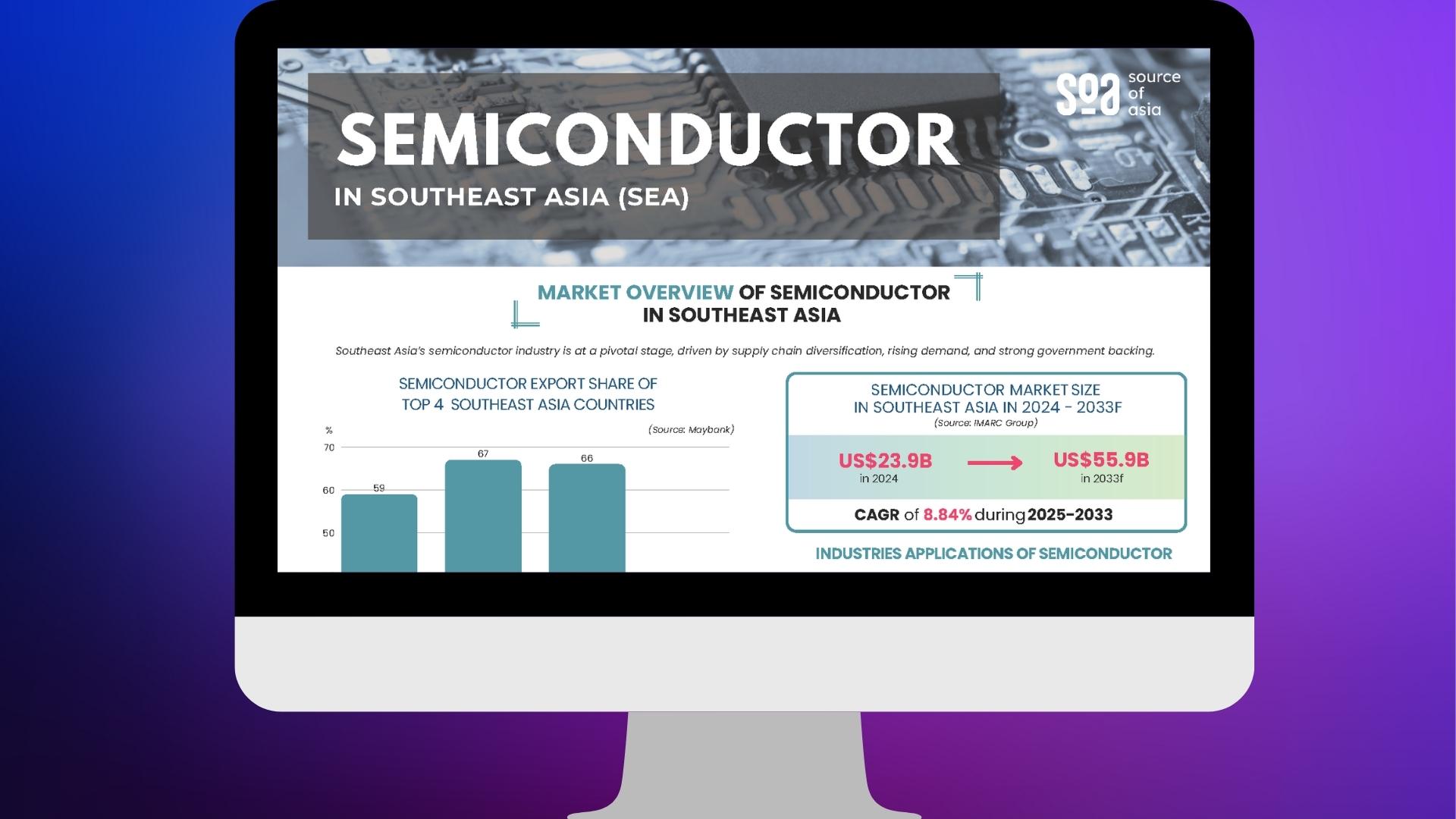
- The semiconductor boom is powering ASEAN’s digital transformation. In addition, new investments in design and testing are boosting regional competitiveness.
- Clean power is reshaping Southeast Asia’s energy landscape. Meanwhile, expanding solar and wind projects are reducing emissions and attracting sustainable investment.
- Vietnam is advancing marine energy innovation. As a result, wave and offshore projects are positioning the country as a regional leader in renewable technology.
- Discover how material innovation supports sustainable manufacturing. Furthermore, industry workshops highlight the growing synergy between packaging, coatings, and green technology.