Summary
The cosmetics industry in Southeast Asia is entering a new phase of sustained growth. The region has evolved into one of the world’s most dynamic beauty markets, supported by a young population, rising income, and rapid digital transformation. According to TMO, the Southeast Asia cosmetics market reached USD 5.6 billion in 2024 and is projected to expand steadily through 2025 at an annual growth rate of 4–5%.
With strong domestic demand and global partnerships, the region is transforming from an import-reliant consumer market into a production and innovation hub for both Asian cosmetic brands and international companies. Vietnam, Thailand, and Indonesia lead sales and manufacturing growth. At the same time, Malaysia and Singapore position themselves as centers for halal certification, R&D, and distribution.
This momentum mirrors trends across the broader Asia cosmetics industry, where sustainability, digital commerce, and cross-border collaboration define the next wave of expansion. Asian beauty cosmetics now represent a major share of the global beauty supply chain, linking tradition, innovation, and technology.
Key Highlights from the Agriculture in Southeast Asia Note
The following insights outline the main trends, challenges, and opportunities shaping the Asian cosmetics industry and its development across ASEAN.
Digital commerce and consumer shift
Online platforms dominate beauty retail in the region. Nearly 60% of cosmetic sales occur on Shopee, TikTok Shop, and Lazada. In addition, influencers and livestream campaigns are essential to brand discovery. Asian cosmetic stores, both online and offline, are expanding quickly as consumers seek the best Asian cosmetics and affordable, authentic products.
As a result, digitalization is blurring the line between cosmetic Asia and global markets. Local brands compete with established players, offering high-quality products directly to consumers.
Local production and halal innovation
Halal and clean beauty are redefining the Asian beauty industry. Indonesia and Malaysia are leading the movement with government-backed halal certification systems. Meanwhile, Thailand and Vietnam focus on natural and organic formulations that appeal to international consumers.
Furthermore, the rise of Asian cosmetic brands brings more regional identity to the Asian beauty market. Many companies now attend in-cosmetics Asia 2025 to showcase product innovations and strengthen export partnerships.
Technology and the Asia-Pacific beauty devices industry
Technological innovation continues to transform the Asia-Pacific beauty devices industry. Skincare tools, AI-based diagnostics, and home-use beauty gadgets are becoming mainstream. Therefore, manufacturers and investors see Southeast Asia as a growing hub for beauty-tech development and testing.

Opportunities and challenges of cosmetic in Southeast Asia
Sustainability and responsible consumption
Consumers in ASEAN are becoming more conscious of their purchasing choices. Asian cosmetics companies are reducing plastic use, investing in recyclable packaging, and adopting eco-certifications. Moreover, the shift toward ethical sourcing and cruelty-free testing is improving brand credibility and regional export competitiveness.
Investment and market outlook
The cosmetics industry Asia-wide continues to attract new investors. Investing in cosmetic companies is becoming an appealing long-term opportunity, especially as regulations under the ASEAN Cosmetic Directive aligning regional standards. For example, firms interested in learning how to invest in cosmetics can benefit from favorable trade policies and expanding e-commerce ecosystems.
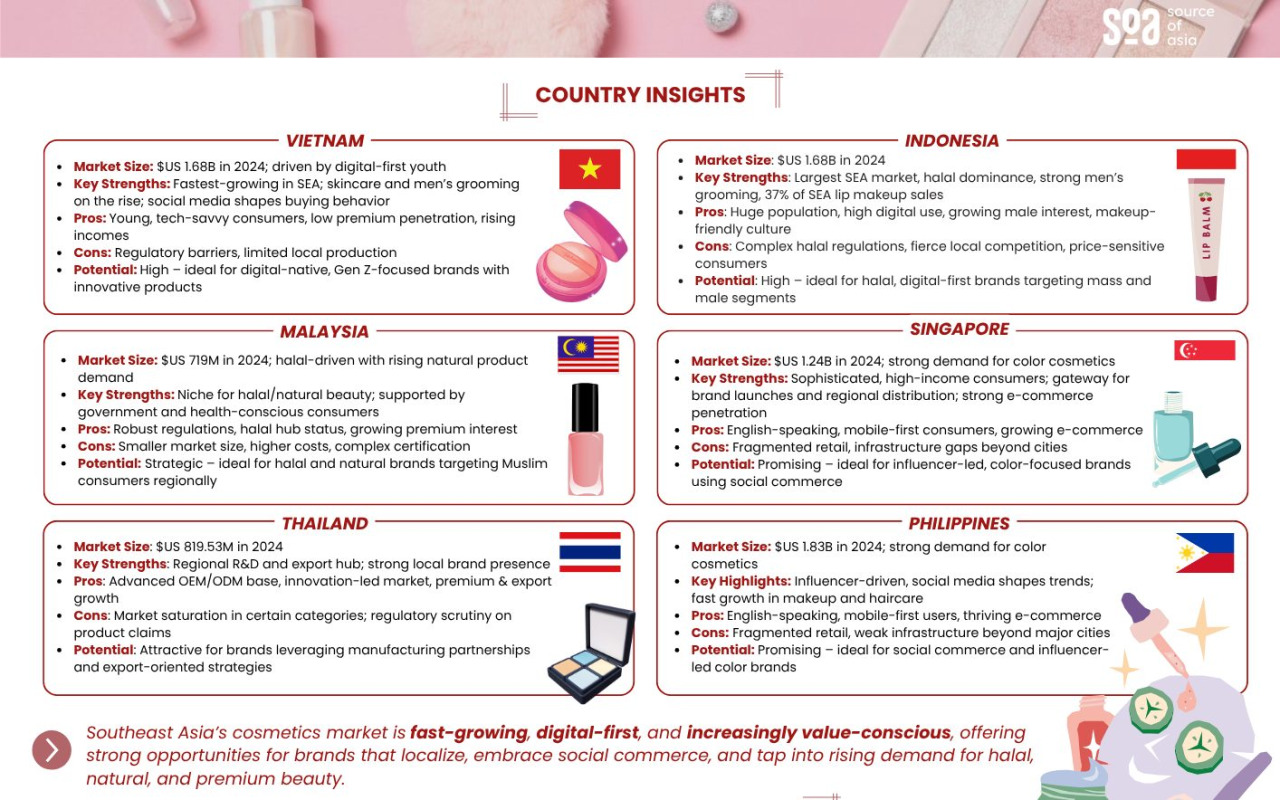
Country-by-country industry overviews | Southeast Asia Cosmetic Market 2025, created by Source of Asia.
Why Southeast Asia Matters
Southeast Asia stands at the intersection of culture, creativity, and commerce. The cosmetic industry in Asia is increasingly influenced by local innovation, supported by digital infrastructure and diverse consumer preferences. Meanwhile, ASEAN governments are creating tax incentives and R&D grants to help companies scale responsibly.
For both global and regional players, the Southeast Asia cosmetics market offers high potential, balancing cost competitiveness, cultural diversity, and long-term consumer loyalty. As more Asian cosmetic brands go global, the region’s beauty sector is shaping the future of the global Asian cosmetics industry.
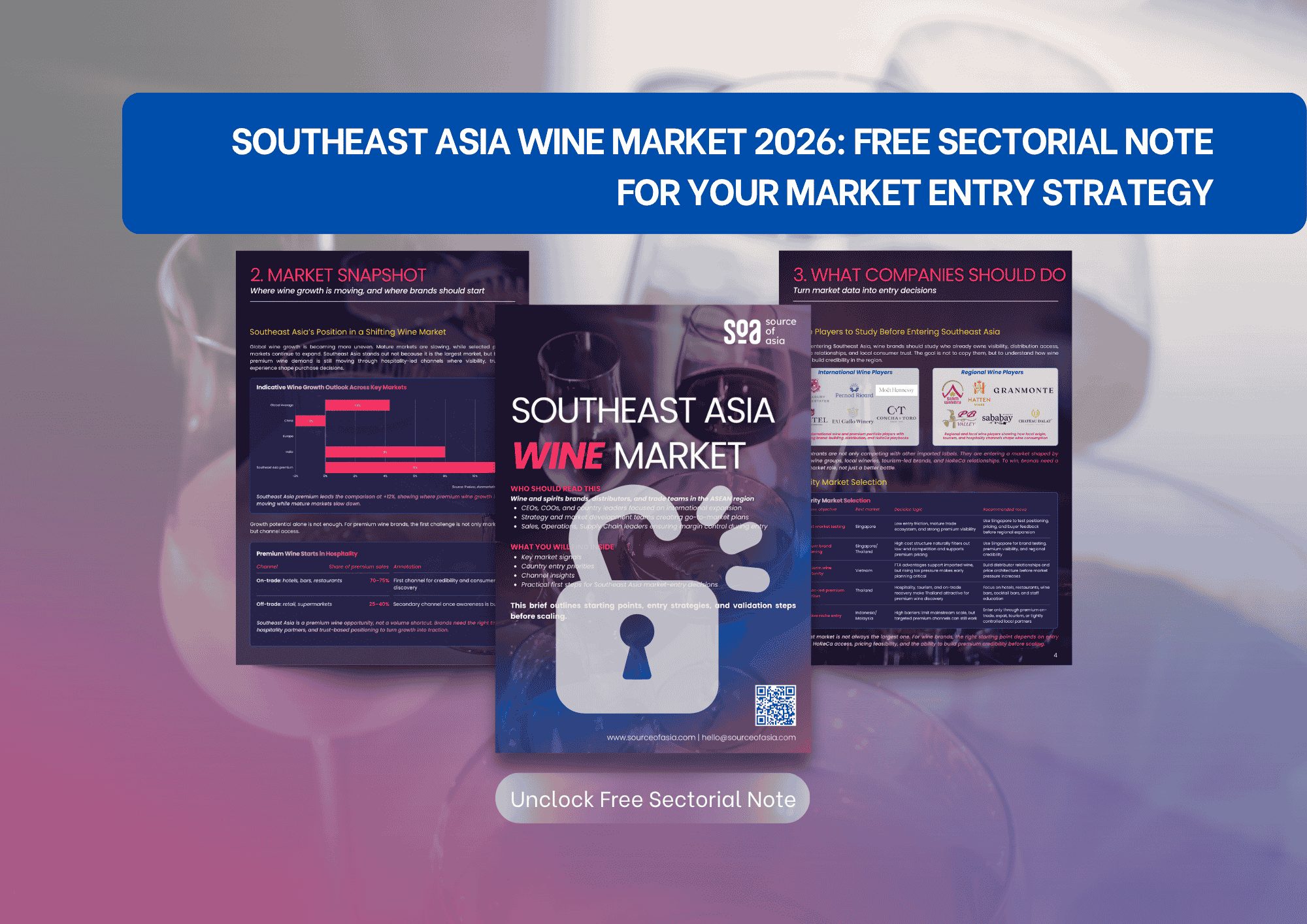
Download Free Southeast Asia Cosmetics Market 2025
The full Sectorial Note: Cosmetics Industry in Southeast Asia 2024 – 2025 includes detailed insights on:
- Regional market size and beauty category breakdown.
- Country-by-country industry overviews.
- Halal, clean, and sustainable product trends.
- Key players in Asian beauty cosmetics and export strategies.
- Investment outlook and regulatory framework across ASEAN.

Explore more insights from Source of Asia
- Discover how ASEAN is becoming a global sourcing powerhouse. In addition, learn how regional supply chains are helping brands build resilience and cost efficiency.
- Thailand remains a strong industrial base for manufacturing and exports. Meanwhile, its growing beauty and healthcare sectors make it an attractive destination for investment.
- Vietnam’s strategic position and competitive labor market continue to draw global manufacturers. Furthermore, the country is rapidly developing as a key center for cosmetics and consumer goods.
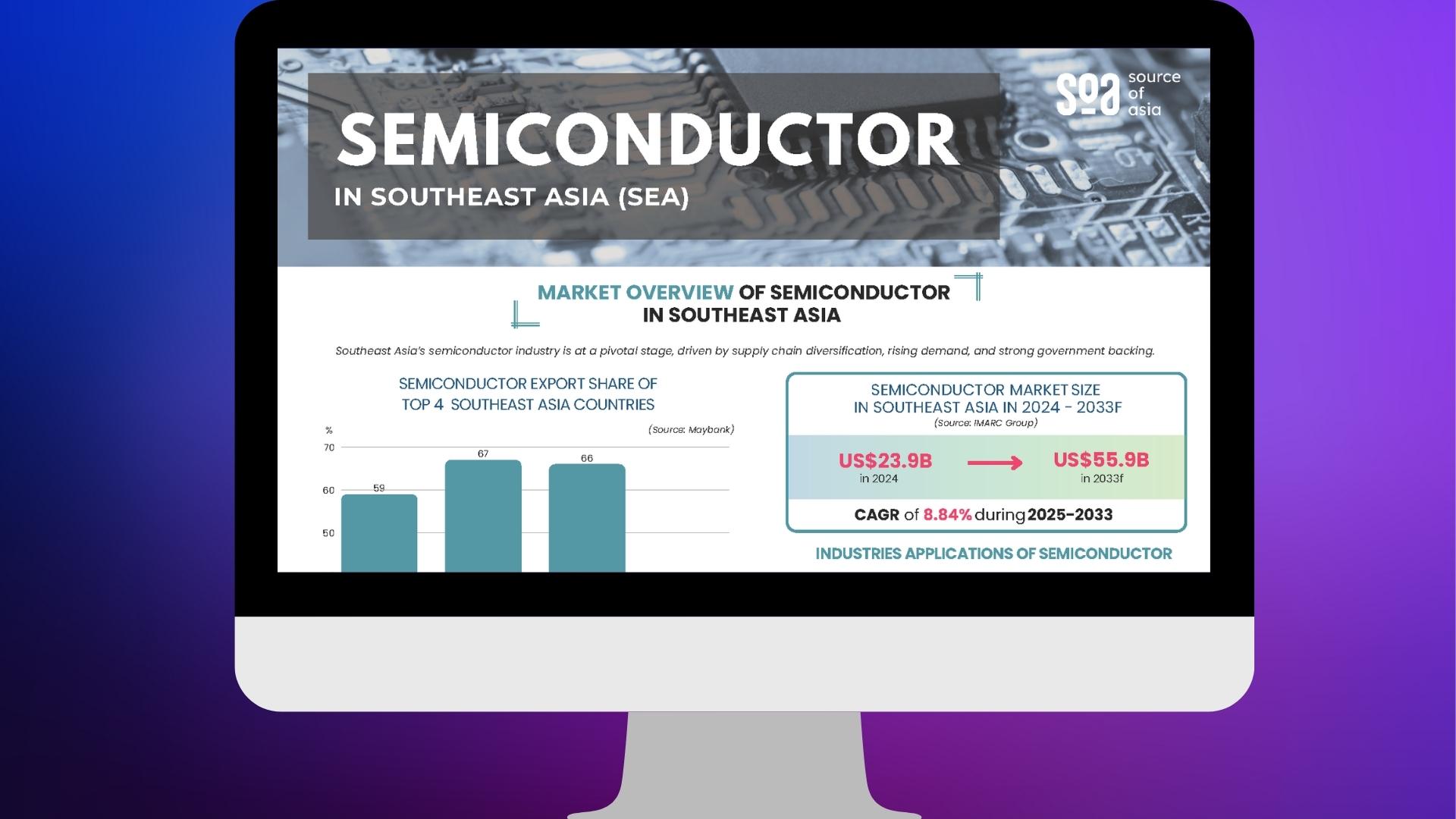
- The semiconductor industry is powering ASEAN’s technological transformation. As a result, it strengthens cross-sector innovation from electronics to packaging and beauty tech.