Introduction
ISO 27001:2022 certification has become an important benchmark for companies managing digital operations, client data, and cross-border business activities. As outsourcing and international collaboration continue to grow, businesses also face higher expectations around information security, governance, and operational reliability.
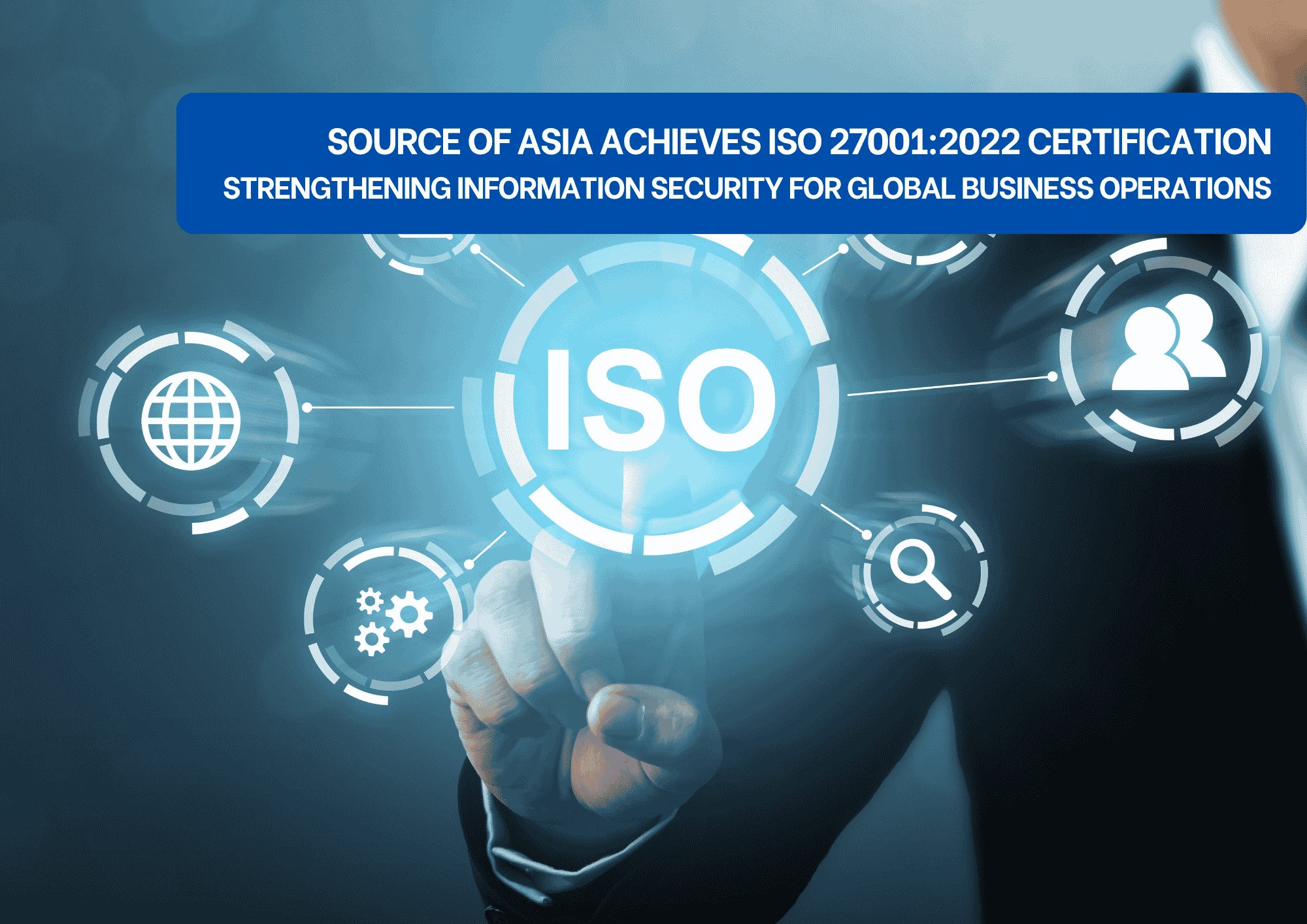
Source of Asia (SOA) is proud to officially achieve ISO 27001:2022 certification in April 2026. The implementation and compliance process was supported by Scrut.io, helping us strengthen internal security practices, governance processes, and operational controls across the organization.
The certification covers SOA’s company-wide operations, internal processes, and information management practices, with a strong focus on our Business Transformation (BT) division and IT outsourcing activities. Besides, this milestone reflects more than compliance. It shows our long-term commitment to building secure, scalable, and reliable business operations for clients across Asia and international markets.
What Is ISO 27001:2022?
ISO 27001:2022 is the latest international standard for Information Security Management Systems (ISMS), developed by the International Organization for Standardization. The framework helps organizations identify security risks, protect sensitive information, and improve operational resilience through structured governance and security controls.
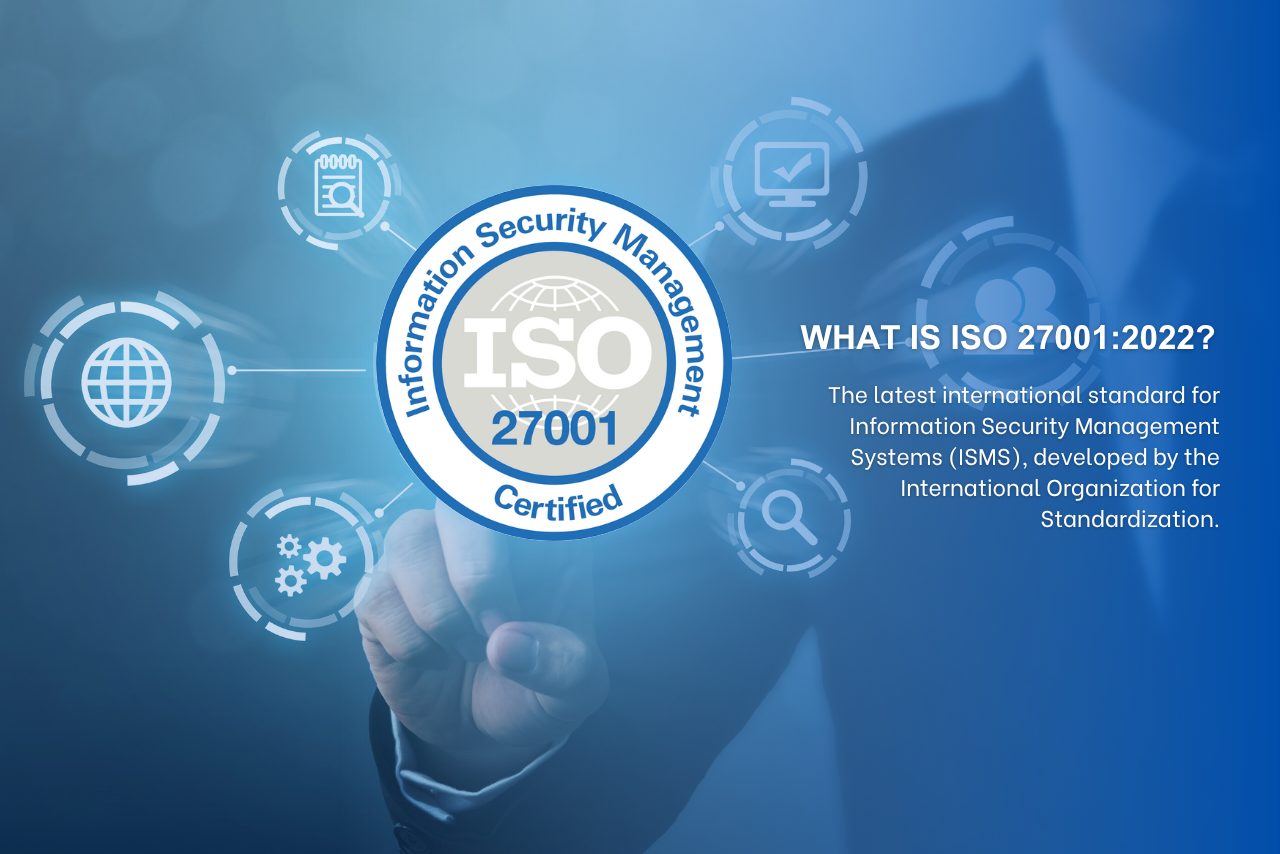
ISO 27001:2022 provides an internationally recognized framework for managing information security risks, protecting sensitive data, and strengthening operational resilience.
In practice, ISO 27001:2022 helps companies:
- Protect business and customer data
- Improve cybersecurity management
- Reduce operational risks
- Strengthen internal accountability
- Support business continuity
- Build trust with clients and partners
The 2022 version also includes updated controls designed for modern business environments. This includes cloud infrastructure, remote work environments, third-party access management, and evolving cybersecurity threats.
Today, many enterprise clients and international partners expect companies to follow recognized information security standards before starting long-term collaboration. As a result, ISO 27001 has become increasingly important for organizations operating internationally.
Before exploring how we approached this certification, it is important to understand why ISO 27001 matters for international business operations in the first place.
Why ISO 27001 Matters for International Businesses
As companies expand across multiple markets, they also manage more systems, vendors, digital platforms, and sensitive information. This creates new operational and cybersecurity challenges. For businesses involved in IT outsourcing, Business Transformation services, or cross-border operations, information security directly affects client trust and long-term business continuity.
A structured Information Security Management System (ISMS) helps organizations manage these risks more effectively.
The Business Benefits of ISO 27001:2022
From an operational perspective, ISO 27001:2022 helps organizations build stronger internal security practices while improving governance and process consistency. For Source of Asia, the certification supports:
- Better operational visibility
- Stronger internal governance
- More structured risk management
- Improved incident response readiness
- Higher security standards across BT operations
- Greater alignment with international client expectations
The process also encouraged stronger collaboration between teams, clearer operational responsibilities, and more consistent security practices across departments. At the same time, the benefits extend far beyond internal operations.
What This Means for Our Clients
For clients and partners, ISO 27001:2022 provides stronger confidence when working with us on digital operations, outsourcing activities, and regional business expansion projects. This includes:
- Stronger protection of sensitive business information
- Structured governance and security processes
- Reduced operational and cybersecurity risks
- More secure collaboration across teams and markets
- Enterprise-level operational standards
These practices become especially important when businesses manage distributed teams, outsourced operations, cloud-based systems, or cross-border workflows.
As security expectations continue to rise globally, companies increasingly look for partners that can combine operational execution with reliable security practices. This is exactly the direction SOA has been building toward over the past several years.
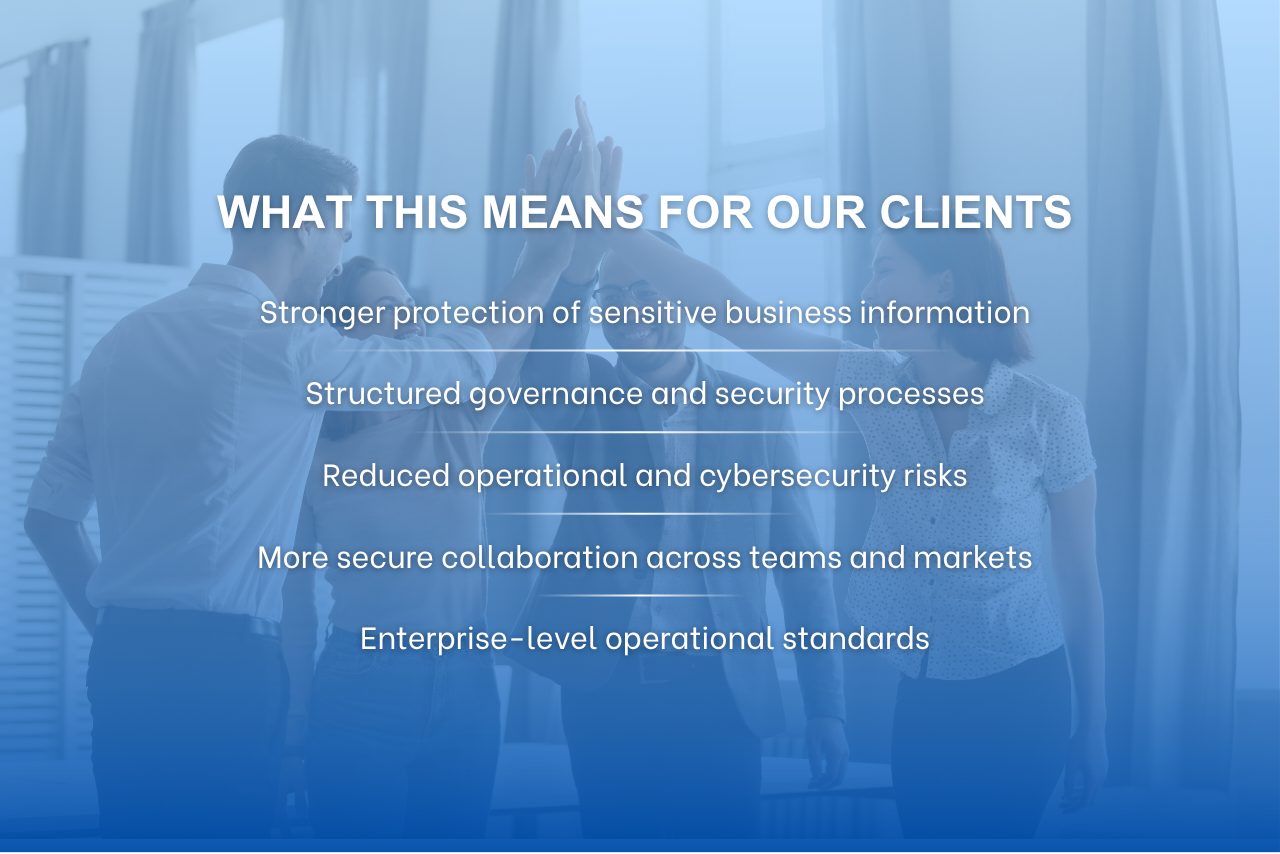
SOA’s ISO 27001:2022 certification helps clients benefit from stronger data protection, structured governance, reduced operational risks, and more secure collaboration.
How SOA Built a Strong Information Security Framework
Achieving ISO 27001:2022 required a structured and company-wide approach. Over several months, we worked closely with Scrut.io to strengthen internal governance, improve operational security practices, and complete the implementation and audit process before officially achieving certification in April 2026.
The certification scope covers our company-wide operations, internal processes, information management practices, and Business Transformation division activities. To support this process, we focused on four key areas.
Risk-based information security management
We implemented a structured framework to identify critical information assets, assess operational risks, and define appropriate security controls, including:
- Information asset identification
- Risk assessment procedures
- Threat and vulnerability analysis
- Risk mitigation planning
- Security control implementation
By using a risk-based approach, we aligned security practices with real operational exposure and business priorities.
Governance and internal controls
Strong governance played a central role throughout the certification process. We established:
- Standardized information security policies
- Defined operational responsibilities
- Internal audit procedures
- Access control management practices
- Vendor and third-party governance processes
- Continuous monitoring mechanisms
These processes help create stronger accountability and more consistent operational management across departments.
Technology and infrastructure security
As digital operations continue to grow, infrastructure security becomes increasingly important. We strengthened its operational environment through:
- Secure cloud infrastructure practices
- Data protection procedures
- Access management controls
- Infrastructure monitoring
- Incident response procedures
- Secure data handling processes
These measures support both internal operational security and client-related information management.
Security awareness and operational culture
Information security also depends on daily operational behavior. For this reason, we continue to invest in:
- Employee security awareness training
- Internal operational best practices
- Incident response readiness
- Security-focused operational procedures
Building a strong security culture helps reduce human-related risks while improving long-term operational resilience. With this foundation in place, SOA is better positioned to support companies operating in increasingly digital and interconnected business environments.
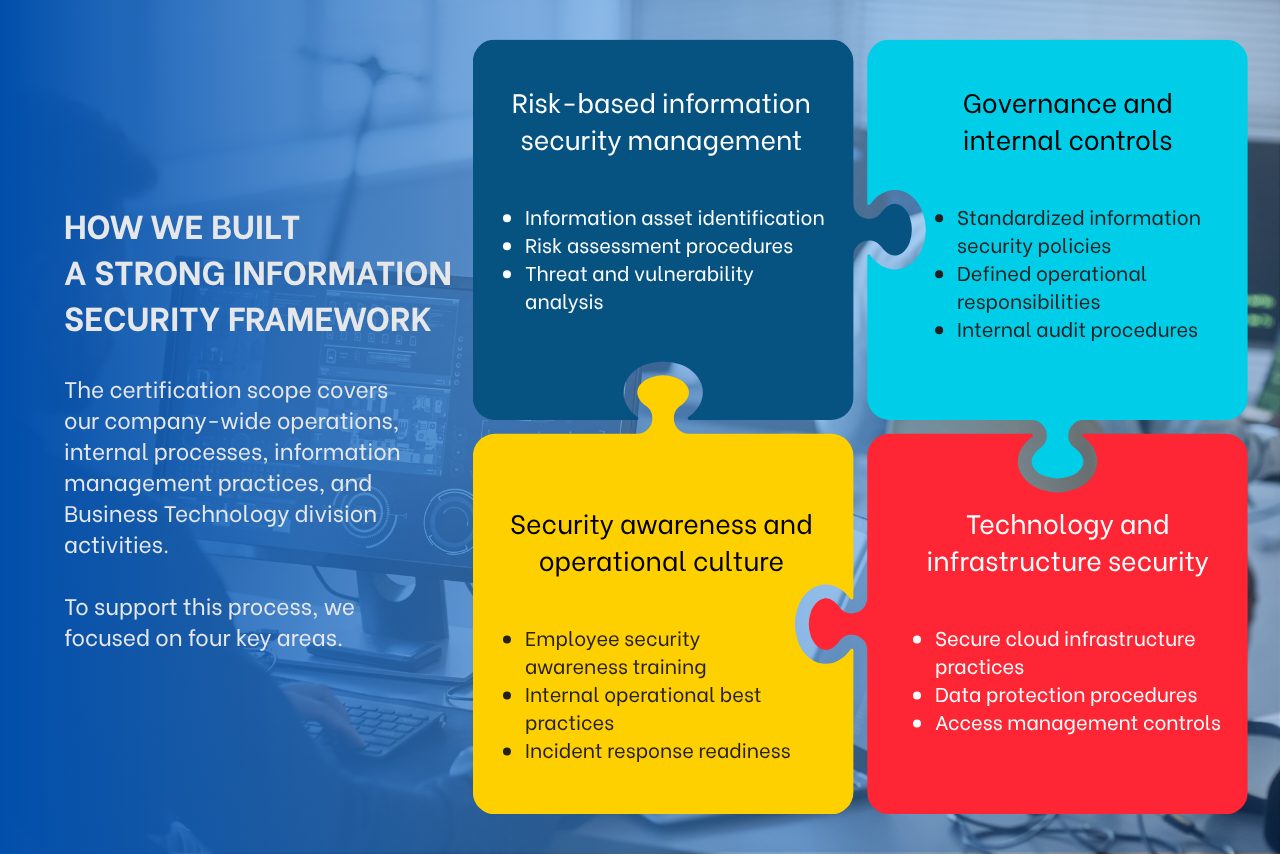
We strengthened our information security framework through risk-based management, governance controls, infrastructure security, and company-wide security awareness practices.
Supporting Secure Expansion Through IT & Business Transformation Outsourcing
Security plays an increasingly important role in outsourcing and digital operations. Businesses today rely on external partners to manage systems, infrastructure, workflows, and operational processes across multiple markets. As a result, companies need outsourcing partners that can combine operational execution with structured security practices.
At Source of Asia, our Business Transformation and IT outsourcing services are designed with this long-term operational mindset.
IT infrastructure & security
SOA supports organizations with:
- Infrastructure management
- Secure operational environments
- Cloud integration support
- Access management practices
- Security-focused operational workflows
Website & digital platform development
We help companies build digital platforms that support:
- Operational scalability
- Structured data management
- Reliable performance
- Secure digital operations
Business technology operations support
We also support businesses with operational coordination and technology-related processes designed to improve efficiency, visibility, and governance across regional operations.
Digital operations & Martech integration
As businesses manage more digital channels and operational tools, security and governance become increasingly important. Our teams support clients in building structured digital ecosystems that align operational performance with security best practices.
By combining regional execution capabilities with internationally recognized security standards, SOA helps organizations operate more securely and confidently across Asia.
Conclusion
Achieving ISO 27001:2022 certification marks an important milestone in SOA’s long-term commitment to operational excellence, information security, and responsible business growth. Indeed, the certification process, supported by Scrut.io, helped strengthen governance, improve operational security practices, and reinforce security standards across our company-wide operations and Business Transformation division.
As businesses continue to expand internationally, security and operational reliability will play an even greater role in long-term success.
Whether you are managing cross-border operations, outsourcing business processes, or building digital infrastructure in Asia, SOA helps organizations operate securely, efficiently, and compliantly at scale. We are proud to continue supporting our clients with internationally aligned operational standards and trusted execution across Asia. Contact us now!
FAQs
ISO 27001:2022 is an international standard for Information Security Management Systems (ISMS). It helps organizations manage information security risks through structured governance, operational controls, and continuous improvement practices. The framework is widely recognized across industries and supports stronger cybersecurity, business continuity, and data protection standards.
IT outsourcing often involves sensitive information sharing, third-party access, and cloud-based operations. ISO 27001 helps organizations establish structured security practices to reduce operational risks and improve trust between outsourcing partners and clients. It also supports stronger governance and more secure operational collaboration across international markets.
No certification can guarantee complete protection against cybersecurity threats. However, ISO 27001 helps organizations significantly improve their ability to identify, manage, and reduce information security risks. The framework creates stronger operational processes, better governance, and more consistent security practices across the organization.
An Information Security Management System includes policies, operational controls, governance processes, risk assessments, monitoring practices, and employee awareness initiatives designed to protect sensitive information. The goal is to create a structured and continuous approach to managing information security across the organization.
The implementation timeline depends on company size, operational complexity, and existing security maturity. For many organizations, the process can take several months and includes risk assessments, policy development, operational improvements, internal audits, and external certification reviews before certification is officially achieved.