Summary
Agriculture in Southeast Asia remains the backbone of the region’s economy and a vital source of food for the world. It contributes about 9 % of ASEAN’s GDP and provides jobs for one-third of its people. Yet, the agriculture of Southeast Asia is no longer limited to traditional practices. It is moving toward technology-based, high-value, and sustainable production that can meet global food-security needs.
According to Statista, the regional market is projected to exceed USD 153 billion by 2025. Growth is driven by digital tools, export diversification, and strong government support. Vietnam, Thailand, and Indonesia dominate exports in rice, seafood, and palm oil. At the same time, Malaysia and the Philippines develop halal and processed-food industries.
Because farming in Southeast Asia depends heavily on land and water, sustainability has become essential. New investment in climate-smart irrigation, seed innovation, and digital-farming systems helps local Asian farmers raise productivity while reducing emissions.
Key Highlights from the Agriculture in Southeast Asia Note
The following insights summarize the key trends, market drivers, and policy shifts shaping the transformation of agriculture of Southeast Asia in 2025–2026.
Modernization and technology adoption
The development of agriculture in Southeast Asia increasingly involves smart tools such as drones, sensors, and data-driven irrigation. Digital marketplaces now connect farmers directly to buyers. Terracing, widely used in Southeast Asian agriculture, helps control soil erosion and expand arable land in mountain regions. These practices show how technology and tradition can work together.
Cold-chain and logistics upgrades
Post-harvest losses still average 30 – 40 %. Therefore, many governments are investing in agricultural infrastructure such as cold-storage systems and farm-to-port logistics. As a result, farmers can keep product quality high and meet export standards. Vietnam and Thailand lead these improvements, followed by Indonesia’s public-private projects in transport and warehousing.
Sustainability and ESG commitment
Consumer demand for certified, traceable agricultural products of Southeast Asia continues to rise. In addition, buyers now require proof of low-carbon sourcing. Countries are integrating ESG principles into their farming policies and promoting renewable energy on farms. These steps strengthen the agricultural resources of Southeast Asia and attract responsible investment.
Investment and policy support
Meanwhile, governments are creating new incentives for agritech and food-processing ventures. Public-private partnerships fund irrigation, training, and digital platforms. The role of agriculture in Southeast Asia is expanding—from rural employment toward innovation and export value creation. This shift opens new opportunities for companies providing automation, logistics, and financial solutions.
Challenges and opportunities
Although progress is steady, fragmented land ownership, limited R&D budgets, and climate risks are still slow to transform. However, these same issues create room for growth. Investors offering expertise in supply-chain management, sustainable inputs, and precision-farming technology can help scale modern Southeast Asia farming efficiently.

Opportunities and challenges of agriculture in Southeast Asia 2025 – 2026.
Why Southeast Asia Matters
Agricultural development in Southeast Asia is central to global food resilience. The region combines fertile land, strategic trade access, and a young labor force. Moreover, integration into agreements such as EVFTA and RCEP expands export reach. As farming in South Asia and East Asia becomes more industrialized, ASEAN is emerging as a complementary production base, balancing affordability and sustainability.
Today, the types of agriculture in Southeast Asia range from rice terraces to smart-greenhouse systems. This diversity ensures long-term adaptability and investment potential across the agri-value chain.
Download Free Sectorial Note: Agriculture in Southeast Asia
The complete Sectorial Note: Agriculture in Southeast Asia 2025 – 2026 offers data and analysis on:
- Market size, exports, and growth outlook.
- Country-specific policies and incentive programs.
- Technology trends in modern Asian farming.
- ESG and climate-resilient investment models.
- Case studies and strategic insights for investors.

Explore more insights from Source of Asia
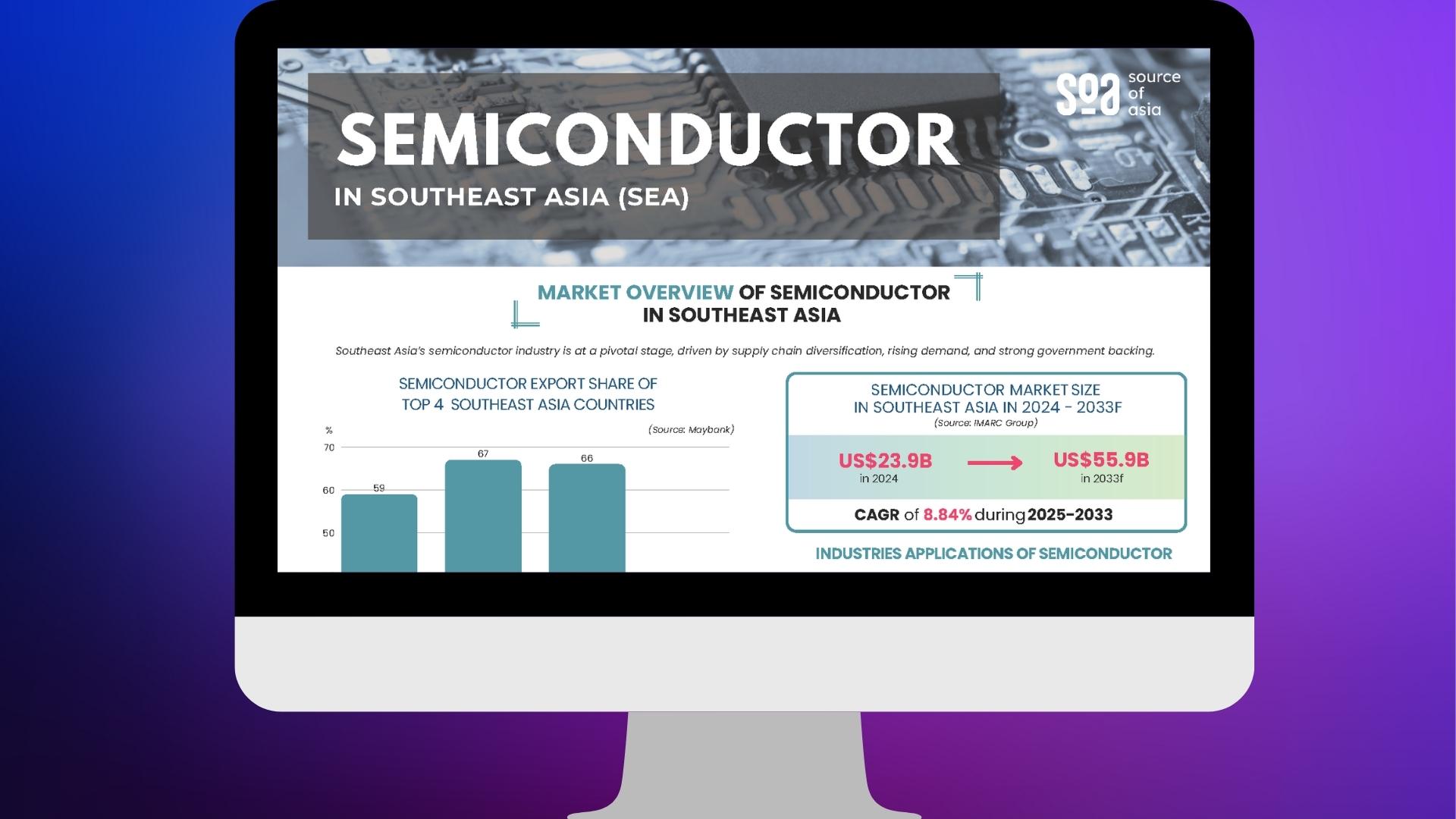
- The semiconductor boom is transforming ASEAN’s industrial landscape. Meanwhile, strong investment flows and policy support make the region a rising tech hub. Explore now!
- Learn how new consumer habits in France are opening export opportunities for Vietnam’s agri-food producers. As a result, demand for sustainable and traceable products keeps rising.
- Thailand remains one of ASEAN’s most dynamic economies. In addition, its advanced logistics and incentive programs attract major investment in agri-processing and manufacturing.
- Vietnam continues to offer a competitive business environment. Therefore, it stands out as a strategic base for companies expanding across Southeast Asia.