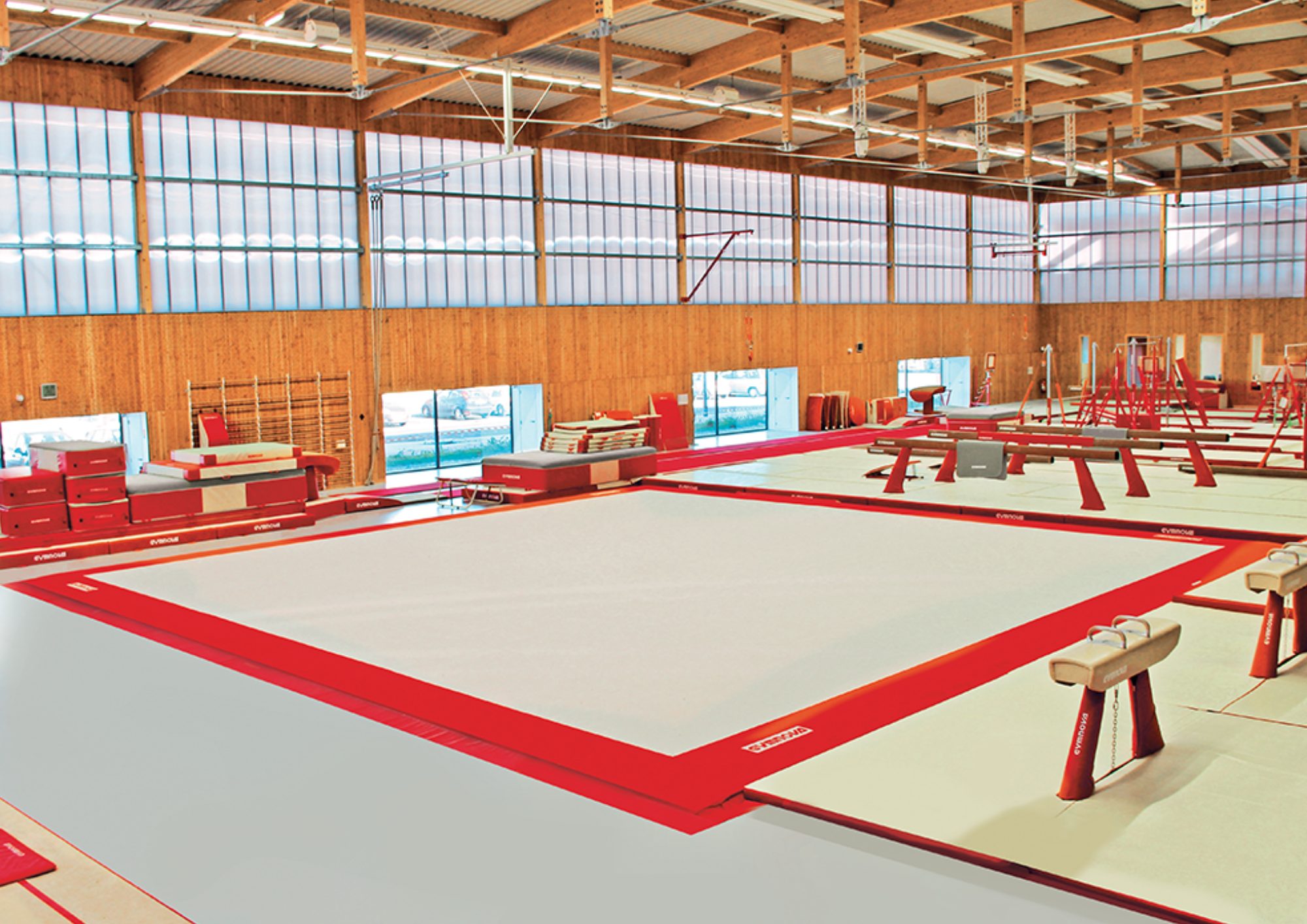
This go-to-market strategy case study shows how Source of Asia helped a European sports equipment company assess Vietnam before moving into commercial activation. Through market diagnosis, customer and competitor analysis, pricing review, regulatory assessment, and distributor mapping, the client gained a clearer view of market potential and a practical direction for future growth.
KEY RESULTS
22-page market report covering market dynamics, regulations, pricing trends, and sales recommendations
38 qualified leads segmented by potential, product fit, and institutional buyer experience
Stronger understanding of Vietnam’s sports equipment market
Actionable go-to-market direction for mid-term growth in Southeast Asia
Building a Go-to-Market (GTM) Strategy for Vietnam’s Sport Equipment Market
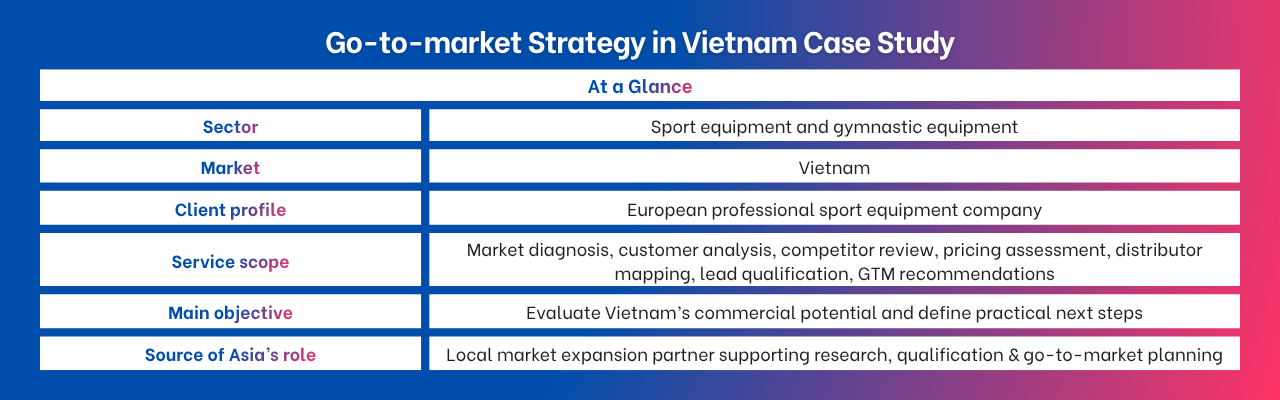
The client wanted to evaluate Vietnam as a potential growth market for professional sports equipment. Before engaging distributors or investing in local sales actions, the company needed a clearer view of market demand, buyer profiles, regulatory requirements, pricing conditions, and local distribution options.
For specialized sport equipment companies, entering a new market requires more than a general overview. The buying process can involve schools, clubs, training centers, sports institutions, public-sector buyers, and specialized distributors. Each segment may have different expectations, budgets, technical requirements, and purchasing timelines.
Several business questions had to be addressed before defining the go-to-market strategy:
- Which customer segments could offer the strongest potential?
- What market dynamics and entry barriers should be considered?
- How were similar products priced and distributed locally?
- Which distributors had relevant experience and market reach?
- What actions should come first before commercial activation?
The client needed structured market evidence before deciding how to approach Vietnam.
SOA’s Role in This Go-to-Market Strategy Case Study
Source of Asia supported the project through a structured research and analysis model adapted to Vietnam’s sports equipment market.
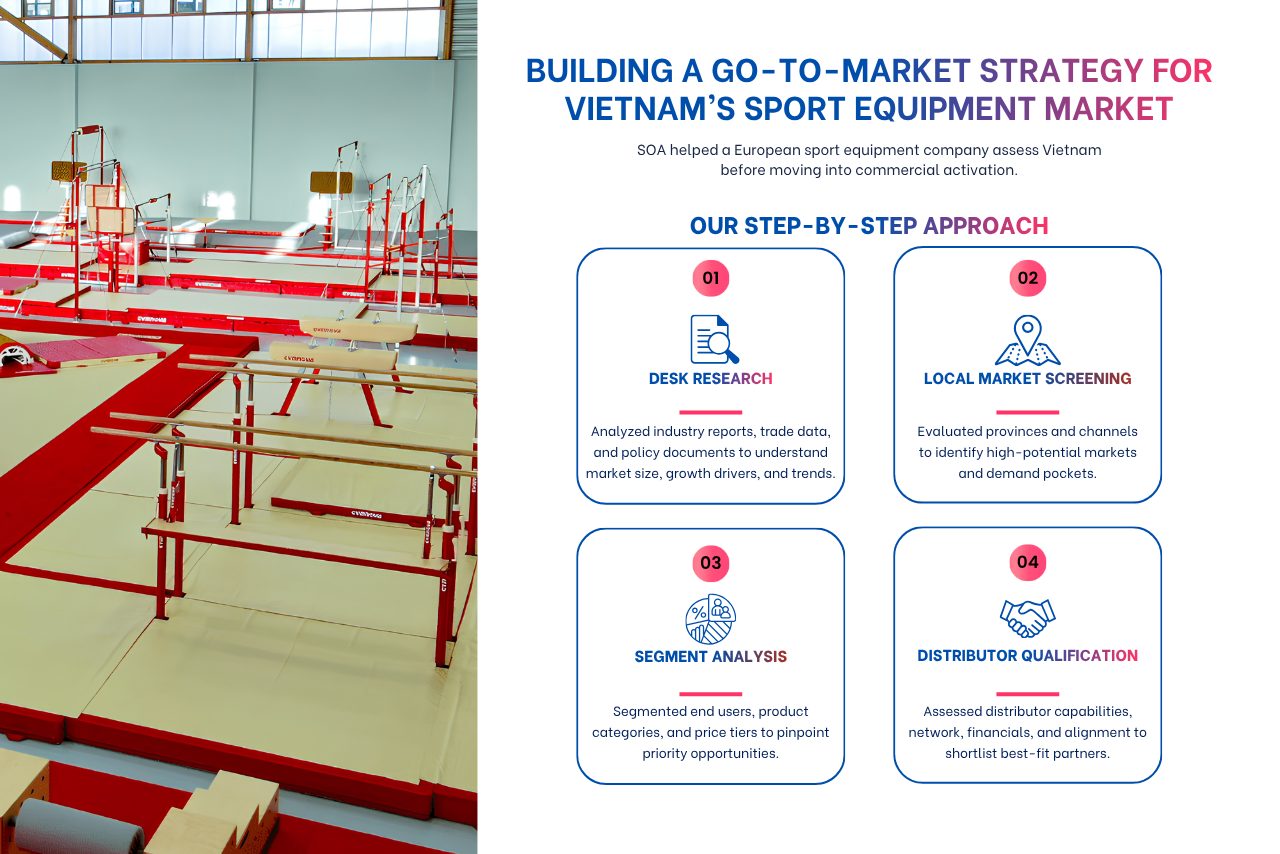
SOA’s structured research approach combined desk research, local market screening, segment analysis, and distributor qualification to define a practical GTM direction.
The research combined desk research, local market screening, and partner-level validation. SOA first reviewed the market environment, including demand drivers, customer segments, regulatory context, pricing references, and local distribution practices. This helped frame the market from both a macro perspective and a practical sales perspective.
For this sector, we applied market attractiveness and route-to-market fit analysis. The objective was to assess not only whether Vietnam had potential, but also which buyer segments could be reached, how purchasing decisions were made, and what type of local partner could support the client’s commercial objectives.
The analysis covered several layers:
- Customer segmentation across schools, clubs, training centers, sports institutions, and other relevant buyers
- Competitor and pricing review to understand product positioning and market expectations
- Regulatory and import context to identify possible entry barriers
- Distribution channel mapping to understand how professional sport equipment reaches end users
- Partner qualification based on market reach, references, product fit, institutional buyer experience, and alignment with the client’s premium standards
We then mapped and reviewed potential distributors and partners. Each lead was assessed against practical criteria rather than listed as a generic contact. This gave the client a more usable view of who could support future commercial development in Vietnam and why each profile was relevant.
Business Impact
SOA’s approach helped the client move from general market interest to a clearer go-to-market strategy for Vietnam.
Instead of assessing the market only through size or growth potential, SOA connected several layers of analysis: customer segments, pricing expectations, regulatory considerations, distribution channels, and partner fit. This approach was important for a specialized sport equipment company, where commercial success depends on reaching the right buyer segments through the right local partners.
The distributor mapping also helped reduce uncertainty before commercial engagement. A distributor with broad market reach may not always have access to institutional sport buyers or the technical understanding required for professional equipment. By qualifying partners based on potential, product fit, and institutional buyer experience, SOA helped the client focus on contacts that were more relevant to its offer and sales model.
As a result, the client received a 22-page market report covering market dynamics, regulatory considerations, pricing trends, and sales recommendations. SOA also delivered 38 qualified leads segmented by potential, product fit, and institutional buyer experience.
The project gave the client a stronger basis for distributor selection, future commercial discussions, and mid-term growth planning in Vietnam and Southeast Asia.
What Sport Equipment Companies Can Take from This Case
For international sport equipment companies entering Vietnam, the first question is not only whether the market has potential, but also how to approach it with the right partner model and commercial priorities.
A market overview can help validate demand. However, a strong go-to-market strategy should go further. It should clarify target segments, pricing logic, local distribution models, regulatory considerations, partner requirements, and the first commercial actions to prioritize.
As a result, this case shows the value of combining market diagnosis with partner qualification. By connecting customer insights, competitor understanding, pricing analysis, and distributor mapping, companies can make market entry decisions with more confidence.
Planning Your Go-to-Market Strategy in Vietnam?
SOA helps international companies assess market potential, identify the right partners, and build practical go-to-market strategies across Vietnam and Southeast Asia. From market diagnosis and customer analysis to distributor mapping and GTM recommendations, our team helps you move from market questions to concrete business priorities.
For companies facing similar expansion questions, SOA can support several key steps:
- Market intelligence & Go-to-market (GTM) Strategy
- Strategic partnering & B2B matchmaking
- Country benchmarking & Market prioritization
- Commercial development & Revenue growth
Together, these services help international companies validate opportunities, identify qualified partners, define a practical go-to-market plan, and move toward measurable business development in Vietnam and Southeast Asia.
Explore our services here!

FAQs
A go to market strategy for Vietnam defines how a company should approach the market, including target customers, positioning, pricing, partner model, distribution channels, regulatory considerations, and first commercial actions.
To build a go to market strategy for a new market, companies should assess demand, understand customer segments, review competitors, evaluate pricing, identify entry barriers, map potential partners, and define the first commercial actions to prioritize.
Distributor mapping helps companies identify which local partners have the right market reach, product fit, references, and buyer relationships. It supports better partner selection before commercial engagement begins.
SOA supports go-to-market planning through market diagnosis, customer and competitor analysis, pricing assessment, regulatory review, distributor mapping, lead qualification, and practical recommendations for market entry and growth.






Our partnerships are built by people who understand how business works across Southeast Asia.

See how SOA helps companies solve complex business challenges across Southeast Asia.