Summary
The Vietnam furniture industry has become one of the most dynamic and competitive sectors in Asia. Ranked among the top four furniture exporters worldwide, Vietnam is now a major production hub for wood-based and industrial furniture. According to Statista 2025, the country’s wood furniture industry is expected to grow steadily, supported by international trade agreements, sustainable raw materials, and strong global demand.
In 2021, the furniture industry in Vietnam generated US$14.8 billion in export value, up nearly 20% from the previous year. By 2022, revenue surpassed US$1.5 billion, with an 18% annual growth forecast through 2027. Moreover, Vietnam accounts for about 6% of the global furniture market, ranking just behind China, Germany, and Italy.
Why Vietnam Is a Global Furniture Hub
Vietnam’s furniture industry has more than 5,500 enterprises and 340 traditional craft villages specializing in wood and forest-based products. Among them, over 2,300 firms export timber and wooden furniture. The country benefits from large timber reserves, skilled labor, and access to international markets through agreements like the CPTPP and EVFTA.
In addition, the industry is supported by the China-Plus-One strategy, as global buyers diversify sourcing away from China. Timber industries Vietnam furniture exporters supply major markets such as the U.S., Japan, China, South Korea, and the EU, accounting for nearly 90% of total export turnover.
Geographically, the northern provinces, which are Hanoi, Bac Ninh, Hai Duong, and Hung Yen, focus on traditional and home furniture. The central and southern regions, such as Binh Dinh, Quang Nam, Dong Nai, Long An, and Ho Chi Minh City, specialize in western-style and industrial furniture for the EU and U.S. markets.
Furniture Industry Outlook and Growth Drivers
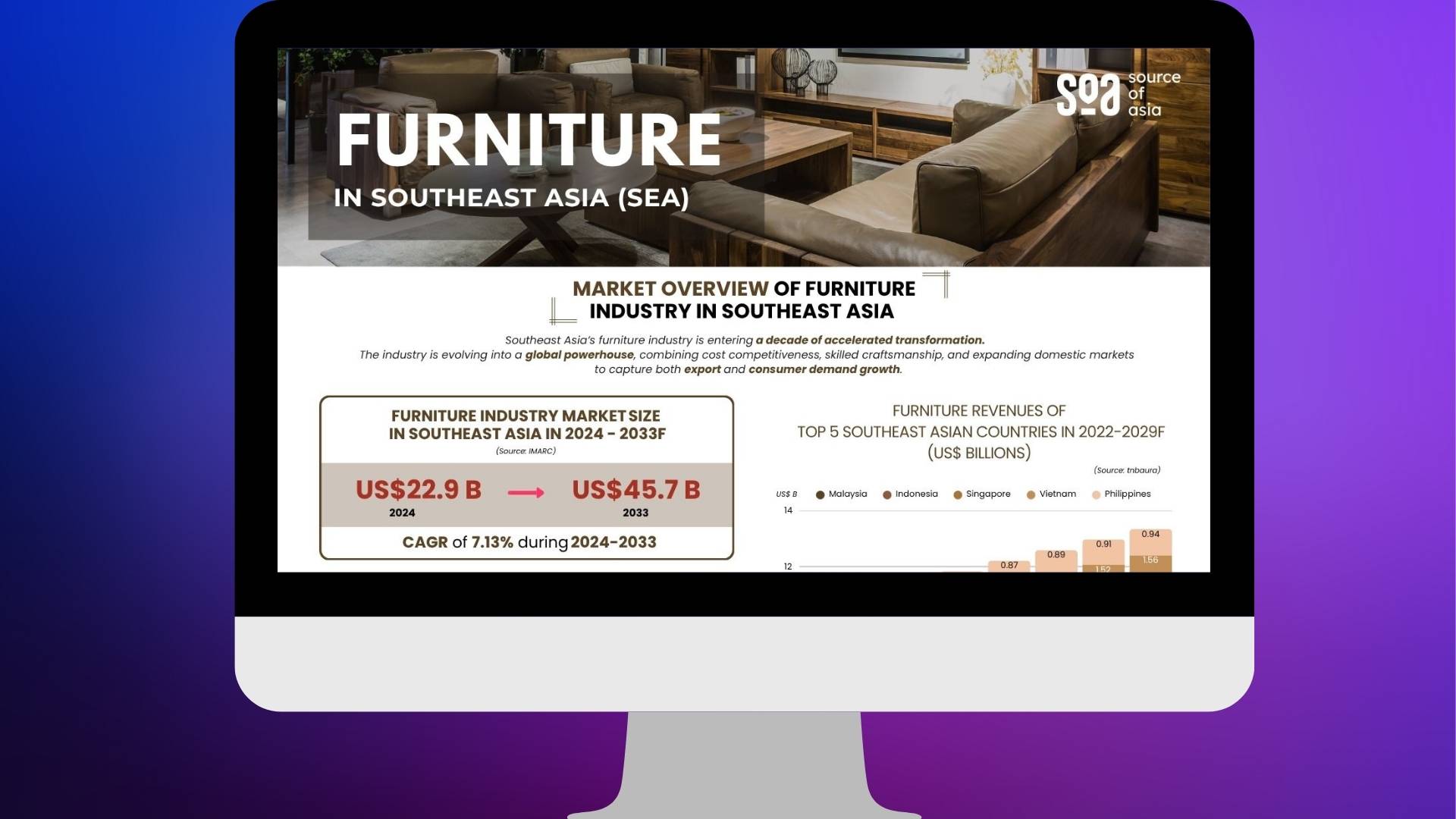
The Vietnam wood furniture industry is forecast to reach US$45.7 billion by 2031, growing at a CAGR of 12.2%. Key drivers include:
- Expanding population and urban housing demand.
- Implementation of FTAs improves export competitiveness.
- Growing interest in legal and certified wood sources.
- Improved technology and local raw material availability.
Moreover, Vietnam’s focus on sustainable forestry and eco-friendly design enhances its reputation as a reliable supplier in the global industrial furniture segment. Major international companies, including Ashley Furniture Industries Vietnam, are investing in local production to meet global demand efficiently.
Competition and Challenges
The competition in the furniture industry in Vietnam is intensifying as local and foreign manufacturers expand capacity. While exports remain strong, the sector faces several obstacles:
- Rising prices of raw materials and imported wood.
- Labor shortages in key industrial zones.
- Logistics constraints and supply-chain volatility.
However, government reforms, digital adoption, and investments in automation are helping factories improve productivity and meet higher quality standards. In addition, the rise of industry furniture design, customization, and e-commerce channels is opening new markets for Vietnamese producers.
Why Vietnam Matters in the Global Furniture Industry
Vietnam stands out as the third-largest wooden furniture exporter and a regional leader in industrial and wood-based furniture. Its mix of sustainability, cost efficiency, and manufacturing expertise makes it a cornerstone of the Asia-Pacific supply chain. Furthermore, growing partnerships with Ashley Furniture Industries and other global brands underline Vietnam’s position as a key player in the future of the furniture industry Vietnam exports.
Therefore, the next decade will likely see Vietnam evolve from an export-driven manufacturer to a design and innovation hub for the global furniture market.
Download the Free Furniture Industry Note in Vietnam
The full Sectorial Note: Furniture Industry in Vietnam 2025–2026 provides:
- Market statistics and export performance.
- Regional production maps and key clusters.
- Insights on sustainability and certifications.
- Competitive landscape and investment outlook.
- Strategic recommendations for foreign investors.

Explore more insights from Source of Asia
- Discover how Source of Asia supported a French furniture brand’s expansion in Vietnam. Moreover, the case highlights how local partnerships boost brand visibility and export success.
- Learn how Source of Asia helped a client secure sustainable timber sourcing. As a result, this project showcases Vietnam’s strength in certified and ethical wood supply chains.
- Understand Vietnam’s investment environment, industrial clusters, and trade regulations. In addition, find practical guidance to start or expand your business successfully.