Introduction
International trade missions are commonly used by governments, industry groups, and business organizations to promote cross-border cooperation. These programs bring companies into a target market through a structured agenda that typically includes business meetings, institutional briefings, and industry visits.
In this guide, we – Source of Asia, explain what a trade mission is, how it works in practice, and why companies should take part in these programs. The article also outlines how trade mission service are organized and when they can support companies exploring new markets or searching for business partners.
Key Insights
- Trade missions are structured programs that bring companies into a target market to explore opportunities through meetings, briefings, and industry visits.
- Participants meet distributors, partners, and industry stakeholders to gain practical insight into market conditions and business collaboration potential.
- Pre-arranged B2B meetings allow companies to evaluate multiple potential partners within a short and focused market visit.
- Institutional briefings provide companies with a direct understanding of regulations, industry structures, and the local business environment.
- Trade mission services support preparation, partner screening, and meeting coordination to conduct efficient and well-structured market visits.
What Is A Trade Mission?
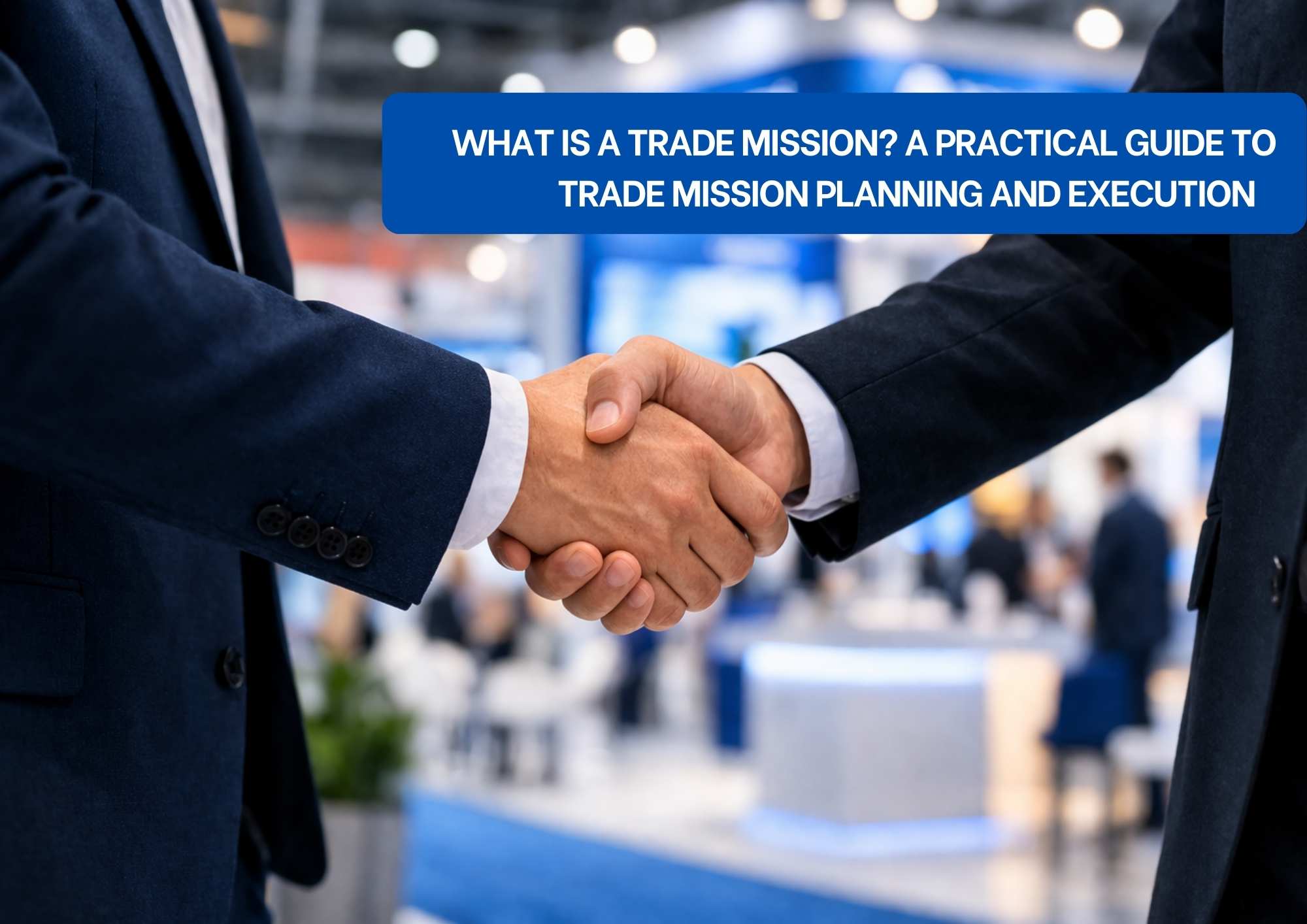
In international business, a trade mission refers to an organized visit where a group of companies travel to a foreign market to explore business opportunities and build commercial relationships. These missions are usually coordinated by government trade agencies, chambers of commerce, industry associations, or international business organizations.
During a trade mission, participating companies typically meet with:
- Potential distributors or local business partners
- Companies operating in the same industry
- Trade promotion agencies or investment authorities
- Chambers of commerce and business associations
However, it can vary in structure and purpose depending on who organizes them and the objectives of participating companies. The following are the most common types.
- Government-led trade missions: Organized by national or regional authorities to promote exports and strengthen economic cooperation. These missions often include meetings with government institutions and investment promotion agencies.
- Industry-focused trade missions: Arranged by industry associations for companies in the same sector, such as manufacturing, technology, or agriculture, to connect with partners within a specific value chain.
- Targeted business missions: Smaller missions organized by consulting firms or business groups to help companies meet selected distributors, partners, or investors in a particular market.
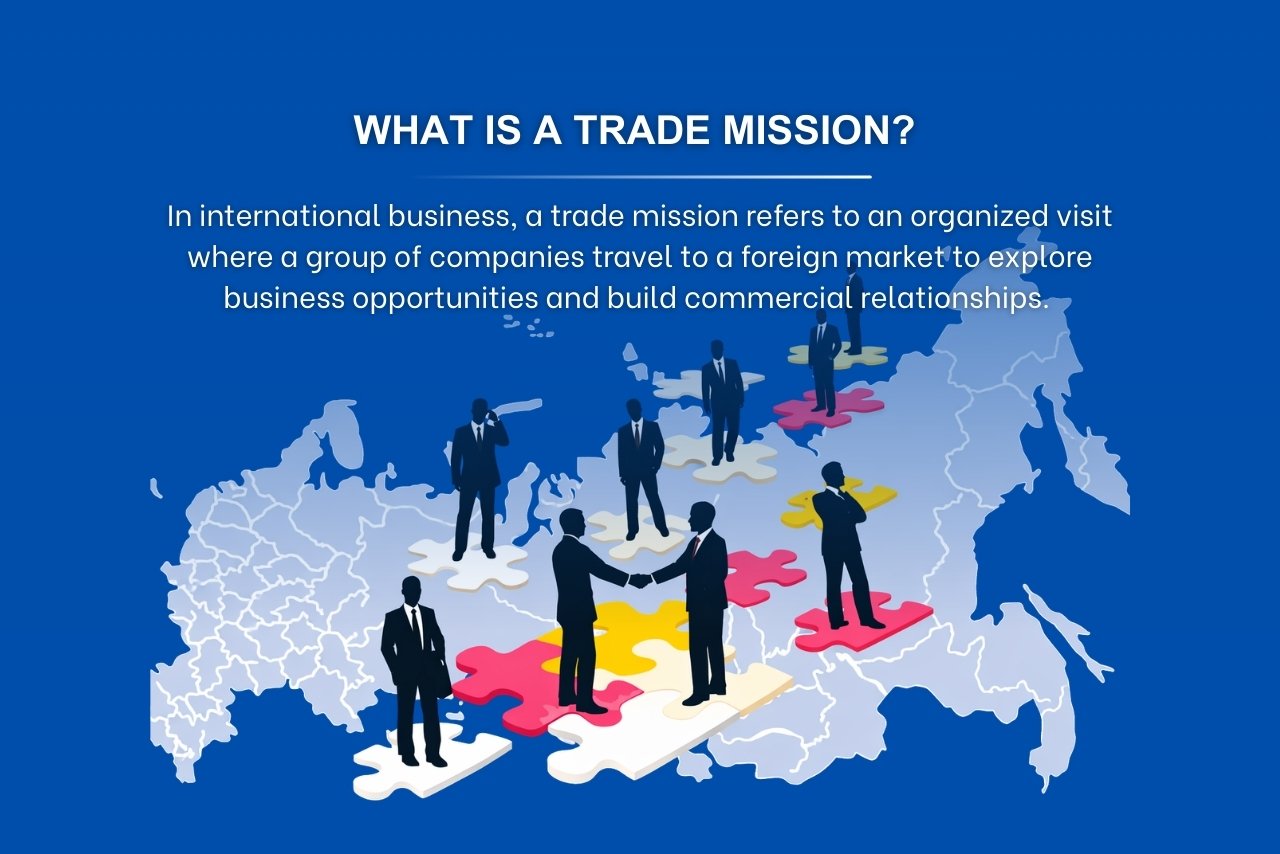
Overview explaining what a trade mission is.
Why Do Companies Participate In Trade Missions?
Companies join trade missions to understand a new market quickly and build direct business connections through meetings with partners, institutions, and industry stakeholders.
Faster market understanding
One reason companies join trade missions is to obtain direct insight into how a market operates. While market reports provide a useful background, conversations with local companies and industry stakeholders often reveal practical realities that are not always visible in secondary research.
Through meetings and briefings during the mission, companies can better understand demand conditions, distribution systems, and the competitive landscape. This exposure helps decision-makers evaluate whether the market aligns with their capabilities and long-term expansion plans.
Meeting potential partners
Another important objective is to identify and engage potential business partners. It typically includes scheduled meetings with distributors, suppliers, service providers, or companies seeking international collaboration.
These discussions allow participants to assess partner capabilities, market reach, and business compatibility. In many cases, several targeted meetings during a mission can provide valuable insights that would otherwise require extensive networking and months of outreach.
Institutional access and market credibility
Trade missions also create opportunities to connect with public institutions and industry organizations that shape the local business environment. Programs often include meetings with trade promotion agencies, regulators, chambers of commerce, and sector associations.
These interactions help companies understand regulatory expectations, industry structures, and available support mechanisms. At the same time, participation in an organized delegation can strengthen credibility when approaching potential partners, as it demonstrates a clear commitment to exploring the market seriously.
To learn more about trade missions and their benefits, you can visit this page:
What Happens During A Trade Mission?
Trade missions combine business meetings, market briefings, and site visits, allowing companies to meet partners, understand regulations, and assess real market opportunities.
Business matching meetings
Business matching sessions are often the central activity of a mission. These meetings connect participating companies with potential distributors, suppliers, buyers, or strategic partners in the target market. The discussions often focus on:
- Identifying potential distribution or sourcing partners
- Exploring commercial collaboration or joint ventures
- Assessing partner capabilities and market coverage
Because meetings are usually arranged in advance based on company profiles, participants can focus on discussions that are directly relevant to their business goals.
Market briefings and institutional meetings
Trade missions also include sessions with government agencies, trade promotion organizations, and industry associations. These discussions help companies understand how the business environment is structured. Participants may receive information on:
- Regulatory requirements and licensing procedures
- Market entry policies and sector regulations
- Investment incentives or government support programs
Such briefings provide practical context, helping companies assess whether the regulatory and institutional environment aligns with their expansion strategy.
Site visits and industry exposure
Many trade missions incorporate site visits to industrial zones, manufacturing facilities, logistics hubs, or local companies. These visits give participants direct exposure to the operational environment of the target market.
Observing production facilities, distribution centers, or retail channels allows companies to better understand local capabilities, supply chain structures, and industry standards. This practical perspective often helps firms assess whether the market can support their long-term commercial or sourcing objectives.
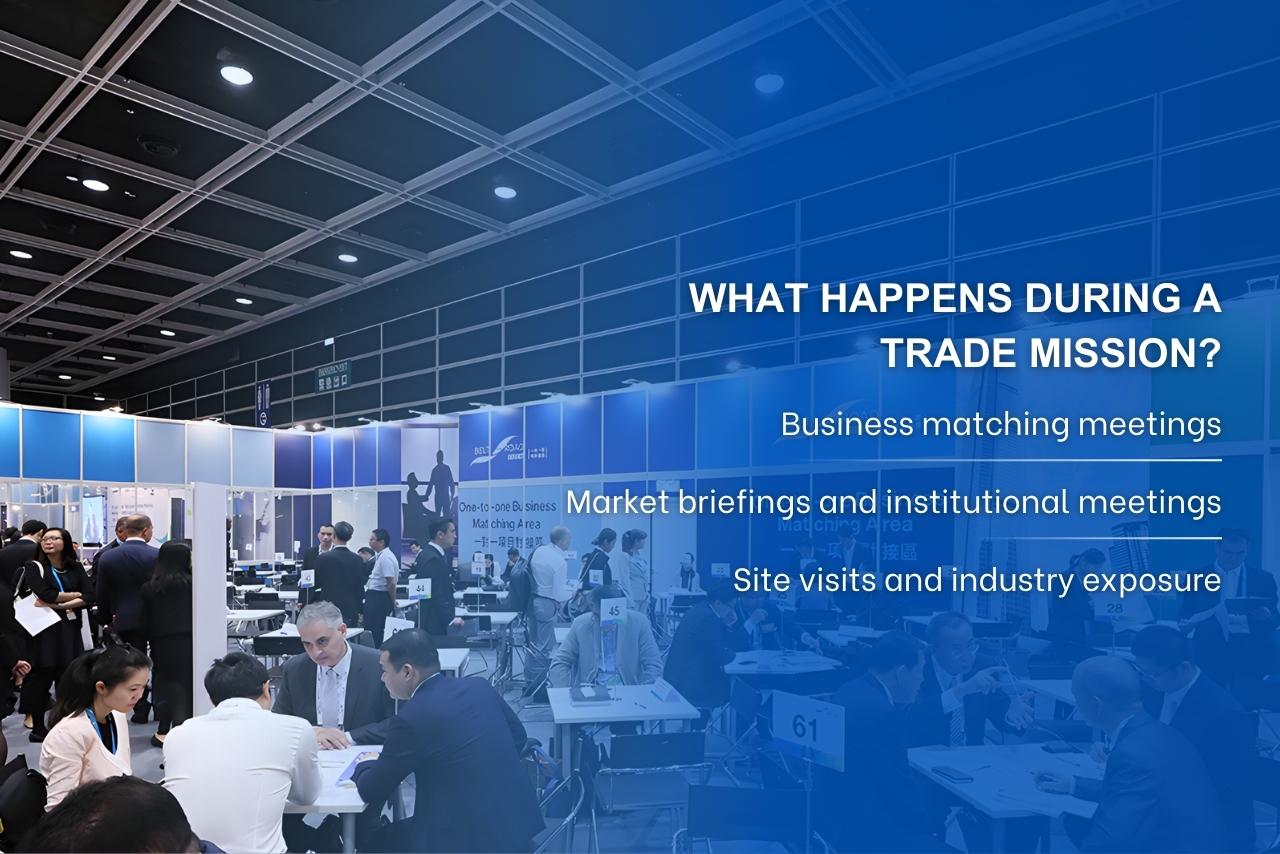
Business matching meetings during a trade mission, connecting companies with partners and distributors
How Trade Missions Are Planned And Executed
Trade missions follow a structured process that combines preparation, on-site meetings, and post-mission follow-up, helping companies use their time effectively and turn initial contacts into concrete business opportunities.
- Preparation before the mission
First, organizers define the mission objectives, select participants, and prepare market briefings. Companies usually review market information, clarify their goals, and prepare company materials before departure. Clear objectives and background research help participants use meetings effectively and identify relevant partners. - Activities during the mission
During the visit, the agenda typically includes B2B meetings, networking sessions, institutional briefings, and selected site visits. These activities allow companies to meet potential partners and understand how the local market operates in practice. - Post-mission follow-up
Finally, companies maintain contact with partners they met, review opportunities identified during the mission, and continue discussions that may lead to partnerships, distribution agreements, or future market entry plans.
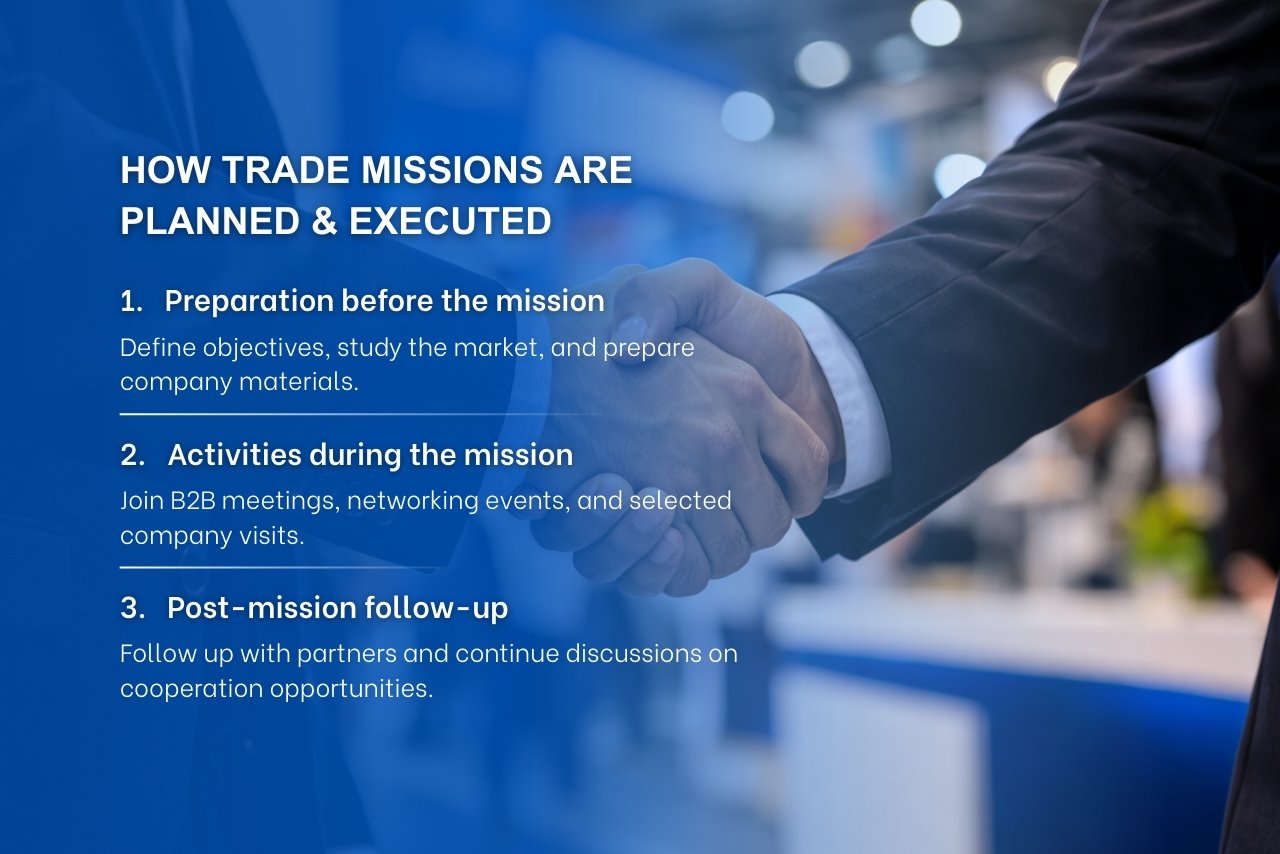
Process of planning and executing a trade mission, including preparation, meetings, and follow-up.
The Role Of Trade Mission Services
Trade mission services help companies structure market visits and engage relevant partners more efficiently. Instead of managing outreach, meeting arrangements, and logistics independently, businesses receive coordinated support. This allows them to focus on evaluating real opportunities in the target market.
In practice, these services typically support companies through several core activities:
- Partner identification: screening potential distributors, suppliers, or industry contacts before the mission.
- Meeting coordination: arranging B2B meetings aligned with company objectives and sector focus.
- Market guidance: providing briefings on regulations, industry structures, and local business practices.
Many trade promotion agencies emphasize that targeted matchmaking and preparation significantly improve the effectiveness of trade missions.
When Should Companies Consider A Trade Mission?
Companies often use trade missions as a structured way to explore new markets and build initial business connections before making deeper commercial or investment commitments.
- Entering a new market
When expanding into a new country, companies often need first-hand insight into the local business environment. Through meetings, briefings, and site visits, firms can better understand demand conditions, regulatory expectations, and industry structure. As a result, decision-makers can evaluate whether the market supports long-term commercial or investment plans. - Searching for distributors or partners
Trade missions also help companies identify potential distributors, suppliers, or collaboration partners. Instead of spending months on outreach, participants meet several relevant companies within a structured program, allowing faster assessment of partner capabilities and market reach.
Final Thoughts
Trade missions offer companies a structured way to explore new markets, meet potential partners, and understand local business conditions before committing deeper resources. By combining targeted meetings, institutional briefings, and industry visits, these programs help businesses evaluate opportunities more efficiently and build initial relationships in unfamiliar markets.
With Source of Asia’s Trade Missions Service, we help businesses prepare structured market visits, identify qualified partners, coordinate B2B meetings, and organize site visits and institutional engagements across ASEAN. Our teams provide coordination before, during, and after the mission, ensuring companies can focus on evaluating opportunities while we manage local execution and follow-up.
If you are planning a trade mission to explore opportunities and connect with partners in ASEAN, you can contact us to discuss a mission aligned with your objectives or learn about the service here.
Explore the key trade fairs in Southeast Asia for 2026
Frequently Asked Questions
Not always. However, trade missions help companies understand market conditions faster by meeting partners, industry stakeholders, and institutions directly during a structured market visit.
Trade missions are most useful for exporters, manufacturers, and companies entering a new market who need direct meetings with distributors, suppliers, or potential business partners.
A trade fair focuses on product exhibition and broad networking, while a trade mission organizes targeted meetings and briefings to help companies explore partnerships and market opportunities.