Introduction
Buying offices play a growing role in how global companies manage sourcing in Vietnam and across Asia. As supply chains become more complex, businesses face pressure around quality, costs, speed, and local compliance. Therefore, clear on-the-ground control has become increasingly important.
In this guide, we – Source of Asia explain the buying office model, why Vietnam attracts global sourcing. We also share practical tips companies use buying offices to manage risk and sourcing complexity.
Key Insights
- A buying office can provide more direct, day-to-day visibility over sourcing activities.
- It works only in buyers’ interest, unlike agents or traders who focus on closing orders. This supports long-term sourcing goals.
- A buying office manages the full sourcing process, from supplier selection to production follow-up and shipment.
- Outsourcing a buying office can shorten market entry timelines compared with building a full local team.
- Local teams improve price negotiation and supplier access because they understand real factory conditions.
- Quality and delivery risks often appear during production. A buying office helps you catch and fix issues early, before costs rise.
Why Vietnam stands out as a sourcing destination today
Vietnam stands out as a sourcing destination because it lets you stay close to production without heavy setup. With clear buying office models, strong FDI flows, and export-ready industries, you can source with more control and fewer surprises.
What a buying office means in Vietnam sourcing context
A buying office is a local team or partner that works for an overseas buyer in Vietnam. It helps manage sourcing and factory relationships so buyers can stay close to suppliers and control quality, cost, and delivery.
It also supports the full sourcing process, from the first order to final shipment, and stays involved in daily factory work to make sure production follows agreed plans and timelines.
Typical activities include:
- Finding and evaluating suppliers
- Negotiating prices and timelines
- Following up on production and orders
- Managing quality checks and shipments
When choosing a sourcing model, it helps to see the differences clearly. These models may look similar, but they work in very different ways:
- Sourcing agents often work on commissions and focus on closing orders.
- Traders buy from factories and resell, which reduces price transparency.
- Inspection firms only check products and do not manage suppliers.
- A buying office works only for the buyer and focuses on long-term supplier control rather than short-term transactions.
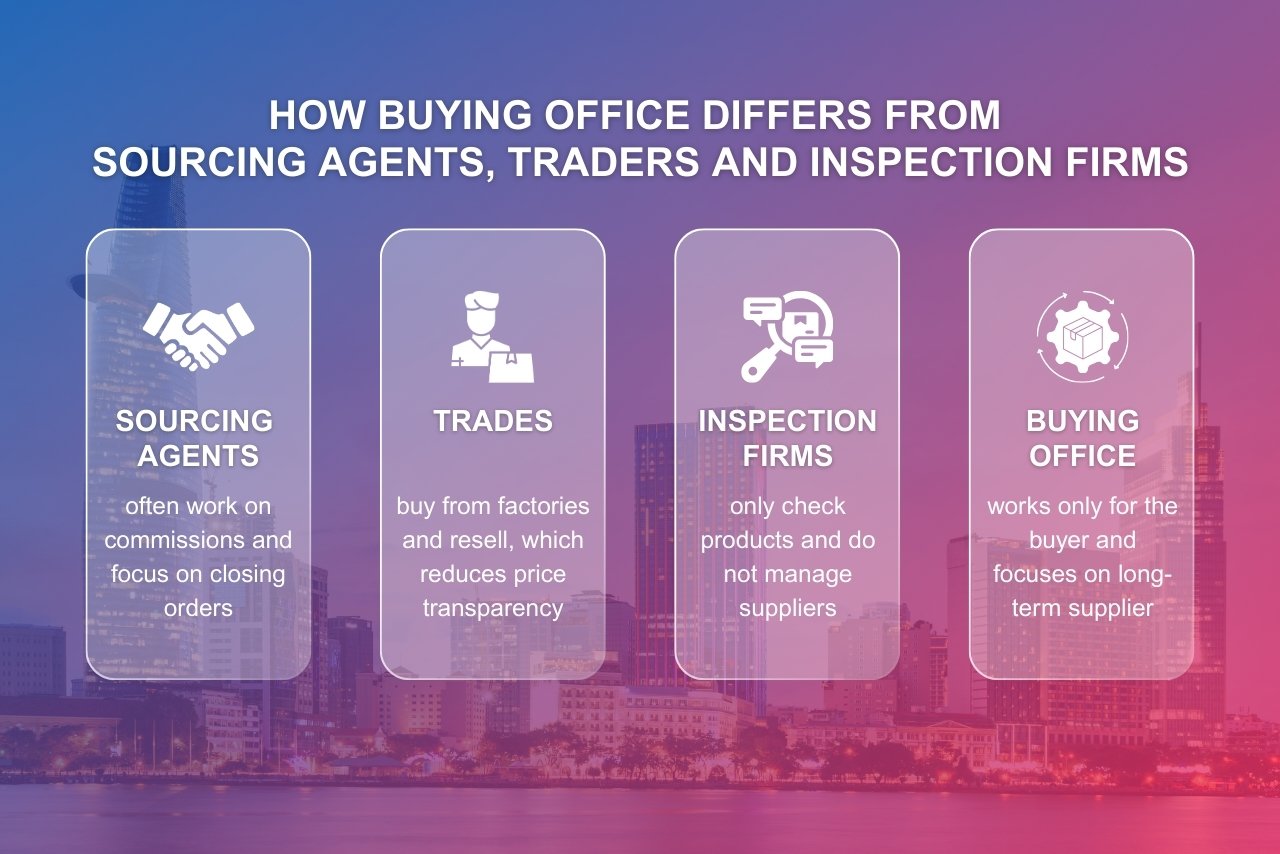
A buying office differs from agents, traders, and inspection firms in role, control, and responsibility
Strong economic growth and FDI trends
When you plan to source a new market, stability is the first thing you should check. Vietnam has shown steady economic growth for many years. This gives you a more predictable base to plan costs and supplier relationships.
That stability is reflected in where global companies invest. Data from Vietnam News shows that, foreign direct investment into Vietnam 2025 exceeded USD 38 billion, with around USD 27.6 billion deployed. Most of this capital went into manufacturing and export-focused industries.
As production capacity improves, sourcing conditions become more reliable. For buyers, this creates better supplier options and smoother operations, making a buying office in Vietnam more manageable to operate and scale over time.
Key industries ready for global buyers
Vietnam has many industries ready to work with international buyers. Many factories already supply global brands. This makes onboarding faster when you enter the market.
Textiles, apparel, and footwear remain strong sectors. Furniture and wood products also perform well, especially for US and EU buyers. These industries offer flexible capacity and competitive pricing.
Electronics, packaging, plastics, and food processing continue to grow. Tracker reports from Vietnam Brief that electronics, computers, and components remain in the top export categories. Quality systems improve each year. With the right local support, you can scale orders while keeping quality under control.
Typical sourcing models
When sourcing in Vietnam, you usually choose between three production models. Each model fits a different business goal. The most common sourcing models are:
- OEM: Factories produce goods based on buyer designs
- ODM: Factories help with design and production
- Private label: Buyers sell products under their own brand
OEM offers the most control, while ODM speeds up development. Private labels work well for fast market entry. The right choice depends on your brand strategy, timeline, and internal resources.
Why companies outsource their buying office in Vietnam
Companies outsource their buying office in Vietnam to stay close to suppliers without building a full local structure. This approach can help reduce fixed costs, improve speed, and strengthen operational oversight while:
Cost savings and faster turn around
When you outsource a buying office, you avoid building a full local team from scratch. Thus, you reduce fixed costs such as hiring, offices, and compliance setup. At the same time, you still operate close to factories.
Because decisions happen on the ground, issues can be identified and addressed more quickly. You get quicker samples, faster quotes, and shorter production cycles. This helps you test suppliers and scale orders without slowing your business.
Stronger negotiation and supplier access
Local buying offices work with factories every day. They know real price levels, capacity limits, and negotiation habits. This helps you avoid overpaying or choosing suppliers that cannot deliver.
More importantly, you gain access to vetted suppliers that may not work directly with overseas buyers. This widens your sourcing options and puts you in a stronger position when comparing offers.
On-the-ground quality and risk control
A buying office checks production while it happens, not after problems arise. Quality issues, delays, or compliance gaps are spotted early and fixed before they grow.
This local control can reduce shipment risks and unexpected costs. As a result, you protect your orders, timelines, and brand reputation as you scale sourcing in Vietnam.
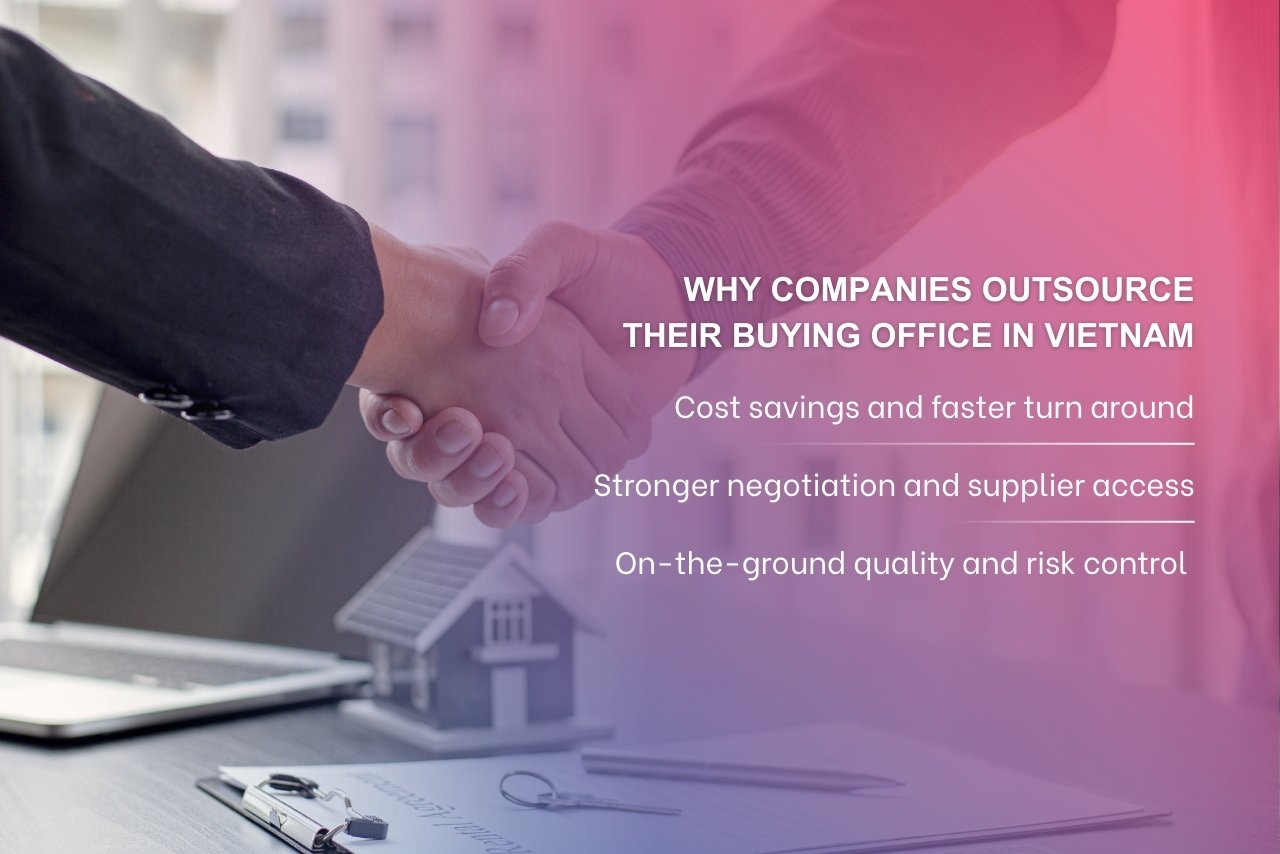
A buying office in Vietnam helps buyers gain control, reduce risk, and improve sourcing results
In-house vs outsourcing buying office: Which fits your business?
Before you choose a model, it helps to pause and look at how you operate today. Your budget, speed needs, and local experience all matter. This quick comparison helps you see when in-house makes sense and when outsourcing is more effective, so you can move forward with fewer risks.
| Aspect | In-house | Outsourcing |
| Market entry stage | Your company already operates in Vietnam | Your company is being entered Vietnam for the first time |
| Order volume | High and stable year-round | Low to medium or still fluctuating |
| Speed to start | You can wait for setup and hiring | You need to start sourcing quickly |
| Cost structure | Fixed long-term costs | Variable, flexible costs |
| Local expertise | You have strong local managers | You lack language and market knowledge |
| Supplier access | You work with a small, stable base | You need wider, pre-vetted suppliers |
| Risk tolerance | Manage compliance and quality control | Shared operational risk |
Use this view to align your sourcing model with your current needs. It helps you see whether to invest in a local team or work with a partner to move faster and stay flexible.
Common challenges when sourcing in Vietnam
Even with strong growth, sourcing in Vietnam comes with practical challenges. Knowing these risks early helps you plan better and avoid costly mistakes.
- Language, culture, and communication gaps: Many factories have limited English skills, especially at the shop-floor level. Different communication styles can also cause misunderstandings about quality standards, timelines, or responsibility.
- Quality control and compliance risks: Factory quality levels vary widely across regions and industries. Without regular checks, issues often appear late, when fixes are expensive or delays are hard to avoid.
- Logistics, payment, and delivery issues: Port congestion, changing regulations, and payment terms can affect delivery schedules. These issues become harder to manage if you work remotely without local support.
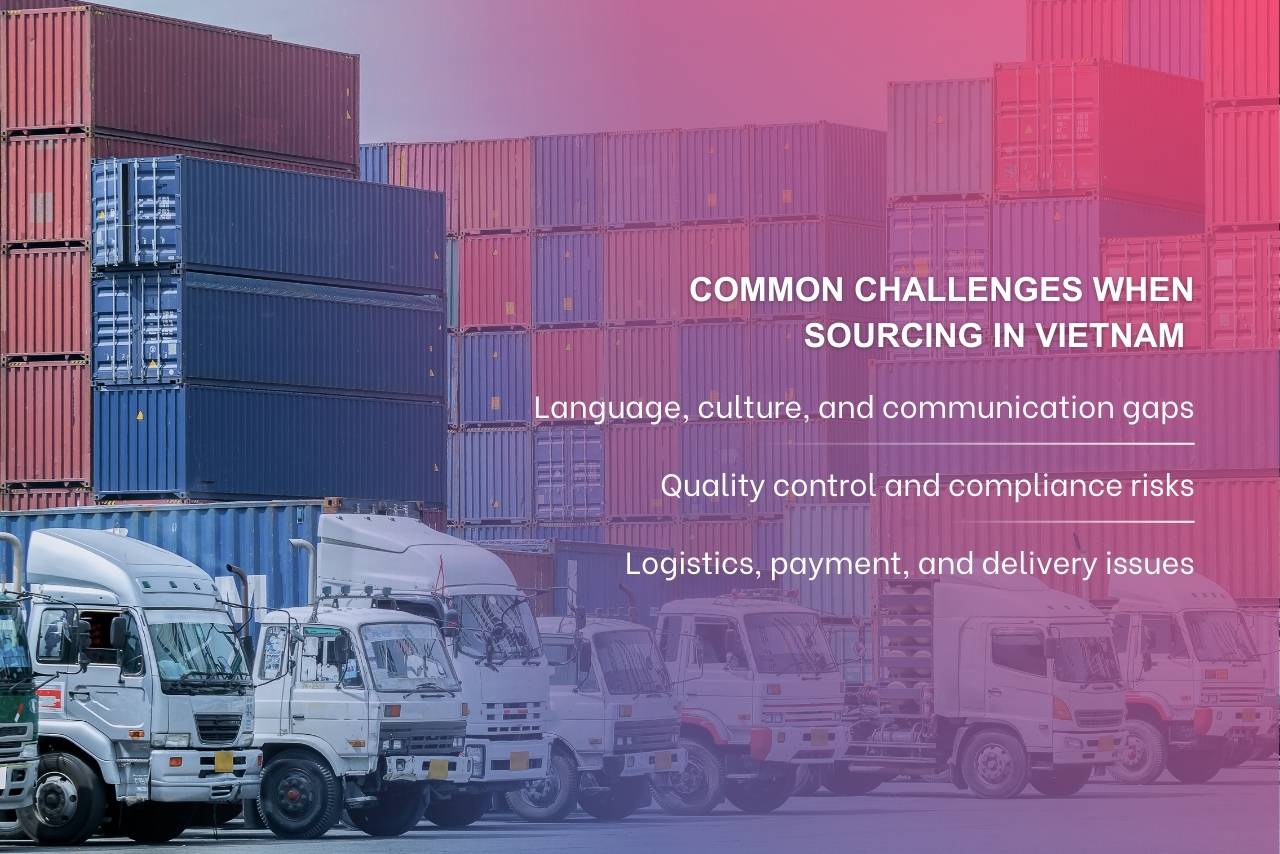
Sourcing in Vietnam involves challenges around communication, quality control, and logistics
Practical tips for successful market entry with a buying office
Entering Vietnam tends to be smoother when control mechanisms are defined early. A buying office helps you move step by step, reduce early risks, and learn about the market while orders stay manageable. Clear scope, simple rules, and local follow-up help you avoid costly mistakes and build a stable sourcing base before you scale.
- Start with a small product range or limited suppliers
- Set clear targets for cost, quality, and delivery time
- Align roles, approval steps, and quality standards early
- Use short, regular reports to track progress
- Scale volume only after first orders run smoothly
Final thoughts
In conclusion, a buying office often marks the transition from initial testing to more structured sourcing in Vietnam. Once you understand the benefits, the next question is how to move forward in a structured way. This is where clear guidance and local execution start to matter.
At Source of Asia, our experts often see that sourcing challenges in Vietnam arise not from lack of opportunity, but from decisions made before teams fully understand how local buying offices operate in practice.
To deepen your preparation, you may also explore further insights from us:
- Renting a Factory in Vietnam: A comprehensive manufacturing sector guide
Or you can reach out to discuss your sourcing context in more detail.
Frequently asked questions
A buying office works only for you. It manages suppliers, quality, and timelines over the long term. A sourcing agent usually works on commission and focuses on closing deals. If you want control and stability, a buying office fits better. If you only need quick orders, an agent may be enough.
Yes, but it depends on the structure. Some buying offices have teams for textiles, furniture, and electronics. Others focus on one sector only. If you plan to source across categories, check out the office industry experience and local network before you move forward.
Not always. You need a legal entity if you build an in-house office. If you outsource, the local partner operates under its own setup. This option lets you start faster and test the market before making long-term commitments.