Introduction
The EU Packaging and Packaging Waste Regulation (PPWR) is changing how businesses approach packaging for the EU market. The rules cover packaging design, materials, recyclability, reuse, and waste reduction, with requirements introduced at different stages.
For SMEs, understanding the new rules is only part of the challenge. Packaging changes may also require adjustments to product specifications, suppliers, costs, lead times, and production plans. This matters especially for companies that source products or packaging from outside the EU.
In this guide, Source of Asia explains the key packaging and packaging waste regulation requirements, what they mean for different industries, and how SMEs can prepare their sourcing and supplier management processes.
Quick Answer
What Does PPWR Mean for SMEs?
The EU Packaging and Packaging Waste Regulation means SMEs selling products in the EU must review how they design, source, document, reuse, recycle, and place packaging on the market. For SMEs sourcing from outside the EU, the PPWR also affects supplier selection because they may need to verify packaging materials, recyclability, PFAS restrictions, empty-space limits, and compliance documentation before products enter the EU market.
 Add Source of Asia as a preferred source on Google
What Is the EU Packaging And Packaging Waste Regulation (PPWR)?
Packaging and Packaging Waste Regulation (PPWR) refers to Regulation (EU) 2025/40, an EU-wide law that sets requirements for packaging and packaging waste. It covers the full lifecycle of packaging, from design and material composition to reuse, recycling, and waste management.
- Timeline: The PPWR entered into force on 11 February 2025 and generally applies from 12 August 2026. Several specific requirements, such as the empty-space limit and single-use plastic bans, are phased in later, through 2030 and beyond.
- Scope: All packaging placed on the EU market, regardless of where it was made.
- Who it affects: Manufacturers, suppliers, importers, distributors, and other economic operators involved in getting packaged goods into the EU.
While these obligations apply broadly, the scope is not entirely uniform across company sizes. According to the European Commission, the regulation applies to all packaging and packaging waste, though micro-enterprises face lighter requirements.
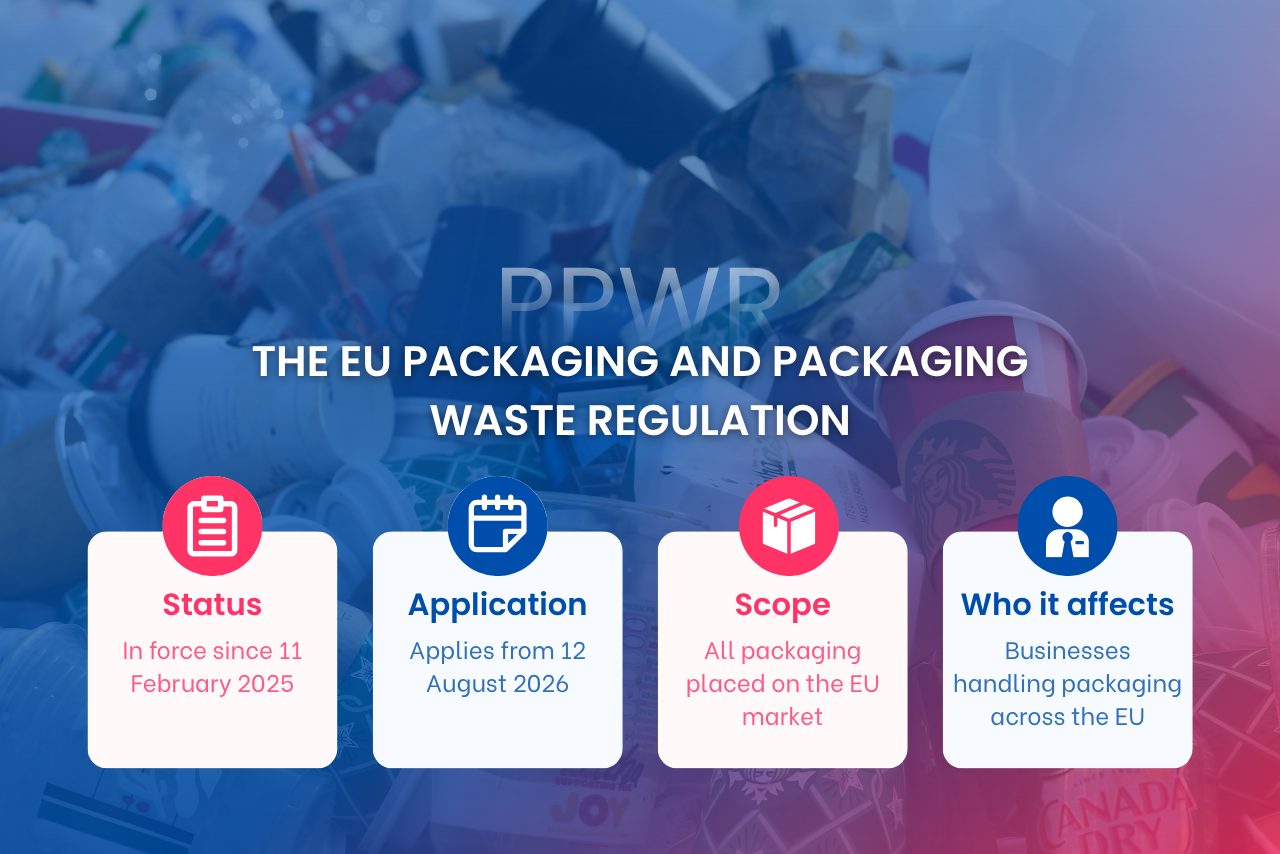
The PPWR sets EU-wide requirements covering packaging design, materials, reuse, recycling, and waste management.
What Will the EU Packaging And Packaging Waste Regulation Change?
PPWR makes packaging a broader business decision. Cost and product protection remain important, but businesses will also need to consider recyclability, material composition, reuse, recycled content, and waste reduction.
Packaging design and recyclability
PPWR introduces design-for-recycling (DfR) requirements for packaging placed on the EU market. From 2030, packaging recyclability will be assessed as Grade A, B, or C, based on a weighted recyclability score: 95% or more for Grade A, 80% for Grade B, and 70% for Grade C. From 2038, Grade C will no longer be allowed on the EU market.
The rules also place greater focus on the packaging structure itself. Materials and components must be suitable for collection, sorting, and recycling, with the regulation specifically considering factors such as component separability, sorting efficiency, and recycling yield. This means complex structures may need to be simplified so packaging can be recycled effectively, not only designed to be recyclable in principle.
Packaging minimization and space limits
The EU Packaging and Packaging Waste Regulation requires businesses to reduce packaging weight and volume to the minimum needed to protect and handle the product. From 2030, or according to the applicable implementing timeline, grouped, transport, and e-commerce packaging must meet a maximum empty-space ratio of 50%, meaning at least half of the packaging volume must be occupied by the product itself, not void fill.
This rule affects three areas of packaging design directly:
- Volume optimization, sizing packaging to fit the product rather than defaulting to standard box sizes.
- Filler reduction, removing reliance on air cushions, bubble wrap, and foam to occupy unused space.
- Logistics efficiency, since smaller, better-fitted packaging lowers shipping volume and material cost.
Restrictions on harmful substances in packaging
The EU now sets stricter limits on harmful chemicals in packaging to protect both food safety and the environment. The biggest change is a strict cap on PFAS in any packaging that touches food directly, when PFAS concentrations meet or exceed the thresholds set under the regulation. Older limits on heavy metals like lead, cadmium, mercury, and chromium still apply too, keeping their total amount in packaging materials very low.
Because of this, suppliers will need stronger visibility over raw materials, technical specifications, and supporting documentation before packaging is approved for EU-bound products. For SMEs, this mainly affects how closely you watch your suppliers. Companies need real material documents, not just a verbal promise that something is safe, and enough visibility into your supply chain to catch it early if a supplier quietly changes a material.
Single-use packaging restrictions
From 1 January 2030, the Packaging and Packaging Waste Regulation (PPWR) restricts certain single-use plastic packaging formats, with specific exemptions by category. This is not a labeling rule that flags non-compliant packaging. It is an outright ban, so no level of quality or design can make these formats acceptable after the deadline. The list includes:
- Packaging for unprocessed fresh fruit and vegetables under 1.5 kg
- On-premises food and drink packaging in hotels, restaurants, and cafés
- Individual condiment, sauce, cream, and sugar portions
- Miniature toiletry packaging in accommodation
- Grouped or multipack shrink film
- Very lightweight plastic bags and airport luggage shrink-wrap
Reuse, refill, and recycled-content requirements
Reuse and recycled-content rules vary by packaging category, but most converge on binding targets by 2030, with stricter goals set for 2040. Beverage packaging and certain transport and sales packaging carry reuse and refill targets, while plastic packaging must meet minimum recycled-content thresholds. Some reuse and refill targets include exemptions or derogations for specific product and packaging categories, such as certain milk products, highly perishable beverages, wine-related categories, spirits, dangerous goods transport packaging, and other defined cases.
Recyclability requirements apply as well. By 2030, only packaging meeting a minimum recyclability threshold can stay on the EU market. Because these targets differ by category and deadline, businesses typically map their packaging portfolio early, before committing to reuse systems or recycled-material suppliers.
Learn more about the Eco-packaging overview in Southeast Asia markets!
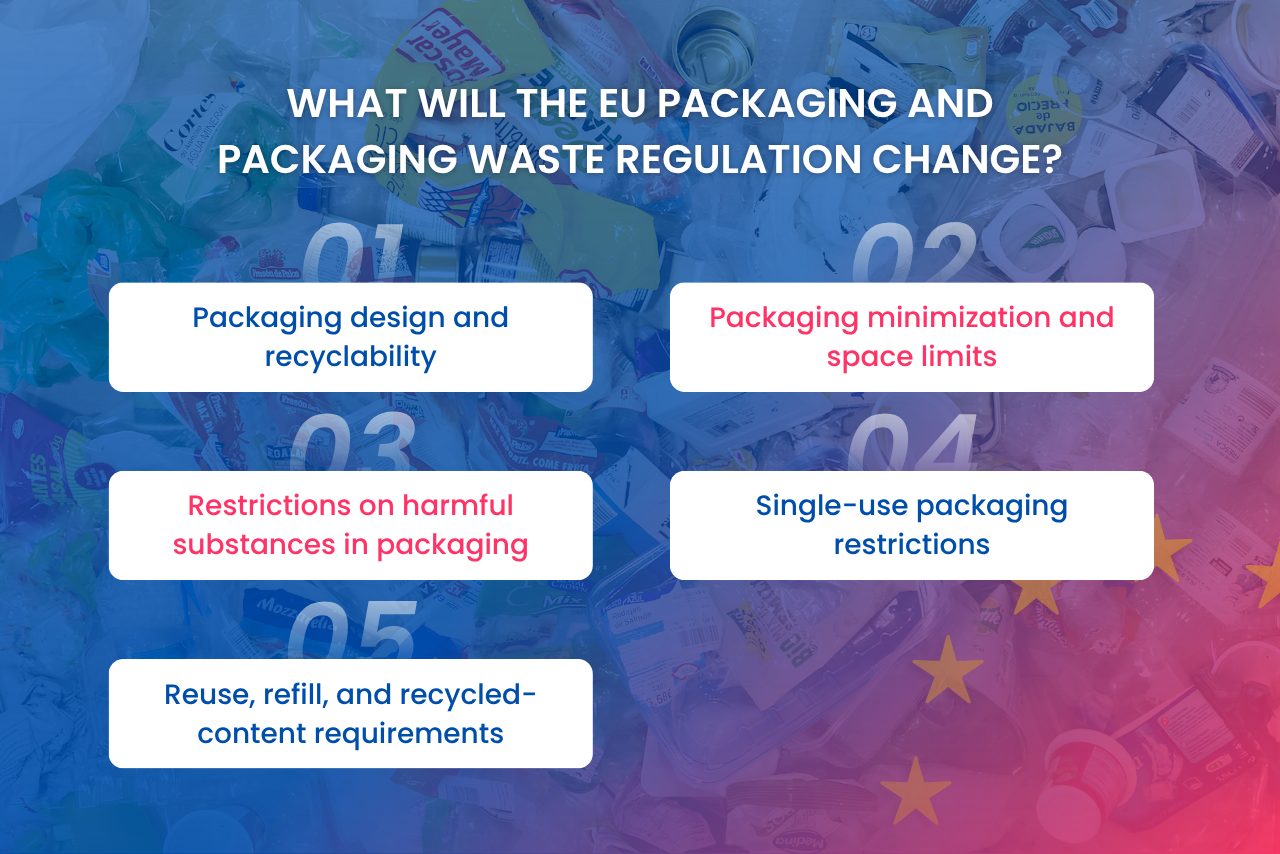
The PPWR changes how businesses approach packaging design, recyclability, material use, waste reduction, and chemical safety.
How Could PPWR Affect Different Industries?
The EU Packaging and Packaging Waste Regulation does not create one universal compliance checklist. Each industry faces a different combination of restrictions, and the exposure often traces back to a specific SKU or packaging format already in use today. For example:
- Food & beverage
Restrictions on certain single-use plastic formats will affect items such as individual sachets for sauces, condiments, and sugar. Takeaway businesses will also need to adjust, since customers may start bringing their own containers rather than relying on single-use packaging by default.
- Hospitality
Hotels and accommodation providers will need to rethink small single-use toiletry packaging, such as miniature shampoo and shower-gel bottles. PPWR restricts these formats directly, so this is a supplier and product-line decision, not a minor packaging tweak.
- Retail & fresh produce
Certain single-use plastic packaging formats will be restricted, including selected individual portions, accommodation-sector toiletry packaging, and some pre-packed fresh fruit and vegetable packaging under 1.5 kg, subject to specific exemptions. Retailers working with fresh produce suppliers should start reviewing which SKUs fall into this category now.
- E-commerce & logistics
The 50% empty-space limit for grouped, transport, and e-commerce packaging will push businesses toward right-sized boxes and less unnecessary filler. This links packaging design directly to logistics efficiency, which means the businesses that act early may actually cut shipping costs while meeting the rule.
- FMCG & consumer goods
Brands will need to factor recyclability, recycled-plastic content, and material safety into packaging decisions from the start. Packaging specifications are becoming increasingly relevant to product sourcing and supplier selection, not just something the design team handles at the end.
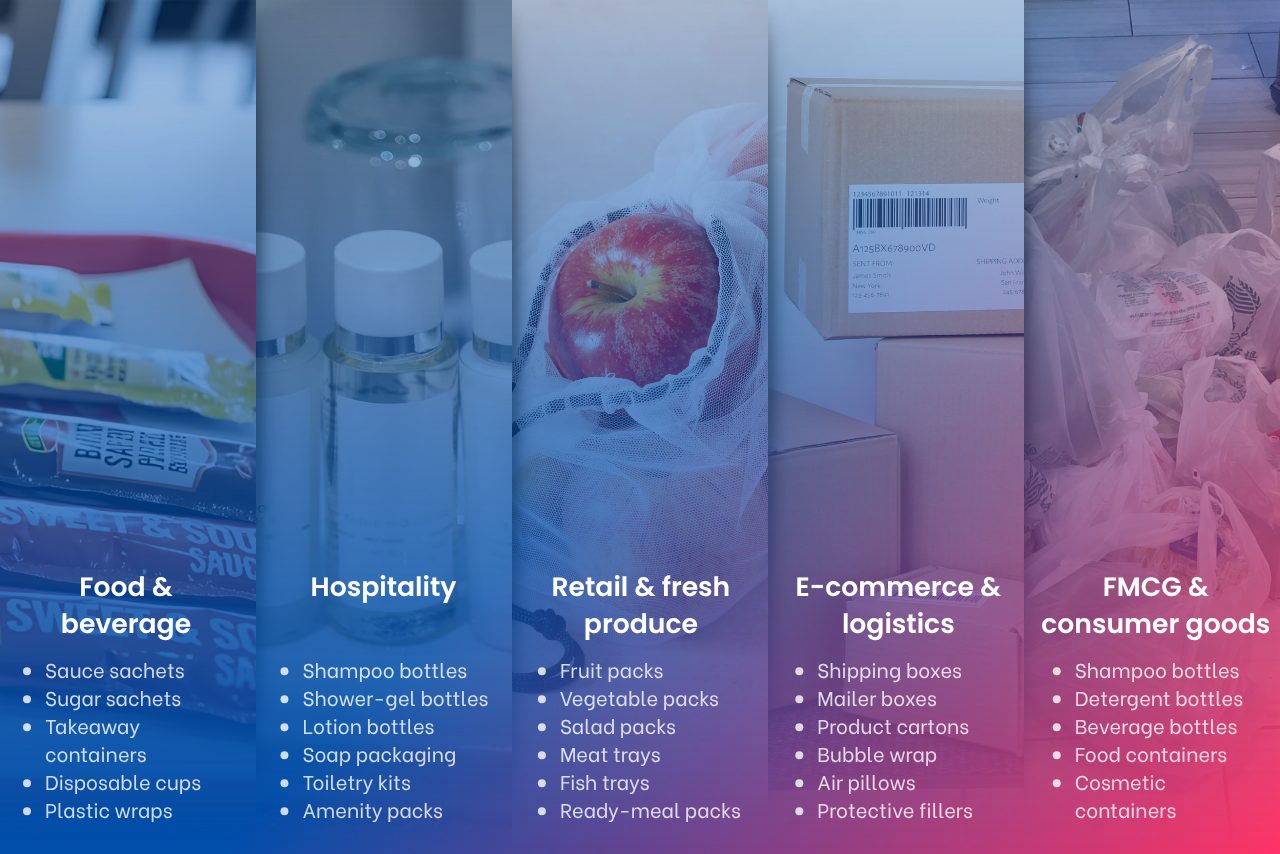
The PPWR affects industries differently, with specific packaging formats facing new restrictions and compliance requirements.
How Does PPWR Affect Sourcing for SMEs?
For SMEs sourcing from Asia or other non-EU markets, the Packaging and Packaging Waste Regulation reshapes sourcing decisions at every stage. Businesses typically face four practical shifts, from supplier scrutiny and material selection to sourcing cost and documentation requirements.
More scrutiny of packaging suppliers
New EU packaging rules require suppliers to provide detailed evidence of what their packaging is made of and how it performs. At the same time, buyers are expected to verify this evidence, not simply accept a supplier’s claim at face value.
Current supplier requirements now include:
- Material composition and technical specifications
- Compliance documentation, such as certificates and test reports
- Traceability records linking materials back to their source
These requirements extend supplier evaluation beyond price, quality, and capacity. Suppliers who can meet them consistently become more valuable long-term partners as EU packaging rules continue to tighten.
Greater focus on compliant materials
A material that passed EU packaging checks two years ago is not guaranteed to pass today. Recyclability, substance restrictions, and recycled-content thresholds now apply at the same time, and a material can satisfy one and still fail another.
The practical fix is to treat material selection as a checklist:
- Does it meet recyclability requirements for its packaging class
- Does it stay under substance restriction thresholds (PFAS, heavy metals, etc)
- Does it include the required share of recycled content, where applicable
- Does it still protect the product and function as intended
However, a material that meets one requirement is not automatically compliant with the others. As a result, simpler packaging structures are gaining traction, since fewer material layers mean fewer checks to fail.
Higher sourcing costs and operational trade-offs
Packaging changes carry real upfront costs, including redesign, testing, tooling, new materials, and supplier requalification. These changes can also shift minimum order quantities, lead time, and production capacity, all of which SME budgets feel quickly.
At the same time, packaging minimization and right-sizing can reduce material use and logistics spend, so total sourcing cost matters more than unit price alone. Because of this, businesses typically weigh compliance capability alongside price before selecting a packaging supplier.
More need for supplier documentation and traceability
PPWR requires documentation as evidence, not the buyer’s assurance that a supplier “said it was fine.” Without paperwork, even fully compliant packaging can be held up at the border simply because it cannot be verified on the spot.
In practice, this means requesting the following from suppliers as a standard part of onboarding, not after an issue comes up.
- Material data sheets
- PFAS declarations or test evidence
- Recyclability assessments
- Certificates of conformity
For SMEs working with several Asian suppliers, this is often the first gap that shows up once they start checking. Most suppliers already have the underlying information. Few have it organized in a form that meets EU documentation standards.
Together, these shifts touch every stage of sourcing, from choosing a supplier to evaluating final cost. The table below summarizes what changes at each step.
| Sourcing Area | Before PPWR | With PPWR |
|---|---|---|
| Supplier selection | Cost, quality, capacity | + Compliance capability |
| Material selection | Cost, functionality | + Recyclability, chemical safety (PFAS-free) |
| Supplier qualification | Production audit, quality control | + Material traceability & certifications |
| Cost evaluation | Unit cost, MOQ | + Redesign, compliance testing, optimized logistics |
How Can Small Businesses Prepare for PPWR Through Better Sourcing Readiness?
Getting ready for the EU Packaging and Packaging Waste Regulation does not require a full overhaul on day one. A structured review, done in stages, closes that gap well before it becomes a costly one.
Map packaging exposure
List every packaging format currently in use, from primary to transport packaging, and flag anything touching food, plastics, or single-use materials. This step alone usually surfaces more exposure than expected, especially across product lines added over several years without a packaging review.
Check requirements and timelines
Match each packaging type against its applicable PPWR requirement and effective date, since obligations apply on different schedules. Some PPWR requirements start applying from 12 August 2026, while major measures such as empty-space limits, certain single-use packaging restrictions, and several reuse or recycled-content targets apply from 2030 or later. This gap between deadlines determines what needs action now versus what can wait.
Prioritize high-risk formats
Address packaging covered by the 2030 single-use bans or PFAS restrictions first, since these carry the highest risk of a shipment being blocked outright rather than flagged for correction. Formats needing only minor design adjustments can follow once high-exposure items are cleared.
Engage suppliers early
Ask current suppliers what they can document today, including material specifications, compliance certificates, and recyclability data, and where the gaps sit. Starting this conversation early leaves time to close gaps or requalify a supplier before a shipment is already scheduled.
Build PPWR into future sourcing and RFQs
Add compliance documentation as a standard requirement in new supplier requests, alongside price, quality, and lead time. This evaluates new suppliers against EU requirements from the start, before any commercial commitment.
For categories involving wood, paper-based materials, furniture, or certified supply chains, supplier documentation and traceability can also support broader responsible sourcing requirements.
For example, Source of Asia’s FSC™ certification for furniture sourcing shows how certified sourcing processes help buyers work with more transparent, traceable supply chains.
Work with sourcing partners to qualify suitable suppliers
A sourcing partner can help identify suppliers that meet product requirements while supporting EU market expectations for packaging, materials, and documentation. This is often where SMEs make the fastest progress, since it turns a compliance question into a practical sourcing task.
Source of Asia supports companies sourcing from Southeast Asia by helping them assess supplier capabilities, qualify suitable partners, and build sourcing strategies aligned with export market requirements. For businesses preparing for PPWR, this support can help connect regulatory awareness with practical supplier selection and sourcing execution.
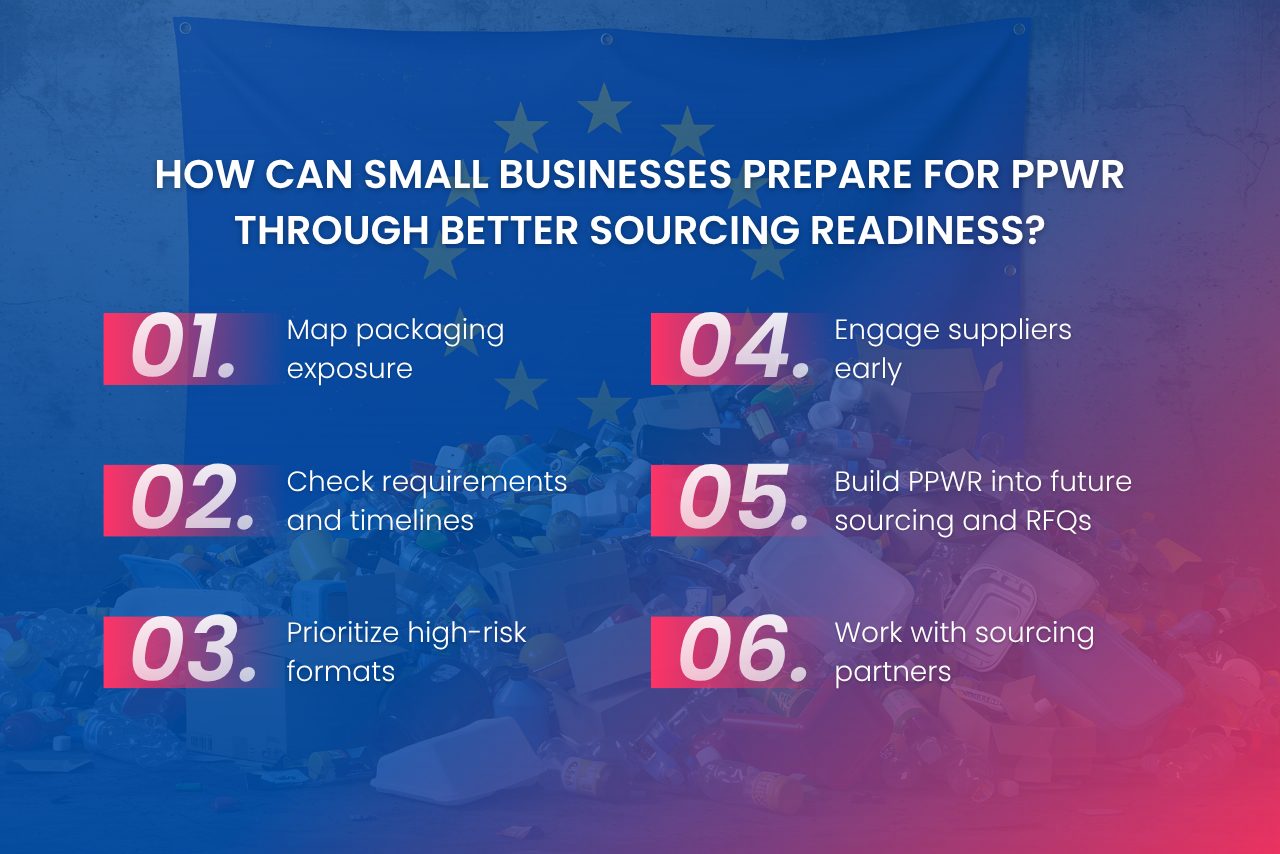
SMEs can prepare for PPWR by reviewing packaging exposure, supplier capabilities, documentation, and sourcing requirements.
Final Thoughts
The Packaging and Packaging Waste Regulation will affect packaging design, materials, and sourcing decisions across nearly every industry selling into the EU. For SMEs, early preparation matters more than perfect preparation. The businesses that start mapping their packaging and talking to suppliers now will have far more room to adjust than those that wait for a deadline to force their hand.
👉 Planning to source from Southeast Asia for the EU market? Talk to our team about your sourcing needs.
Frequently Asked Questions
PPWR is Regulation (EU) 2025/40, an EU-wide law that sets requirements for packaging design, recyclability, reuse, and waste management. It replaces the previous Packaging and Packaging Waste Directive and applies directly across all EU Member States from 12 August 2026.
PPWR applies to manufacturers, suppliers, importers, distributors, and other economic operators who place packaging or packaged products on the EU market, whether they are based inside or outside the EU.
From 2030, PPWR bans certain single-use plastic packaging formats, including packaging for fresh fruit and vegetables under 1.5 kg, individual condiment portions in HORECA settings, hotel toiletry miniatures, and single-use grouped packaging such as shrink film around multipacks.
SMEs should request the following from every packaging supplier.
- Material specifications
- PFAS-free declarations
- Recyclability information
- Recycled-content data
- Any available compliance documentation
If a supplier cannot provide this information, treat it as a sourcing risk rather than a minor gap.
Yes. Any business placing packaging or packaged products on the EU market must meet PPWR requirements, regardless of where the company or its suppliers are based. This is why sourcing decisions made in Asia directly affect EU market access.