Introduction
Successfully doing business across Southeast Asia depends on more than market knowledge, pricing, or a strong product. Business culture in Southeast Asia can shape how quickly you build trust, reach decision-makers, and move from discussion to agreement.
Differences in hierarchy, communication, and relationship-building can create friction. A negotiation approach that works in Singapore may not work the same way in Vietnam or Thailand. Likewise, understanding business culture in Asia/SEA does not mean applying one regional rule to every country.
This guide covers practical business etiquette in Southeast Asia, from greetings and meetings to dining, negotiation, and follow-up. We also explain what foreign companies can expect across key markets and how to adapt while keeping business discussions clear and focused.
Key Insights
- Business etiquette in Southeast Asia is a practical factor in negotiation, decision-making, partner trust, and market entry execution.
- Hierarchy can determine who influences discussions, approves proposals, and makes final business decisions.
- Trust-building can affect when counterparts are ready to discuss pricing, contracts, and long-term commitments.
- Clear follow-up separates agreements, open issues, responsibilities, timelines, and required internal approvals.
 Add Source of Asia as a preferred source on Google
Essential Business Etiquette In Southeast Asia
Business culture in Southeast Asia varies across markets, industries, and business settings. Regional patterns around respect, hierarchy, relationships, and communication provide a useful starting point. However, these expectations can differ significantly between countries and individual business contexts.
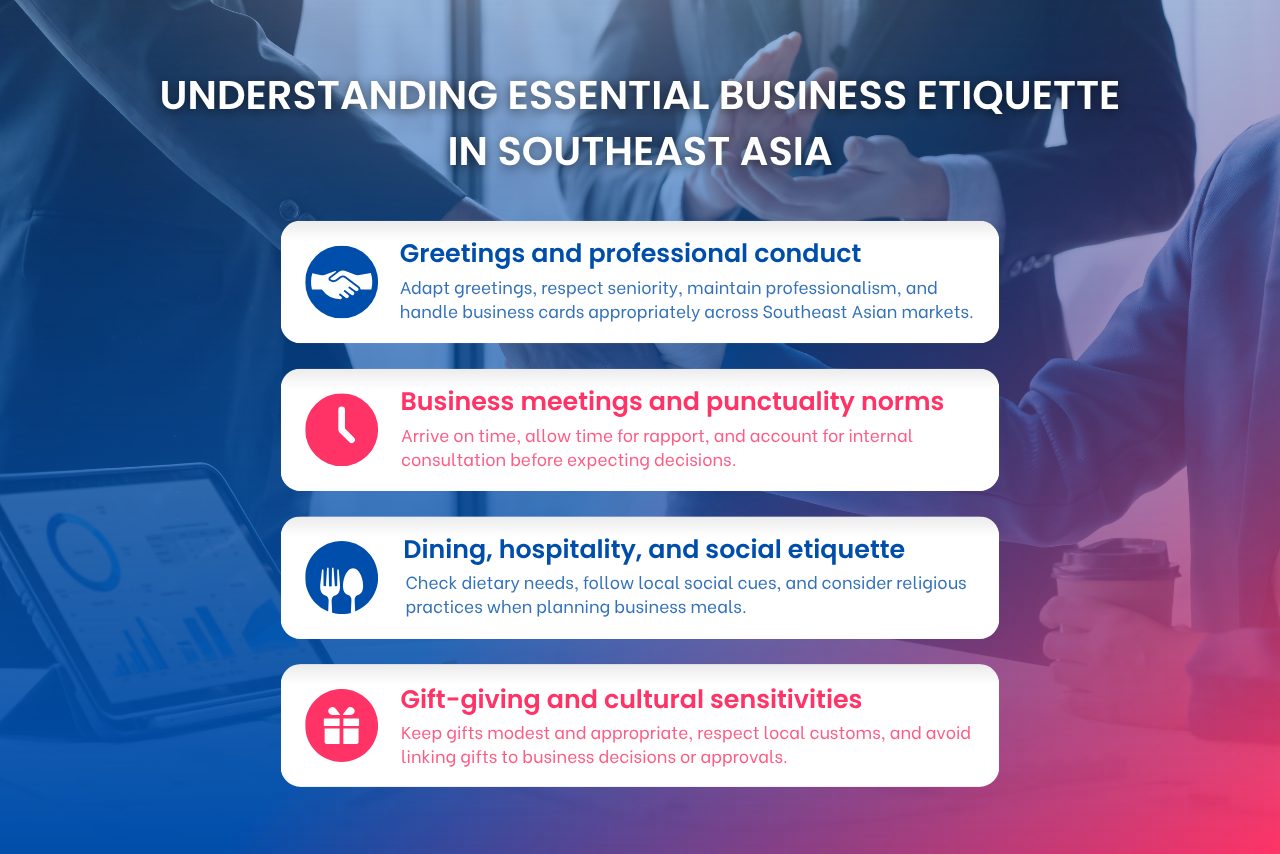
Business etiquette in Southeast Asia covers greetings, professional conduct, meetings, punctuality, dining, hospitality, and cultural sensitivities.
Greetings and professional conduct
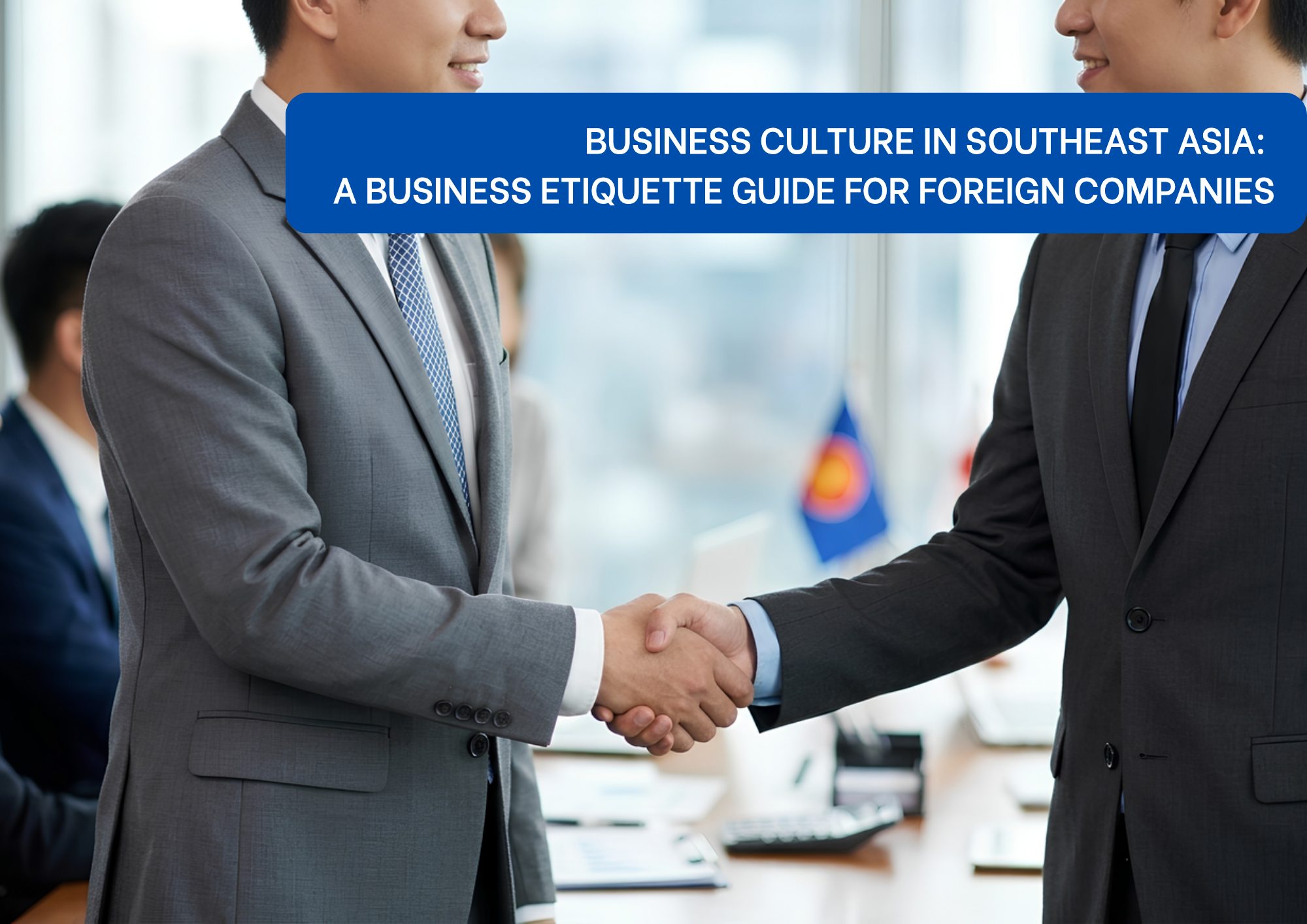
First interactions can influence how local counterparts assess your professionalism and credibility. The safest approach is to adapt to the context rather than apply one greeting style across ASEAN.
- Greeting customs: Differences by country, religion, and setting. You may encounter a handshake, wai, or a hand placed over the chest. When unsure, observe first and follow the local lead.
- Respect seniority: In hierarchical markets such as Vietnam, seniority matters in introductions and meetings. Acknowledge senior stakeholders first and use the title they provide.
- Professional demeanor: Dress appropriately, remain calm and respectful, and adjust your level of directness to the local context.
- Exchange business cards: Receive the card with both hands, take a moment to read the name and position carefully, and keep it accessible during the meeting rather than putting it away immediately.
These details are simple, but getting them right can reduce friction before substantive business discussions begin.
Business meetings and punctuality norms
Business culture in Southeast Asia can shape meeting expectations, so foreign companies should balance punctuality with local meeting rhythms.
- Arrive on time: Punctuality is especially important in Singapore. In Vietnam, Thailand, or Indonesia, meeting flow and decision timelines may require more flexibility, but arriving on time still shows respect and preparation.
- Allow time for rapport: A meeting may start with a brief conversation about the trip, local context, or general topics before business begins. Treat this as part of relationship-building rather than unnecessary delay.
- Build in time for consultation: Senior stakeholders may need time to discuss issues internally before a decision moves forward. Leave reasonable time between meetings and avoid pushing for immediate decisions.
Dining, hospitality, and social etiquette
When arranging a business meal, small planning decisions can affect whether your counterpart feels comfortable and respected. Consider the following:
- Check dietary requirements: In Malaysia and Indonesia, halal requirements can affect restaurant selection, while Ramadan and prayer times may affect scheduling. Confirm dietary or religious requirements in advance, especially when hosting clients or partners.
- Follow social cues: During meals and informal gatherings, follow your counterpart’s lead on seating, food, drinks, and conversation. Allow time for rapport before moving into detailed commercial topics, and do not assume alcohol or informal behavior is appropriate for everyone.
Gift-giving and cultural sensitivities
Business gifts can support relationship-building, but the right choice depends on the local context. Keep gifts modest and thoughtful, and consider local customs, religious sensitivities, timing, and your counterpart’s corporate gift policy. A simple, appropriate gift is usually safer than something expensive or highly personal.
Keep relationship-building separate from business decisions. A gift should not be linked to a tender, purchase, approval, or negotiation. If your company or the recipient has strict gift policies, check them before giving anything to avoid compliance or anti-bribery concerns.
How Business Etiquette Affects Negotiation and Decision-Making
Business etiquette in Southeast Asia can directly affect deal speed, stakeholder alignment, and the reliability of negotiation signals. Small differences in communication and hierarchy can lead to incorrect assumptions if they are not considered during the process.
Trust-building shapes how negotiations move forward
A new partner may want to understand the company and its intentions before discussing sensitive commercial terms. Do not force pricing or contract discussions too early. Use initial meetings to establish credibility, understand the partner’s priorities, and assess whether both sides are suited for a longer-term relationship.
Hierarchy influences who speaks, approves, and decides
The person presenting a proposal may not control the final decision. In some organizations, a local contact may manage the discussion while senior management reviews the commercial terms later. Map the decision path early to avoid confusing a productive meeting with actual approval:
- Who manages the project and coordinates internally?
- Who assesses the proposal?
- Who supports the proposal internally?
- Who makes the final decision?
Use this map to set realistic timelines and involve the right stakeholders. If internal approval is required, allow time for consultation before expecting a decision.
Polite responses do not always mean agreement
A counterpart may respond positively while still needing internal discussion. According to Cultural Atlas, Thai communication often avoids direct refusals, so polite acknowledgement does not always indicate agreement. Confirm what has been agreed, what remains open, and what requires further approval before moving forward. This is especially important before changing pricing, allocating resources, or preparing contracts.
Saving face can affect how concerns are communicated
A counterpart may avoid openly challenging a proposal in front of colleagues or senior managers. Move sensitive discussions to a private setting when appropriate and watch for indirect signs such as repeated questions, delayed responses, or requests to revisit a point. This can uncover concerns before they slow the deal.
| 👉 Explore how cultural misalignment in ASEAN can impact business operations. |
How to Follow Up After Meetings and Avoid Misunderstandings
A productive meeting can still lead to different expectations if decisions and responsibilities remain unclear. Business culture in Southeast Asia makes structured follow-up especially important, as internal consultation and approval processes can vary across markets.
- Confirm discussion outcomes: Record what was agreed, what remains open, and what still requires internal approval. This prevents unresolved points from being treated as final decisions.
- Distinguish interest from commitment: Separate initial interest, commercial alignment, agreement in principle, formal approval, and signed commitment. This helps avoid committing resources before the deal is actually approved.
- Clarify next steps: State who will provide information, review a proposal, arrange a meeting, or make an introduction. Include a realistic timeline for each action.
- Maintain consistent communication: Follow up when needed, but allow time for internal consultation or senior approval. Consistent communication keeps momentum without creating unnecessary pressure.
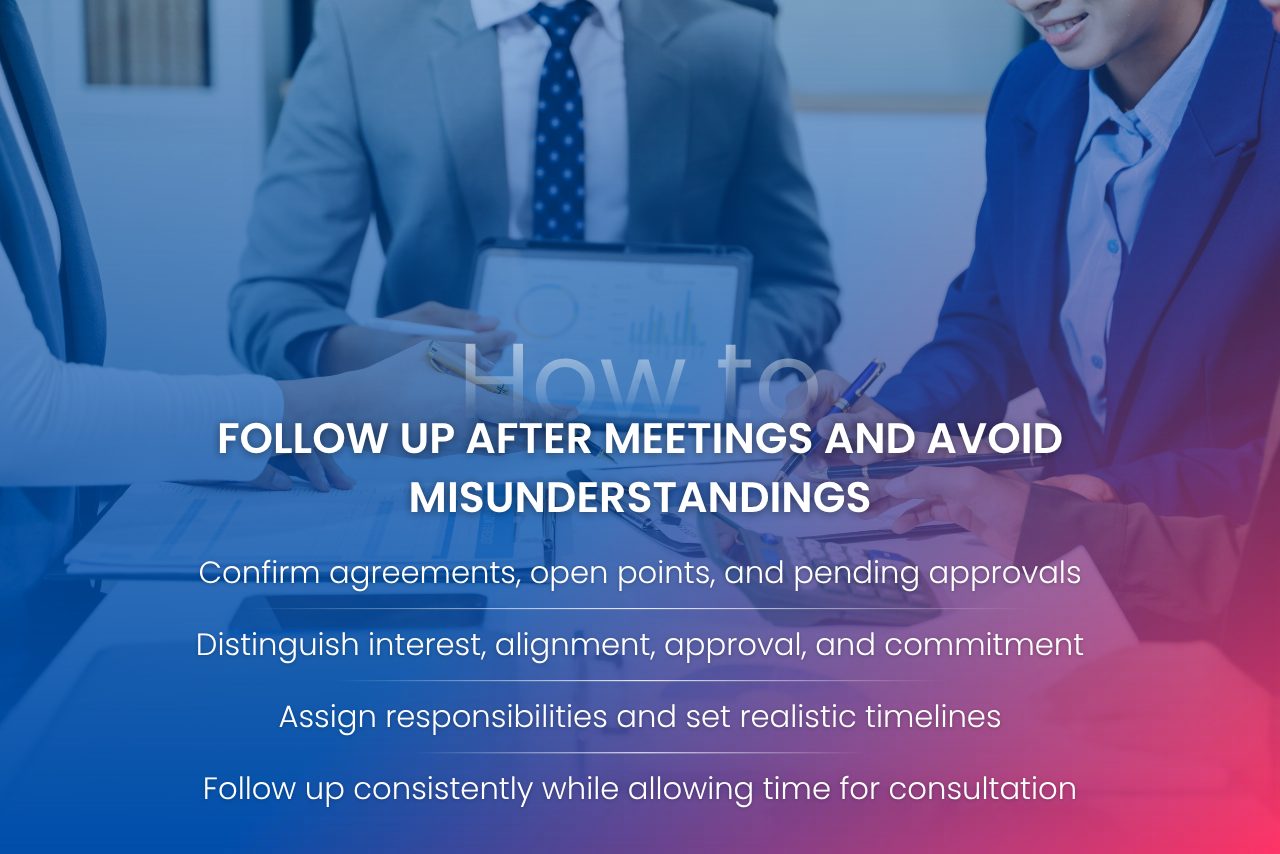
Structured follow-up helps foreign companies confirm decisions, clarify responsibilities, and maintain clear communication.
Business Etiquette Cheat Sheet by Southeast Asian Market
Business culture in Southeast Asia is not uniform. Each market has its own expectations around communication, hierarchy, relationships, and decision-making, which can affect how business interactions unfold.
Malaysia
Malaysia’s multicultural business environment means etiquette can vary depending on the people, company, and setting. Cultural and religious awareness becomes important when planning meetings and building local relationships.
- Multicultural etiquette: Business practices can vary across Malay, Chinese, Indian, and other business communities. Avoid assuming one communication or social style applies to every counterpart.
- Religious considerations: Check halal requirements, Ramadan schedules, prayer times, and alcohol preferences when planning meetings, meals, or events.
- Hierarchy: Use appropriate titles and formal introductions, particularly when meeting senior stakeholders. Recognize seniority when addressing participants and structuring discussions.
| 👉 See our practical guide to Business Culture in Malaysia for key etiquette, communication, and relationship-building insights. |
Singapore
Singapore has a structured and efficiency-focused business culture. Foreign companies should expect clear agendas, prepared counterparts, and a strong focus on decisions and deliverables.
- Punctuality and efficiency: Arrive on time with the data, agenda, and decisions needed. Meetings often move quickly toward specific outcomes.
- Communication: Be clear about proposals, pricing, timelines, and responsibilities. Specific questions and answers reduce ambiguity.
- Professionalism: Follow through on agreed actions and provide accurate information. Missed deadlines can weaken confidence in execution.
Thailand
Thailand has a respectful and harmony-focused business culture. Seniority and social conduct can influence how meetings develop, especially when discussing sensitive issues.
- Hierarchy & respect: Address senior stakeholders appropriately and avoid challenging their position publicly. Seniority can shape meeting roles and how decisions are communicated.
- Saving face: Raise criticism or disagreement privately where possible. Public confrontation can make it harder to resolve issues and maintain the relationship.
- Use appropriate greetings: The wai remains relevant in formal settings, particularly when showing respect to senior counterparts. Observe local cues and follow the setting.
Vietnam
Vietnam has a hierarchical and relationship-driven business culture. Seniority and trust can shape who influences decisions and how quickly commercial discussions progress.
- Respect seniority: Identify senior stakeholders early and address them appropriately. Their role may carry significant weight in meetings and final approvals.
- Communicate with care: Disagreement may be expressed indirectly, particularly around sensitive issues. Clarify concerns rather than treating polite responses as agreement.
- Build trust before terms: New partners may want to establish credibility before discussing detailed pricing, contracts, or long-term commitments.
| 👉 For a deeper look at working with Vietnamese counterparts, explore our guides about Vietnam Cultural Etiquette and Vietnam Business Culture. |
Indonesia
Indonesia has a relationship-oriented and hierarchical business culture. Personal rapport, religious considerations, and internal consultation can affect how commercial discussions progress.
- Build rapport first: Allow time for personal introductions and relationship-building before moving into detailed commercial terms. A transactional approach may feel premature with new counterparts.
- Plan around religion: Consider halal requirements, Ramadan schedules, prayer times, and alcohol preferences when arranging meetings, meals, or business events.
- Allow time for decisions: Respect seniority and expect consultation before major commitments. Avoid treating a positive meeting as immediate approval.
Philippines
The Philippines has a relationship-oriented and English-speaking business environment. Communication may feel familiar to foreign companies, but tone, rapport, and hierarchy still influence business interactions.
- Build personal rapport: Take time for informal conversation and relationship-building, especially with new partners. Trust can support smoother commercial discussions.
- Read communication context: English is widely used in business, but indirect cues, tone, and politeness still matter. Confirm important points rather than relying on wording alone.
- Respect seniority: Identify senior participants and use appropriate titles during introductions and meetings. Decision authority may sit above the person leading day-to-day discussions.
Business etiquette in Southeast Asia can vary significantly across markets. To make these differences easier to compare, the table below highlights what to expect, how to adapt, and common mistakes to avoid.
| Market* | What to expect | How to adapt | Common mistake |
|---|---|---|---|
| Singapore | Structured, punctual, efficient, business-focused | Be prepared, concise, and clear on next steps | Being too vague or unprepared |
| Malaysia | Multicultural, hierarchical, sensitive to religious context | Respect titles, halal practices, Ramadan, and formal introductions | Assuming one cultural norm applies to all counterparts |
| Vietnam | Relationship-oriented, hierarchical, often indirect on disagreement | Respect seniority, build trust, confirm decisions in writing | Treating positive discussion as final approval |
| Thailand | Harmony, respect, saving face, careful communication | Stay composed, avoid pressure, handle disagreement privately | Public criticism or aggressive negotiation |
| Indonesia | Relationship-first, hierarchical, patient decision process | Allow time for rapport, consultation, and religious considerations | Pushing too fast for commitment |
| Philippines | Warm, relationship-oriented, English-friendly but context-sensitive | Combine professionalism with personal rapport and clear follow-up | Assuming English fluency removes cultural nuance |
*The six markets above provide a practical reference and do not represent all Southeast Asian markets.
Common Etiquette Mistakes Foreign Companies Should Avoid
Many etiquette mistakes come from applying the same approach across different Southeast Asian markets. Business culture in Asia/SEA varies by country, company, and context, so watch for these common mistakes:
- Treating Southeast Asia as one business culture: Expectations around hierarchy, communication, and relationship-building differ across markets. A regional strategy still needs local adaptation.
- Applying the same negotiation style: A fast, direct approach may work in Singapore but feel too aggressive in Indonesia or Thailand. Adjust the pace and communication style to the market.
- Rushing trust-building: Moving straight into pricing or contract terms can make early discussions feel purely transactional. Allow enough time to establish credibility with new counterparts.
- Mistaking politeness for agreement: A positive response may indicate interest rather than approval. Confirm what has actually been agreed before moving forward.
- Ignoring hierarchy and informal influence: The person leading the discussion may not make the final decision. Identify senior stakeholders and others who influence the process.
- Following up too vaguely: A general message can leave responsibilities unclear. Confirm decisions, open points, owners, and next steps after important meetings.
Understanding these mistakes in ASEAN business culture helps foreign companies reduce friction and make more realistic decisions when entering the market.
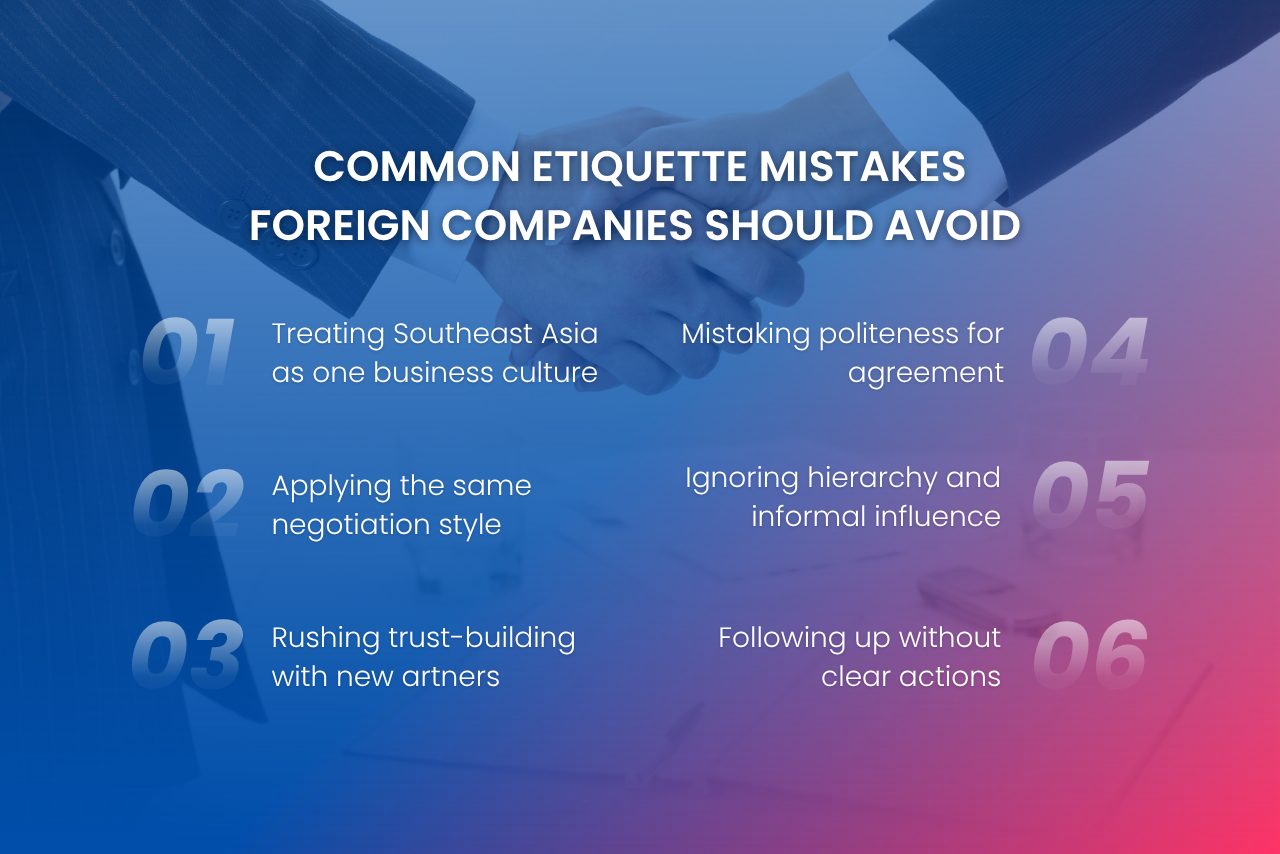
Foreign companies should avoid common etiquette mistakes involving cultural differences, negotiation styles, trust-building, hierarchy, and follow-up.
Business Etiquette Checklist For Foreign Companies
The same meeting approach can produce different results across Southeast Asia. A Business Etiquette in Southeast Asia checklist helps account for local expectations while keeping communication and decision-making clear.
- Before meeting local counterparts
Good preparation means understanding both the people involved and the local context. This reduces avoidable friction before the commercial discussion begins and helps set realistic expectations for the meeting.
- Check seniority, titles, and introductions.
- Identify decision-makers and key influencers.
- Review religious, dietary, and scheduling requirements.
- Match the expected level of formality to the market.
- During business interactions
Observe how counterparts greet, address senior colleagues, and express disagreement before choosing a communication style. Allow time for introductions and rapport, particularly with new partners. In social settings, follow local cues around food, drinks, and conversation. If a response sounds positive but remains vague, clarify what still needs discussion or approval before moving ahead.
- After meetings and negotiations
A clear follow-up turns discussion into defined actions and reduces the risk of different interpretations. This becomes especially important when decisions require internal consultation or senior approval before the commercial process can move forward.
- Separate agreed points from open issues.
- Confirm responsibilities and realistic timelines.
- Record items requiring internal approval.
- Verify formal commitment before proceeding.
Final Thoughts
Business culture in Southeast Asia goes beyond greetings and manners. Differences in hierarchy, communication, relationship-building, and religious considerations can affect trust, negotiation signals, decision-making, and follow-up. The practical approach is to use regional patterns as a starting point, then adapt to each market, company, and counterpart.
However, etiquette is only one part of successful expansion in Southeast Asia. Companies also need to assess market entry options, local partners, regulatory conditions, and execution risks before committing resources.
For a broader view of regional expansion, read our guide on Doing Business in Southeast Asia.
Frequently Asked Questions
Business etiquette in Southeast Asia covers the expected ways of communicating, building relationships, conducting meetings, showing respect, and handling negotiations. It helps foreign companies interact appropriately with local counterparts and reduce misunderstandings.
No, it isn’t. Expectations around hierarchy, communication, relationships, punctuality, and decision-making differ by country, company, and context. Regional patterns provide a starting point, but business interactions should be adapted to each market.
Foreign companies should avoid:
- Treating Southeast Asia as one market
- Rushing relationship-building
- Ignoring hierarchy
- Assuming politeness means agreement
- Using the same negotiation style everywhere