Introduction
Vietnam’s foreign direct investment market has accelerated sharply in 2026, with Singapore FDI in Vietnam remaining at the center of the story. During the first eight months of the year, Vietnam attracted more than US$40.63 billion in registered foreign investment, up 55.4% year on year. Singapore ranked first among sources of newly registered capital, while manufacturing and processing remained the country’s largest destination for new investment.
For a practical view of Vietnam market entry and local execution, explore Source of Asia.
The numbers matter more than the headline. They show that Vietnam continues to attract large-scale international capital while industrial infrastructure, supply chains and investment locations remain important parts of the country’s growth story.
For companies considering Vietnam in 2026, the question is therefore no longer simply whether Vietnam is attracting FDI. It is where investment is going, why Singapore is playing such a large role, and what investors should understand before choosing a location.
Quick Recap
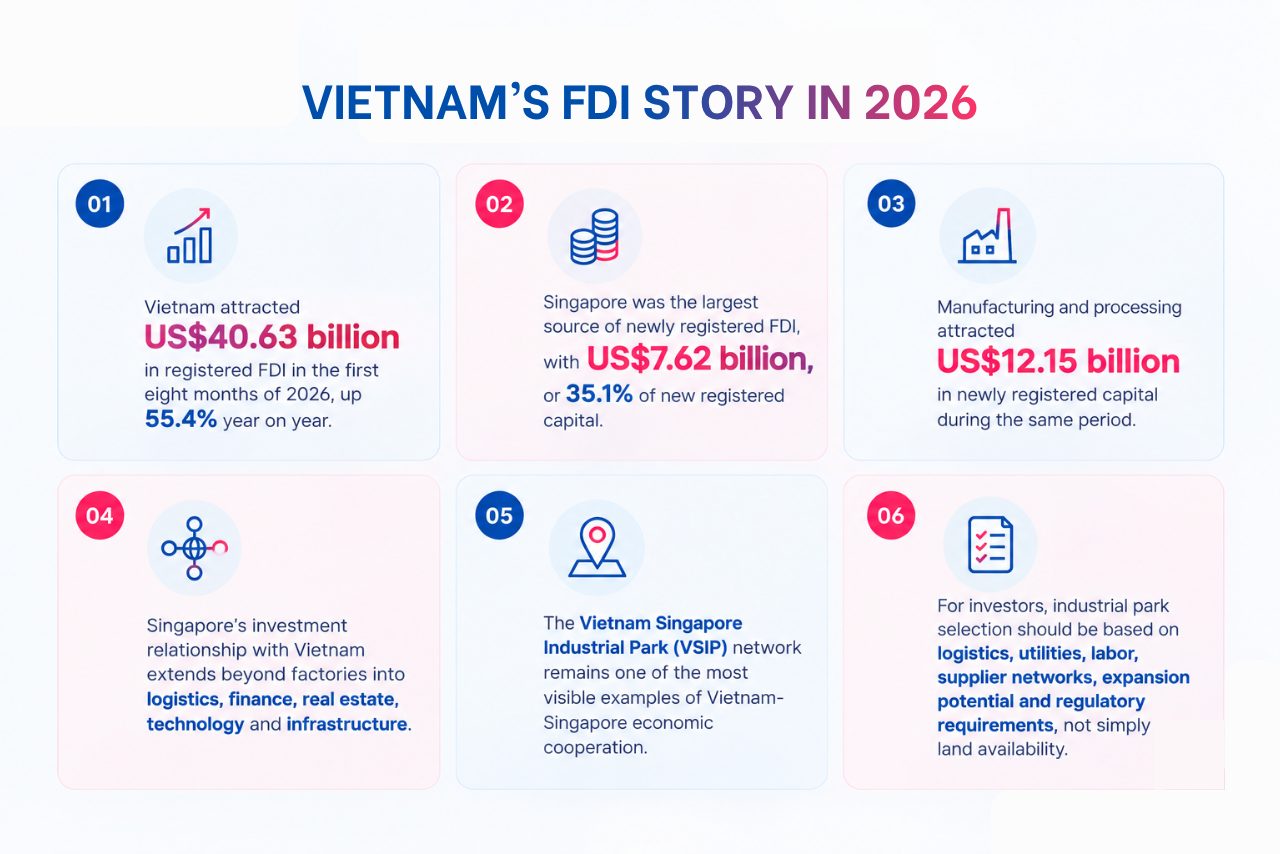
- Vietnam attracted US$40.63 billion in registered FDI in the first eight months of 2026, up 55.4% year on year.
- Singapore was the largest source of newly registered FDI, with US$7.62 billion, or 35.1% of new registered capital.
- Manufacturing and processing attracted US$12.15 billion in newly registered capital during the same period.
- Singapore’s investment relationship with Vietnam extends beyond factories into logistics, finance, real estate, technology and infrastructure.
- The Vietnam Singapore Industrial Park (VSIP) network remains one of the most visible examples of Vietnam-Singapore economic cooperation.
- For investors, industrial park selection should be based on logistics, utilities, labor, supplier networks, expansion potential and regulatory requirements, not simply land availability.
 Add Source of Asia as a preferred source on Google
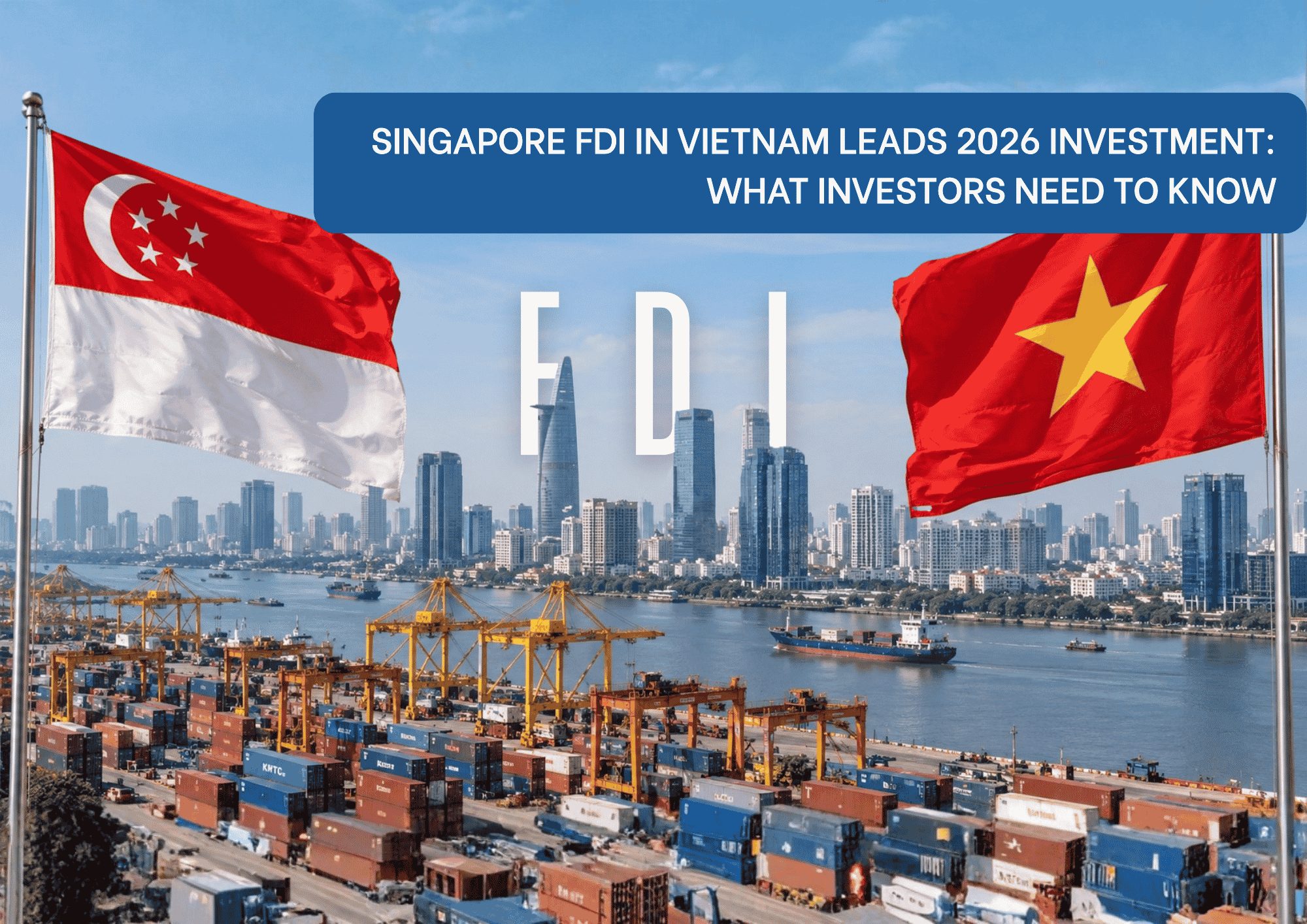
Singapore led Vietnam’s newly registered FDI in the first eight months of 2026, while manufacturing remained the country’s largest investment destination.
Vietnam’s FDI Reached US$40.63 Billion in the First Eight Months of 2026
Vietnam’s FDI performance has strengthened considerably in 2026.
According to Vietnam’s Ministry of Finance, total registered foreign investment reached US$40.6255 billion by the end of August 2026, including newly registered capital, additional investment in existing projects, and capital contributions or share purchases. This represented an 55.4% year-on-year increase in Vietnam’s total registered FDI during the same period.
The government also reported that realized FDI reached approximately US$17.25 billion, up 12% year on year and the highest eight-month level recorded over the previous five years.
More importantly, manufacturing remains a key part of the story. Manufacturing and processing attracted US$12.15 billion in newly registered FDI, equivalent to 55.9% of new registered capital. When newly registered and additional capital are combined, the sector attracted US$20.18 billion, or 59.5% of the total.
This helps explain why industrial locations remain an important consideration for foreign investors. Vietnam’s FDI growth is not only about financial services or real estate. A substantial part of the capital is connected to production, supply chains, logistics, and industrial infrastructure.
Why Singapore Is Vietnam’s Leading FDI Source in 2026
Singapore has maintained a strong investment position in Vietnam for several years.
In the first seven months of 2026, Singapore was the largest source of newly registered FDI, with approximately US$7.5 billion, representing 35.6% of new registered investment. VnExpress also reported that Singapore has ranked first among countries and territories investing in Vietnam since 2020.
VnExpress International’s report on Singapore investment in Vietnam
By the end of August, official Vietnamese data showed Singapore had registered almost US$11 billion in total investment across the three investment channels, making it the largest source of registered foreign investment during the period.
Singapore is the largest source of current newly FDI in 2026, but it is not Vietnam’s largest cumulative foreign investor. By the end of August, South Korea remained first in cumulative registered capital, while Singapore ranked second with more than US$99.8 billion.
Singapore’s importance also comes from its position as a regional financial and business hub. Singaporean-linked investment in Vietnam spans manufacturing, logistics, finance, real estate, technology and other sectors. Major Singapore-linked companies including Mapletree, Keppel Land, CapitaLand, Banyan Tree, Grab, Shopee and UOB have established operations or investments in Vietnam.
Some capital classified as Singaporean investment can also represent international capital managed or routed through Singapore. This is one reason Singapore’s role should be understood as part of a broader regional investment network rather than only as investment from Singapore-based operating companies.
Vietnam Singapore Industrial Park: Why VSIP Matters
One of the most recognizable examples of Vietnam-Singapore economic cooperation is the Vietnam Singapore Industrial Park, commonly known as VSIP. The first VSIP was established in Binh Duong in 1996. Over the following three decades, the model expanded across Vietnam, combining industrial development with urban and service infrastructure.
The current VSIP network includes projects across Vietnam’s major economic regions. Its portfolio includes VSIP I, II and III in Binh Duong, VSIP Bac Ninh, VSIP Hai Phong and other developments. The official VSIP website describes the model as an integrated industrial and urban ecosystem designed to create long-term value for investors, businesses, and communities.
VnExpress reported in August 2026 that Vietnam had 28 Vietnam Singapore Industrial Parks nationwide, with VSIP Da Nang becoming the latest project approved at that time.
The importance of VSIP is not only its number of locations.
The model combines:
- Industrial land and factory infrastructure
- Logistics and transportation connectivity
- Urban and service development
- Environmental and sustainability considerations
- Support for international manufacturers
- Access to established industrial ecosystems
This makes VSIP relevant to companies looking at Vietnam as part of a broader regional manufacturing or supply chain strategy.
It also demonstrates how foreign investment can develop beyond an individual factory. The investment model can create a wider ecosystem involving suppliers, logistics providers, workers, service companies, and supporting infrastructure.
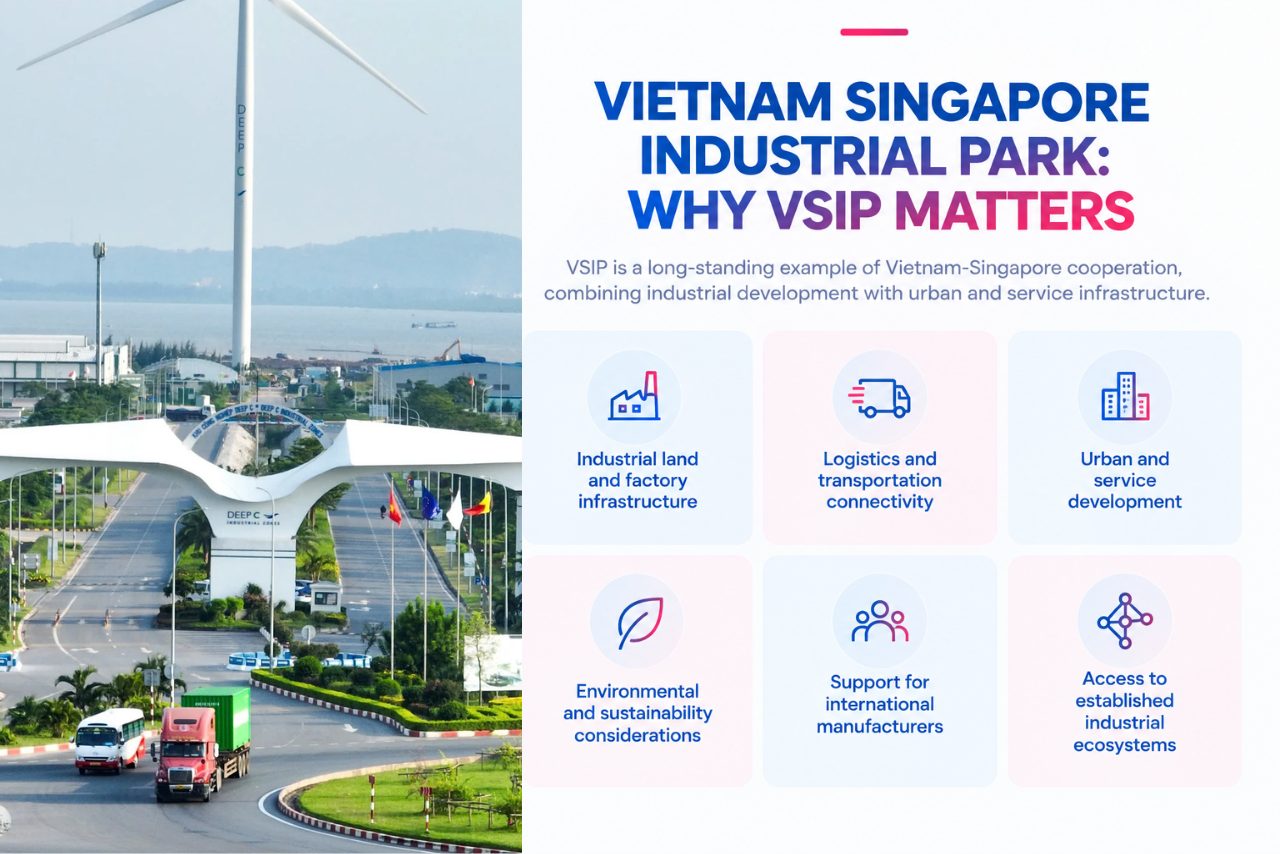
6 key points making VSIP significant for Vietnam-Singapore Industrial Park
What the 2026 FDI Surge Means for Industrial Locations
The rise in FDI does not mean every industrial park will benefit equally. For investors, the more useful question is whether a location can support the company’s actual operating model.
A manufacturer may need stable electricity, wastewater treatment, access to ports, qualified workers, nearby suppliers, and room for expansion. An electronics company may prioritize proximity to an existing supplier cluster. A food manufacturer may place greater emphasis on cold-chain logistics and wastewater infrastructure. This is why industrial park selection needs to happen alongside market and supply chain analysis.
SOA’s existing guide on industrial parks in Vietnam goes deeper into regional differences, industrial park models and the practical factors companies should review before committing to a location.
The North
Northern Vietnam has become an important manufacturing base for electronics, automotive components and supporting industries.
Its proximity to China and access to Hai Phong’s port system make the region relevant to companies pursuing supply chain diversification and China+1 strategies.
Bac Ninh, Hai Phong, Quang Ninh and neighboring industrial areas have attracted significant manufacturing investment.
The South
Southern Vietnam benefits from established supplier networks, access to major consumption centers and extensive logistics infrastructure.
Ho Chi Minh City and surrounding industrial areas remain important for companies that need access to customers, skilled labor, business services and ports.
Long Hau, VSIP, Becamex and other established industrial developers are part of this broader ecosystem.
The Central region
Central Vietnam offers a different investment profile.
Da Nang and surrounding areas can be attractive for companies looking for industrial and technology infrastructure with access to central Vietnam’s logistics network. The region is also receiving new investment as Vietnam continues to diversify industrial development geographically.
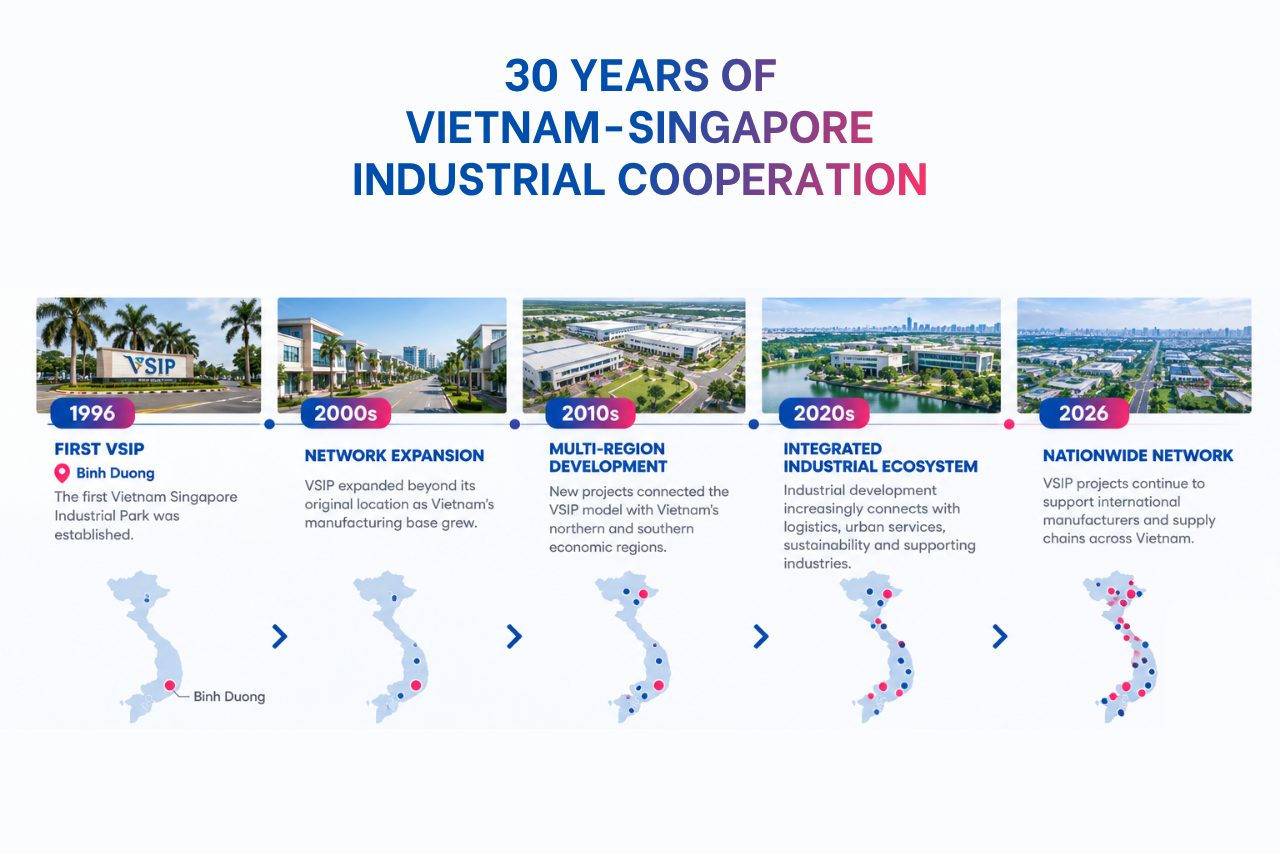
Established in Binh Duong in 1996, VSIP has developed into one of the most recognizable examples of long-term Vietnam-Singapore industrial cooperation.
Top 5 High-Quality Industrial Parks in Vietnam to Know in 2026
There is no single official national ranking that determines the “highest-quality” industrial park in Vietnam. Instead, the following five are useful names for an international investor shortlist because of their infrastructure, connectivity, sustainability initiatives, industrial ecosystems or ability to serve international manufacturers.
Vietnam Singapore Industrial Parks (VSIP)
VSIP is one of Vietnam’s most established international industrial development models. Its strength is its nationwide network and integrated approach to industrial, urban and service development. Current VSIP projects cover major manufacturing regions, including southern and northern Vietnam.
VSIP is particularly relevant for:
- Electronics and advanced manufacturing
- Consumer products
- Supporting industries
- Logistics
- International manufacturers seeking established infrastructure
The network’s long operating history also gives international investors access to an existing ecosystem rather than starting in an entirely new industrial location.
DEEP C Industrial Zones
DEEP C operates industrial zones across Hai Phong and Quang Ninh. Its positioning is particularly relevant to companies that depend on port access and northern logistics. The developer emphasizes advanced infrastructure, proximity to major transportation hubs, and sustainability. DEEP C is also developing its industrial parks around the eco-industrial park model and states that its sustainability strategy aligns with the Global Eco-Industrial Park Standard.
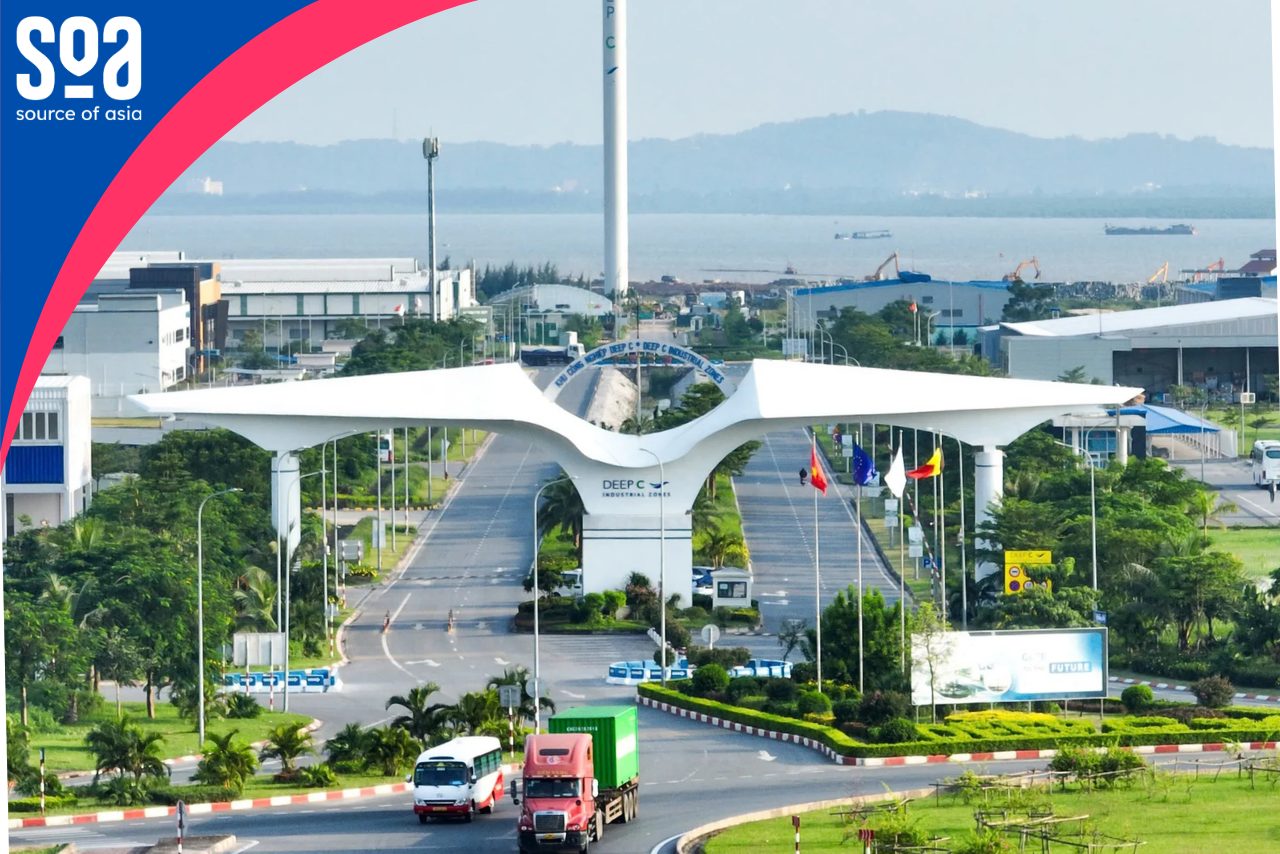
DEEP C combines industrial infrastructure with port connectivity and an eco-industrial development strategy.
This makes DEEP C especially relevant for manufacturers evaluating:
- Export-oriented production
- Port-intensive supply chains
- Electronics
- Automotive
- Logistics
- Sustainability and ESG requirements
Amata City Ha Long
Amata has developed a significant industrial presence in Vietnam, including Amata City Ha Long in Quang Ninh and Amata City Long Thanh in Dong Nai. The Quang Ninh development has continued attracting foreign-invested manufacturing projects in 2026. In August, three new projects totaling US$64 million were announced across machinery manufacturing, electronic components, and ready-built factory development.
The park is therefore relevant to companies looking at northern Vietnam and sectors that require modern industrial infrastructure. Amata is also developing new industrial projects in Vietnam around high-tech manufacturing and sustainable industrial ecosystems.
Long Hau Industrial Park
Long Hau is particularly relevant to manufacturers that want access to Ho Chi Minh City and southern logistics infrastructure. The industrial park is located close to major ports and offers industrial land, ready-built factories, and supporting infrastructure. Its current infrastructure includes power, water, wastewater treatment, security, and on-site services.
The park is also developing ESG-oriented factory solutions. Its Long Hau LEED Park is designed for sectors including precision technology, electronics, semiconductors, pharmaceuticals, high-tech medical devices and smart logistics. This makes Long Hau a practical option for companies that need both manufacturing space and proximity to the Ho Chi Minh City market.
Chau Duc Urban Industrial Park
Chau Duc Industrial Park in the southern economic region offers a different proposition, with a large industrial land area and connectivity to major transport corridors. The park covers approximately 2,287 hectares in total, including industrial, urban, and golf course components. Its location connects it with National Road 56, the Bien Hoa-Vung Tau Expressway, major highways and the Cai Mep-Thi Vai deep-sea port area.
The park is positioned to serve industries including electronics, semiconductors, precision engineering, automotive components, pharmaceuticals and medical devices. For large-scale projects, land availability and long-term expansion potential can be important considerations.
Industrial Park Selection Should Start with the Business Model
The growing number of industrial investment options can make site selection more difficult, not easier. A company should not choose an industrial park simply because it is well known. Instead, investors should assess several practical factors:
| Factor | What to evaluate |
| Logistics | Distance to ports, airports, highways and customers |
| Utilities | Power stability, water supply and wastewater capacity |
| Labor | Availability, skills, wage levels and employee access |
| Suppliers | Existing local supplier and supporting industry ecosystem |
| Land | Available area and future expansion options |
| Factory options | Land lease, ready-built factory or build-to-suit |
| Regulation | Investment approvals, environmental requirements and licensing |
| Sustainability | ESG requirements, renewable energy and wastewater management |
| Market access | Proximity to customers and domestic consumption centers |
For foreign companies, this assessment should happen before signing a long-term industrial land or factory agreement. It is also where local market knowledge becomes useful.
What This Means for Companies Considering Vietnam
The 2026 FDI numbers show that international investment interest in Vietnam remains strong. However, capital flows do not automatically translate into a straightforward market entry process. A company planning a manufacturing project still needs to focus on these practical keypoints:
- The right province for the supply chain
- The industrial park that fits the production requirements
- An appropriate investment structure
- The incentives that apply to the project
- Available local suppliers and partners
- The right approach to local authorities
- Operational requirements after investment approval
This is where market intelligence and local execution become important.
For this reason, Source of Asia’s Market Expansion services cover market assessment, partner identification, business development and local market support for companies entering Southeast Asia.
SOA has also supported international organizations through structured trade and investment engagement. For example, its Alabama trade delegation project combined market insight, regulatory guidance, B2B matchmaking and stakeholder engagement in Vietnam. For companies that need to understand the market before committing capital, a structured market assessment can help narrow down the right location and business model.
Singapore and Vietnam: A Relationship That Extends Beyond FDI
The strength of Singapore’s investment position also reflects the broader depth of Vietnam-Singapore economic relations. The two countries upgraded their relationship to a Comprehensive Strategic Partnership in 2025. Cooperation now extends across areas including finance, digital transformation, green economy, innovation, AI, semiconductors, clean energy and logistics. This matters for investors because industrial development is increasingly connected to areas outside traditional manufacturing.
In practice, a modern investment project may require:
- Digital infrastructure
- Renewable energy
- Regional logistics
- Data centers
- Advanced manufacturing
- Local supplier development
- Skilled workforce
- Cross-border management
In other words, the Vietnam-Singapore investment story is increasingly about building business ecosystems rather than simply building factories.
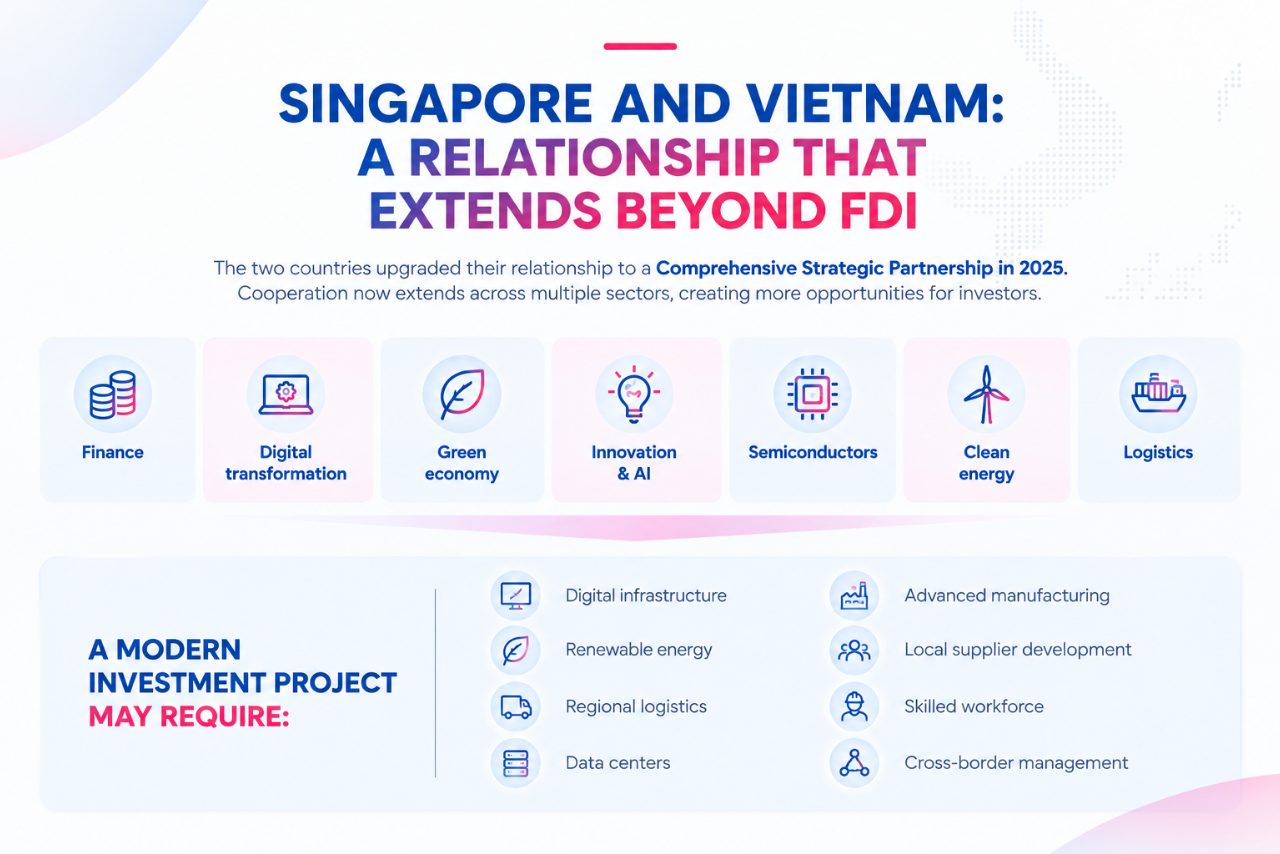
Singapore & Vietnam: Expanding strategic cooperation beyond FDI into digital transformation, green economy, AI, and semiconductors.
Final Thoughts
Singapore FDI in Vietnam has become one of the defining investment stories of 2026. Singapore is leading new registered FDI, while Vietnam’s overall investment inflows have reached more than US$40 billion in the first eight months of the year. Manufacturing continues to absorb a large share of that capital, keeping industrial infrastructure and supply chain locations firmly on the investor’s agenda.
For international companies, however, the opportunity is not simply about finding available industrial land. The more important decision is finding the location, infrastructure, and local ecosystem that fit the company’s long-term strategy. That may mean VSIP, DEEP C, Amata, Long Hau, Chau Duc or another location entirely.
Before committing capital, companies can use Vietnam market intelligence and market expansion support from Source of Asia to assess opportunities, identify relevant partners and build a practical entry plan.
Explore Vietnam with the right local partner. Talk to Source of Asia about your investment or market entry plans.
| 👉 Planning to enter a new market? Contact our experts to discuss the setup requirements and next steps. |
Frequently Asked Questions
Singapore ranked first among sources of newly registered FDI in Vietnam during the first eight months of 2026, with US$7.62 billion, representing 35.1% of newly registered capital. Its role as a regional financial and business hub also supports cross-border investment into Vietnam.
The Vietnam Singapore Industrial Park, or VSIP, is a network of industrial and integrated development projects created through Vietnam-Singapore cooperation. The first VSIP was established in Binh Duong in 1996, and the network has since expanded across Vietnam.
No. Vietnam has many industrial parks operated by domestic and international developers. The appropriate location depends on factors such as industry, logistics, utilities, labor availability, supplier networks, and expansion requirements.
VSIP, DEEP C, Amata City, Long Hau, and Chau Duc are among the industrial investment destinations that international companies may consider. Their advantages differ, so investors should compare locations against their own operational requirements rather than choosing based only on the park’s reputation.
Manufacturing and processing attracted US$12.15 billion in newly registered FDI during the first eight months of 2026, representing 55.9% of new registered capital. When additional capital is included, the sector accounted for US$20.18 billion, or 59.5% of total registered investment.
Companies should first assess their production model, target market, logistics requirements, supplier ecosystem, labor needs, utilities, regulatory requirements and expansion plans. A market and location assessment can then be used to shortlist suitable industrial parks before making a long-term commitment.