Introduction
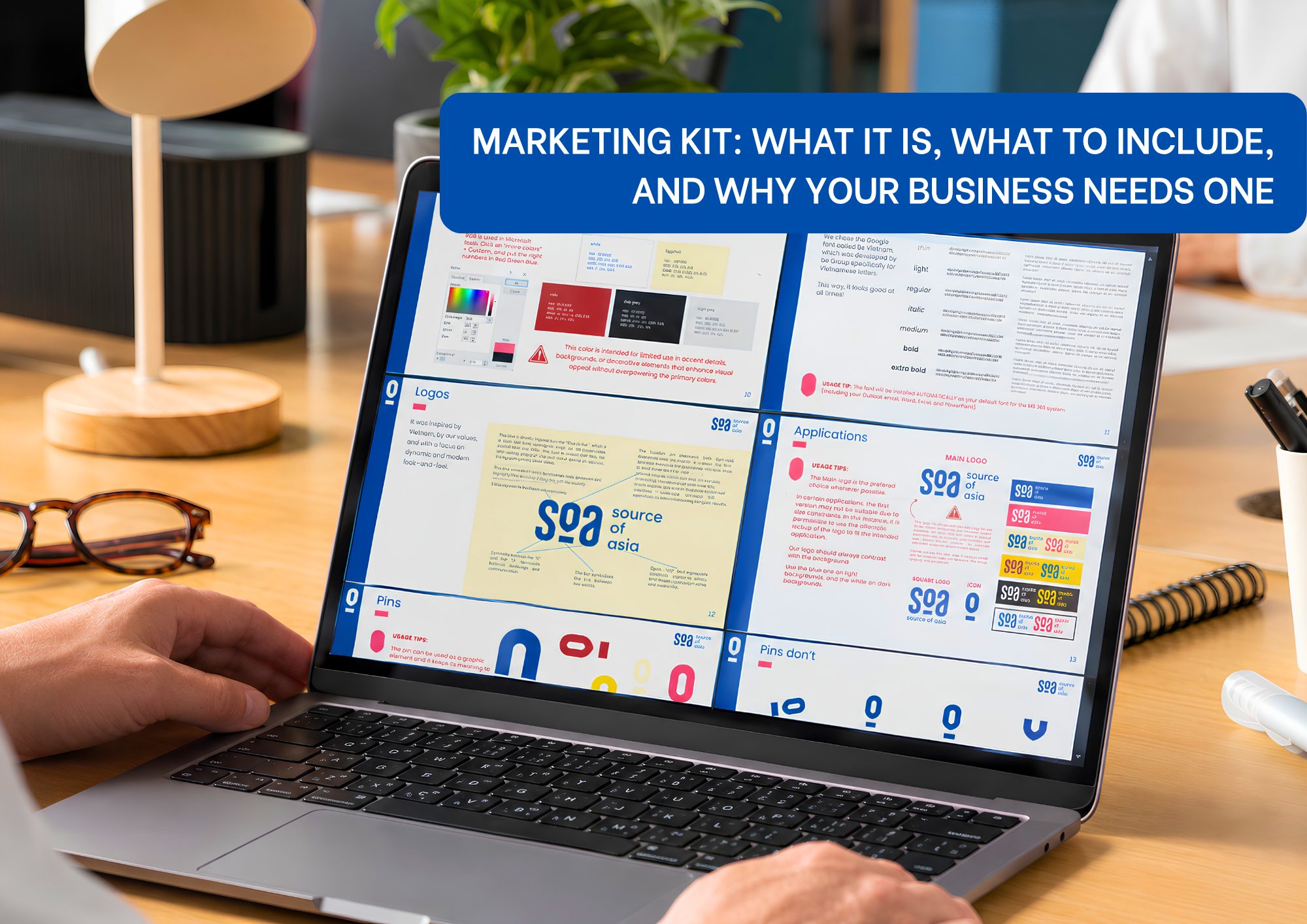
Successful B2B collaboration depends on how clearly companies communicate their expertise, offerings, and value across different business interactions. A well-structured digital marketing kit brings key company information, sales materials, and visual assets together in one practical resource. It helps teams present a consistent, credible image to prospects, clients, partners, and other business stakeholders while reducing the time spent searching for approved information or recreating materials for each opportunity.
In this guide, we – Source of Asia – explain what a digital marketing kit should include, why it matters for B2B companies, and how to keep it relevant and practical across different business opportunities and markets.
Quick Answer
What Does a Marketing Kit Mean for B2B Companies?
For B2B companies, a marketing kit is more than a collection of promotional materials. It helps buyers understand a company, assess its credibility, and evaluate its offerings. A professional marketing package helps businesses:
- Build credibility by showing buyers the company’s expertise, capabilities, and relevant experience.
- Reduce buyer uncertainty through clear information about the company’s offerings and suitability.
- Improve communication with consistent company information, key messages, and visual materials.
- Support sales conversations with practical resources for meetings, proposals, follow-ups, and partnerships.
Overall, this kit serves as a practical resource for building credibility, communicating value, and supporting B2B business development.
 Add Source of Asia as a preferred source on Google
What Is a Marketing Kit?
A marketing kit is a collection of promotional and business materials that presents a company, its offerings, expertise, and value to potential clients, partners, and other external audiences. It works as a practical toolkit, bringing key information into one organized resource so teams can communicate the business clearly and consistently.
The main difference between a marketing kit, brand kit, and media kit is their purpose:
- A brand kit covers brand identity, such as logos, visual elements, and usage guidelines.
- A media kit provides company or brand information mainly for journalists, publishers, advertisers, and media partners.
- A digital marketing kit brings together broader materials that explain the company’s offerings, expertise, credibility, and value.
The format can be a digital folder, PDF, online resource hub, or a combination of these. The important point is to keep the right materials accurate, approved, and easy to use when a business opportunity arises.
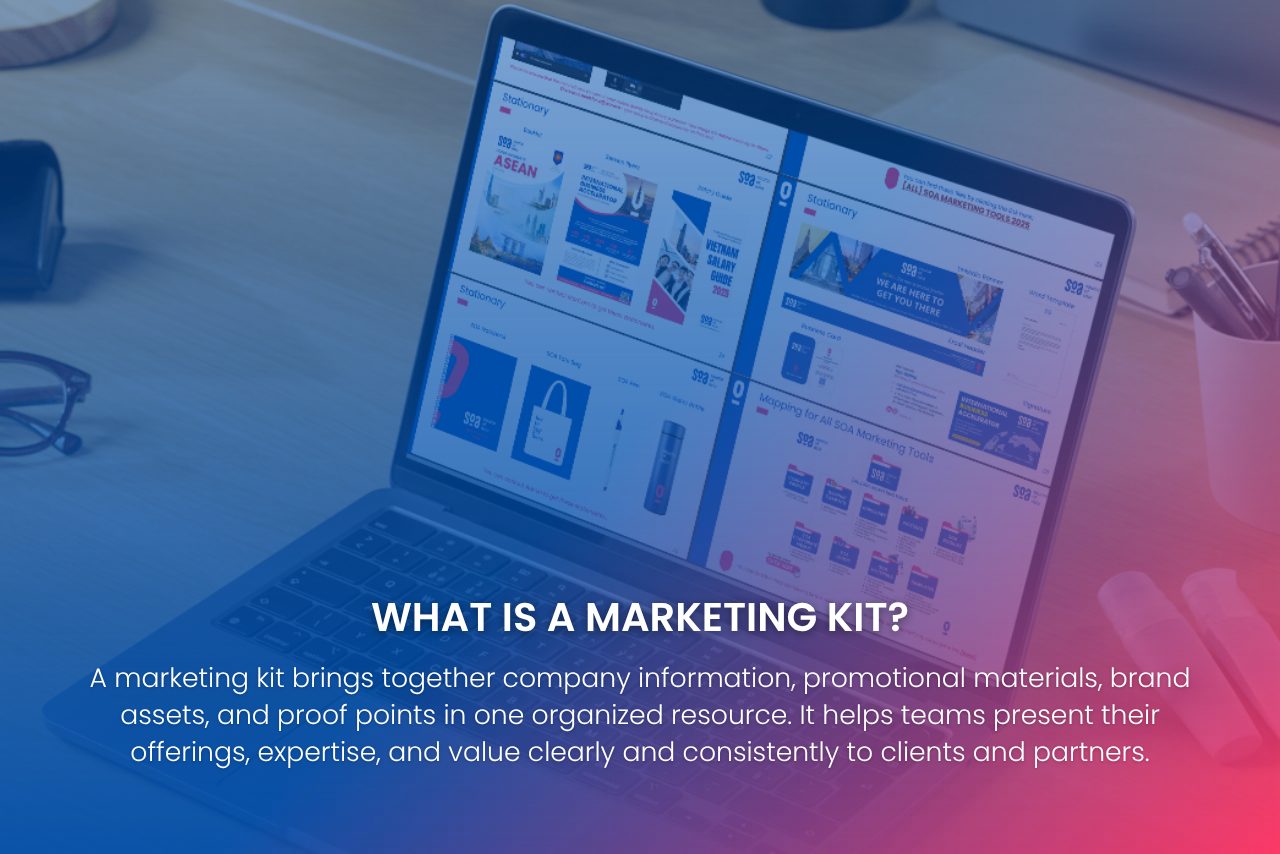
A marketing package brings essential company materials together for clear and consistent business communication.
Why Do Companies Need a Professional Marketing Package?
A professional marketing kit helps turn scattered information into a usable business resource. This matters when several people represent the company across different channels, markets, or customer conversations.
Centralize key company information
Company information often sits across folders, presentations, websites, and sales documents. When teams work from different versions, outdated figures or inconsistent company descriptions can reach prospects and partners.
A corporate marketing package creates one approved source for essential materials, such as:
- Company profile and key messaging
- Services, capabilities, and credentials
- Case studies and client proof
- Sales materials and contact details
This makes information easier to find, verify, and reuse. For example, a sales team preparing for a prospect meeting can use the latest company profile and case study instead of rebuilding the same materials. As a result, teams spend less time searching and reduce the risk of conflicting information.
Standardize brand messaging across channels
B2B companies often use several channels, including websites, LinkedIn, email marketing, and events, to build visibility and reach different audiences. When each channel presents the brand differently, with inconsistent logos, colors, tone, or company messages, it becomes harder to build recognition and maintain a professional image.
A digital kit gives teams one shared foundation for brand identity and messaging. It also provides approved assets for presentations, proposals, sales communications, and other materials. Teams can adapt content to each channel and audience while keeping the core brand consistent. This creates a more cohesive brand presence across customer touchpoints.
| Once the brand foundation is clear, the next step is choosing the right channels for each growth stage. 👉 Explore our guide to B2B marketing channels by business stage. |
Support sales and business development activities
Sales and business development teams often need company materials for meetings, follow-ups, partner discussions, and events. Without ready-to-use materials, teams may spend extra time preparing information for each interaction.
With this kit, teams can quickly access company profiles, service presentations, brochures, and case studies. They can then choose the right information and proof points for each conversation.
For example, sales teams can share relevant case studies with prospects, while BD teams can use company credentials when approaching potential partners. This makes each interaction easier to support and more consistent.
What Does a Corporate Marketing Kit Include?
A well-structured digital marketing package combines company information, service details, client proof, brand assets, and sales materials to support consistent business communication.
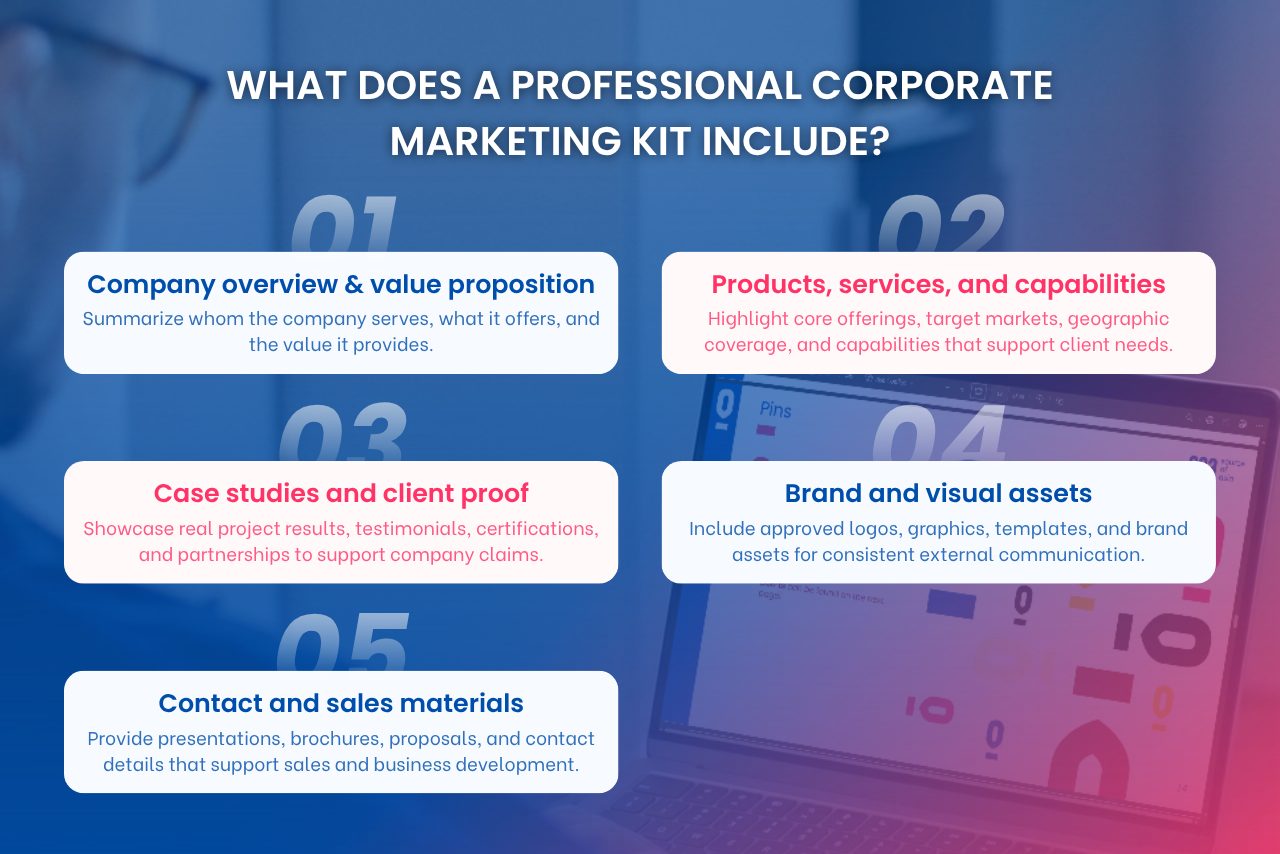
A corporate marketing kit typically covers company information, offerings, client proof, brand assets, and sales materials.
Company overview and value proposition
The company overview is often the first part prospects read, so it should help them quickly understand whether the business is relevant to their needs. Instead of focusing on company history, highlight the information that supports this decision:
- Who the company serves and which markets or industries it covers
- What products or services it provides
- Which business problems it helps solve
- What makes its approach or capabilities different
Keep the information concise and specific. Then, reuse the same core overview across presentations, one-pagers, event materials, and partner communications. This keeps the introduction consistent while helping each audience assess relevance quickly.
Products, services, and capabilities
Once prospects understand who the company serves, the next step is to show what it provides and what capabilities support those offerings. Focus on the information that helps them assess fit, such as:
- Core products or services and related capabilities
- Relevant industries and markets served
- Geographic coverage
- Technical or operational capabilities
Rather than giving every offering equal space, prioritize what matters to the intended audience. For example, a company entering a new market may need clear information on local expertise and execution capabilities. A focused overview makes the offer easier to understand and evaluate.
Case studies and client proof
A marketing package should support company claims with specific and credible proof. Instead of relying on broad statements such as “trusted partner,” include:
- Selected case studies and client results
- Testimonials, certifications, and awards
- Relevant partnerships or project examples
According to Forbes, 82% of B2B buyers rely on white papers, 78% on webinars, and 73% on case studies when making purchasing decisions.
Therefore, each case study should show the challenge, the company’s response, and the outcome. When client names or results cannot be shared, describe the industry, market, and situation instead. Always secure client approval before publishing identifiable information or results.
| 👉 See how we present project proof in our case studies or contact us to discuss your needs. |
Brand and visual assets
For external communication, a marketing kit should include approved visual assets such as logos, photography, graphics, presentation templates, brand visuals, and other design files. These materials should follow the company’s brand guidelines and stay easy for internal teams and approved partners to access.
This helps prevent small but visible brand issues. For example, partners may use an outdated logo or an incorrect file when the official version is difficult to find. Providing the right formats with simple usage guidance makes assets easier to apply and keeps brand presentation consistent.
Contact and sales materials
Include company presentations, brochures, one-pagers, proposal templates, product sheets, event materials, and contact details that support sales and business development activities. Each material should have a clear purpose, whether introducing the company, explaining a service, supporting a proposal, or helping a prospect reach the right team.
Keep the selection focused on the intended use. A marketing kit should not become a storage folder for every company asset. Instead, choose materials that help prospects understand the offer, assess its relevance, and take the next step in the business conversation.
| Core Component | Examples |
|---|---|
| Company overview & value proposition | Company introduction, positioning, key differentiators, and value proposition |
| Products, services & capabilities | Core offerings, industries served, markets, and relevant capabilities |
| Case studies & client proof | Case studies, client results, testimonials, certifications, awards, and partnerships |
| Brand & visual assets | Logos, photography, graphics, presentation templates, and other approved brand assets |
| Contact & sales materials | Company presentations, brochures, one-pagers, proposal templates, product sheets, and contact details |
How Can Companies Make Their Digital Marketing Kit Stand Out?
To make a kit more effective, companies should focus on clear positioning, relevant proof, and up-to-date information. Together, these elements make the company easier to understand, more credible, and more relevant to prospects.
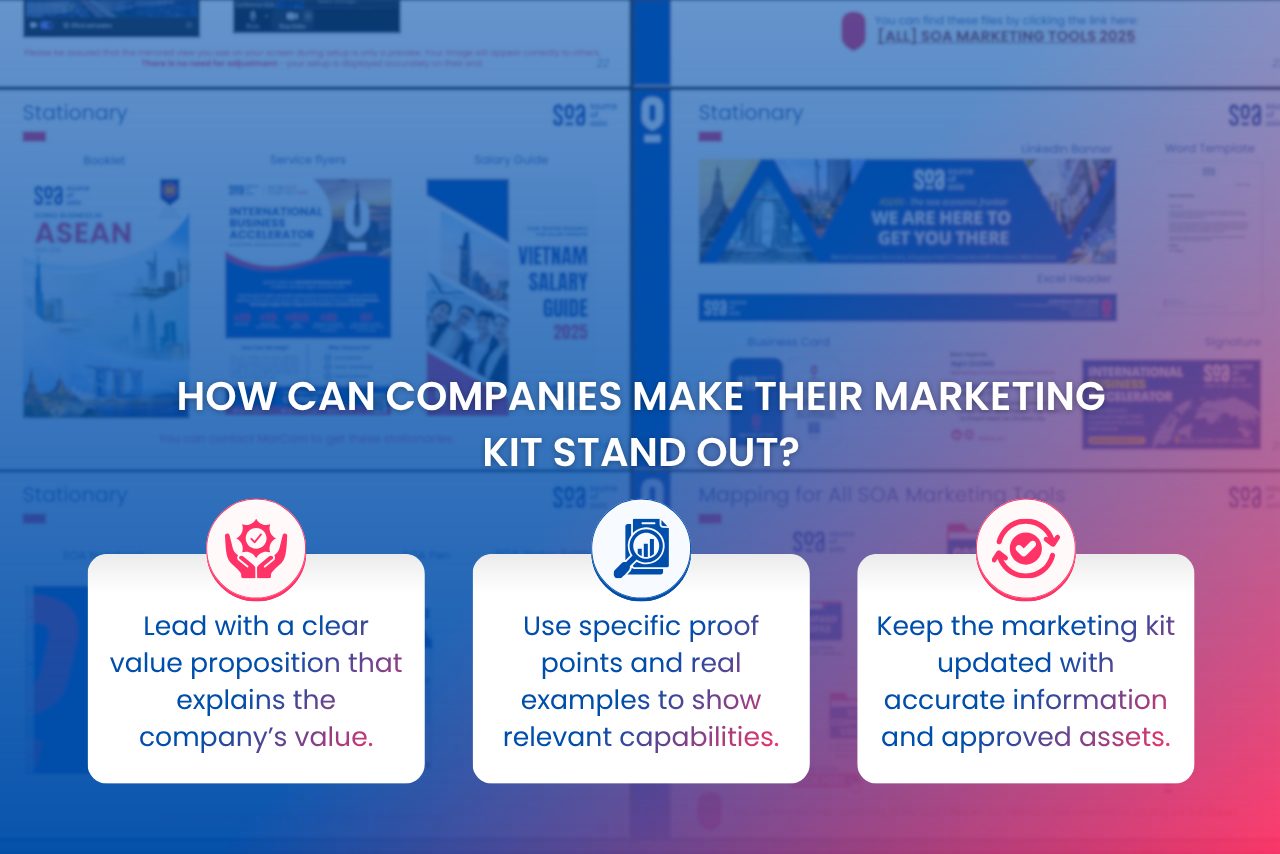
A stronger digital kit combines clear value, relevant proof, and regularly updated information.
Lead with a clear value proposition
The opening should help a prospect understand the business quickly. Focus on three points:
- What does the company offer?
- Who does it help?
- What business value does it provide?
Keep the message focused. Avoid long company histories or several competing value propositions. Instead, connect the offer to a clear business need and support broad claims with specific capabilities or results.
A useful test is to show the first page to someone unfamiliar with the company. If they cannot explain the business after reading it, the message needs to be clearer. This is especially important when entering a new market.
Use specific proof points and real examples
Specific examples give prospects a clearer view of what a company has actually delivered. Instead of listing broad capabilities, show relevant proof through:
- Client results and project outcomes
- Relevant certifications and industry experience
- Measurable results or delivery details
- Examples from similar markets or business situations
Then, match each proof point to the audience. An industrial buyer may want operational results, while a company entering a new market may look for local expertise and relevant experience. Relevant examples make the company’s capabilities easier to understand and assess.
Keep the digital marketing kit updated
Review the kit every 3 to 6 months and after major changes, such as a new service, certification, office, or contact person. Remove outdated figures, offerings, campaigns, and contact details so teams do not share information that no longer reflects the business.
Use a clear ownership process so someone is responsible for keeping the master materials current. A simple routine works well:
- Name one owner for the master kit.
- Store one master version in one shared location.
- Retire old versions to avoid accidental use.
- Tell teams and approved partners when key materials change.
This keeps the marketing package a living business asset rather than a one-time document.
Final Thoughts
A marketing kit brings company information, services, proof points, brand assets, and sales materials into one structured resource. For B2B companies, it supports consistent communication, sales and business development, and content use across different audiences and markets.
At Source of Asia, we can help companies build and strengthen their marketing package through Marketing Services, including:
- Brand positioning and value proposition development
- Content and sales materials
- Creative design and brand assets
- Website, SEO, and social media content
Looking to build a digital marketing kit for your business? Speak with our experts about your marketing needs and objectives.
Frequently Asked Questions
A marketing kit is an organized set of company information, promotional content, sales materials, proof points, and brand assets. It helps businesses present their offer and credibility clearly to potential customers, partners, and other external stakeholders.
A marketing package should combine the materials needed to explain the business and support commercial communication:
- Company overview and value proposition
- Products, services, and capabilities
- Case studies and client proof
- Brand and visual assets
- Sales materials and contact details
B2B companies need a clear and credible set of materials to support longer, multi-step sales processes. A professional digital marketing package helps teams communicate consistently, provide relevant proof, and give prospects the information needed to evaluate the business.
Review the kit every 3 to 6 months and complete a full update at least once a year. Update it sooner when services, case studies, credentials, contact details, visual assets, or other key information changes.