Introduction
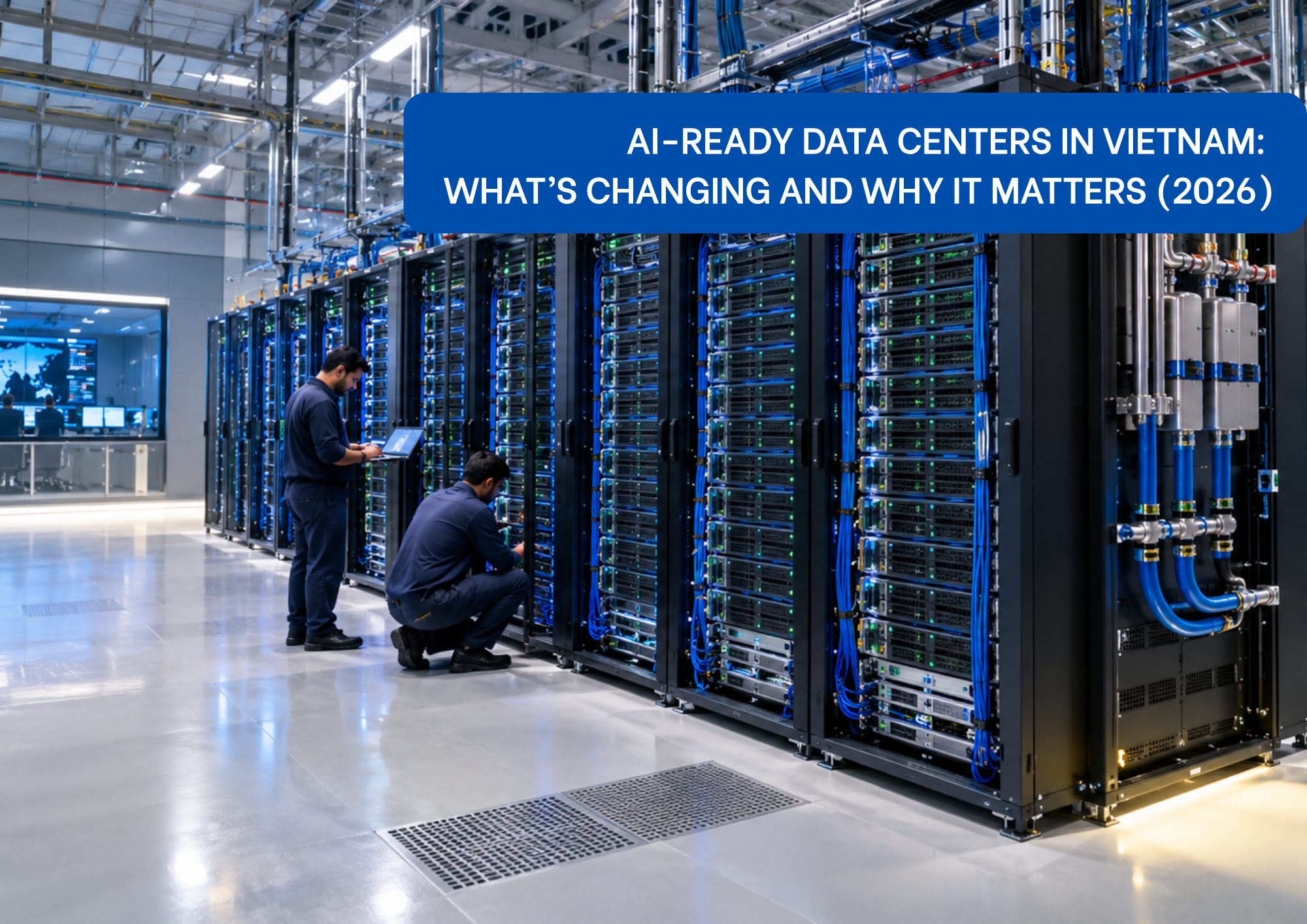
Vietnam’s data center market is growing as more companies use cloud services, digital tools, and AI. This is increasing demand for an AI-ready data center that can handle higher workloads, maintain reliable performance, and support future growth. New projects and better connectivity are also giving businesses more options when planning their infrastructure.
AI workloads can require more power, cooling, network capacity, and stronger security. Choosing the right AI-ready data center solution can help companies avoid higher costs, limited flexibility, or scaling problems.
In this guide, Source of Asia explains what is changing in Vietnam’s data center market, what makes a data center AI-ready, and what companies should consider before investing or expanding.
Quick Answer
What Are Data Centers and AI Readiness?
Understanding both terms helps companies assess whether their infrastructure can support growing digital and AI workloads.
- Data centers: Physical facilities that provide the computing, storage, network, power, cooling, and security infrastructure needed to run digital services and process data.
- AI readiness: The ability of a data center to support AI workloads reliably as computing demand grows. An AI-ready data center may require higher power and cooling capacity, faster networking, scalable infrastructure, and reliable monitoring and support.
In simple terms, AI readiness means having the capacity and infrastructure to support AI workloads as they grow.
 Add Source of Asia as a preferred source on Google
What’s Changing in Vietnam’s Data Center Market?
Vietnam’s data center market is expanding, with larger projects and stronger connectivity creating more infrastructure options for companies. This growth is also increasing demand for AI-ready data center capacity that can support more demanding digital and AI workloads.
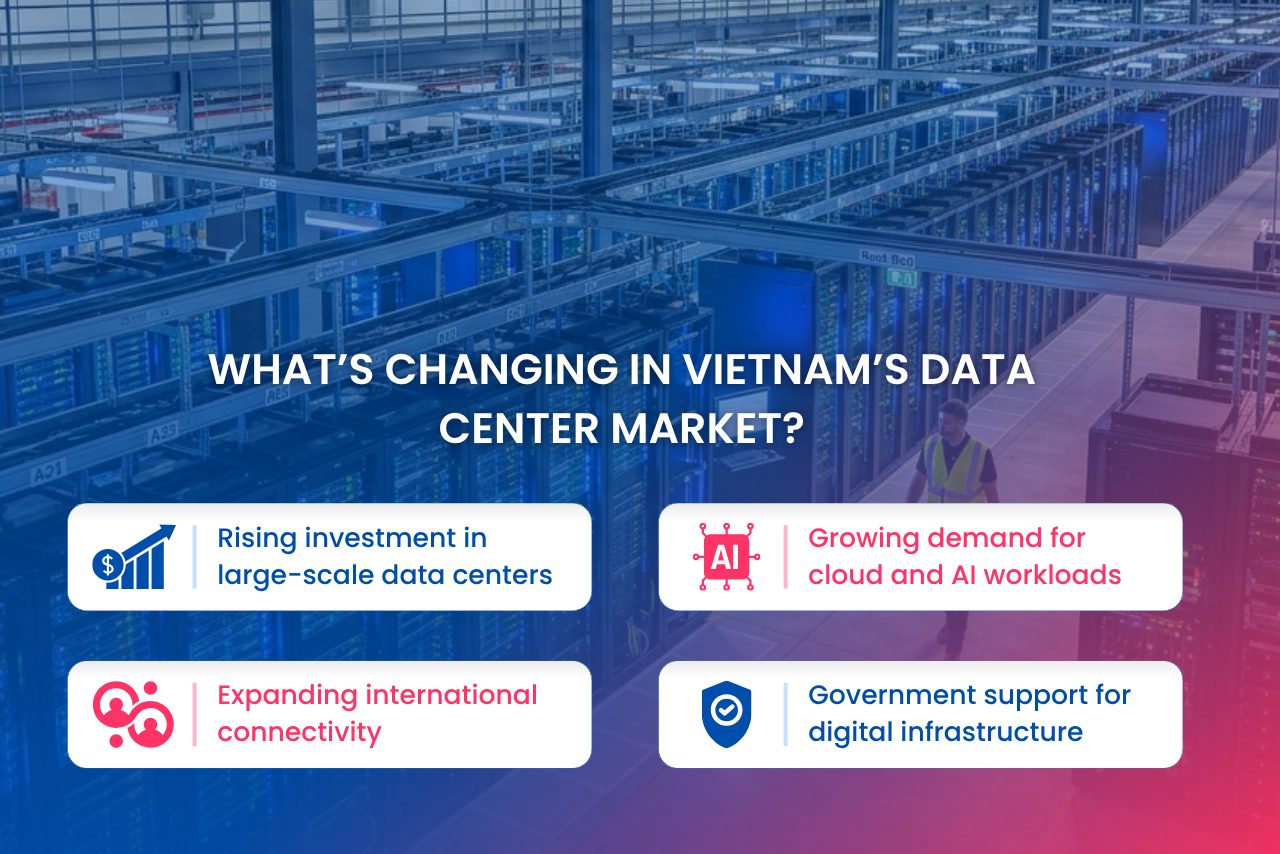
Vietnam’s data center market is expanding through new infrastructure projects, stronger connectivity, and growing demand for digital services.
Rising investment in large-scale data centers
Vietnam’s data center market was valued at around $1.04 billion in 2025 and is projected to reach $3.18 billion by 2031, with annual growth of about 20%. At the Data Center and Cloud Infrastructure Summit 2026, Viettel IDC also reported that Vietnam’s growth rate is about 1.5 times the global average, highlighting strong demand for digital infrastructure.
This growth is reflected in new large-scale projects. Ho Chi Minh City has attracted hyperscale facilities with investments worth hundreds of millions of dollars, including infrastructure designed for AI and high-performance computing. For companies, this growing capacity creates more options for supporting higher-density workloads and scaling digital operations in Vietnam.
Growing demand for cloud and AI workloads
Cloud adoption and AI experimentation are growing across Vietnamese enterprises and multinational companies. Vietnam’s national computing strategy targets 250,000 advanced GPUs by 2030, reflecting the expected growth in computing demand. Companies are using cloud platforms and AI tools for:
- Business operations
- Customer service
- Data analysis
- Process automation
These applications require reliable computing power, storage, and network capacity. As workloads become more demanding, businesses need infrastructure that can support growth, maintain performance, and manage operational costs.
Expanding international connectivity
Vietnam is strengthening its international connectivity through new submarine fiber optic cables, higher network capacity, and improved redundancy. These developments support more reliable connections between local businesses, regional cloud regions, and global digital networks.
Reliable connectivity also helps companies manage cloud workloads, international applications, and cross-border data flows. Low latency can improve application performance, while route diversity helps reduce disruption risks. For this reason, companies should assess network performance and backup connections alongside data center capacity when planning infrastructure for growing digital and AI workloads.
Government support for digital infrastructure
Vietnam is strengthening support for data center and AI infrastructure through policies covering land, electricity, and investment incentives. At the same time, the National AI Strategy to 2030, with a vision to 2045, identifies AI infrastructure as a strategic pillar, including computing infrastructure, cloud services, edge AI, and AI data centers.
In addition, the Law on Data encourages domestic and foreign investment in data storage and processing centers in Vietnam. The Law on Personal Data Protection and Decree No. 356/2025/ND-CP also set requirements for personal data protection and processing. Together, these policies provide clearer direction for companies planning data center investment and long-term digital operations in Vietnam.
What Makes an AI-Ready Data Center?
An AI-ready data center solution is not defined by one specification. Readiness depends on whether a facility can support the required workload with enough power, cooling, network capacity, reliability, security, and room to scale.
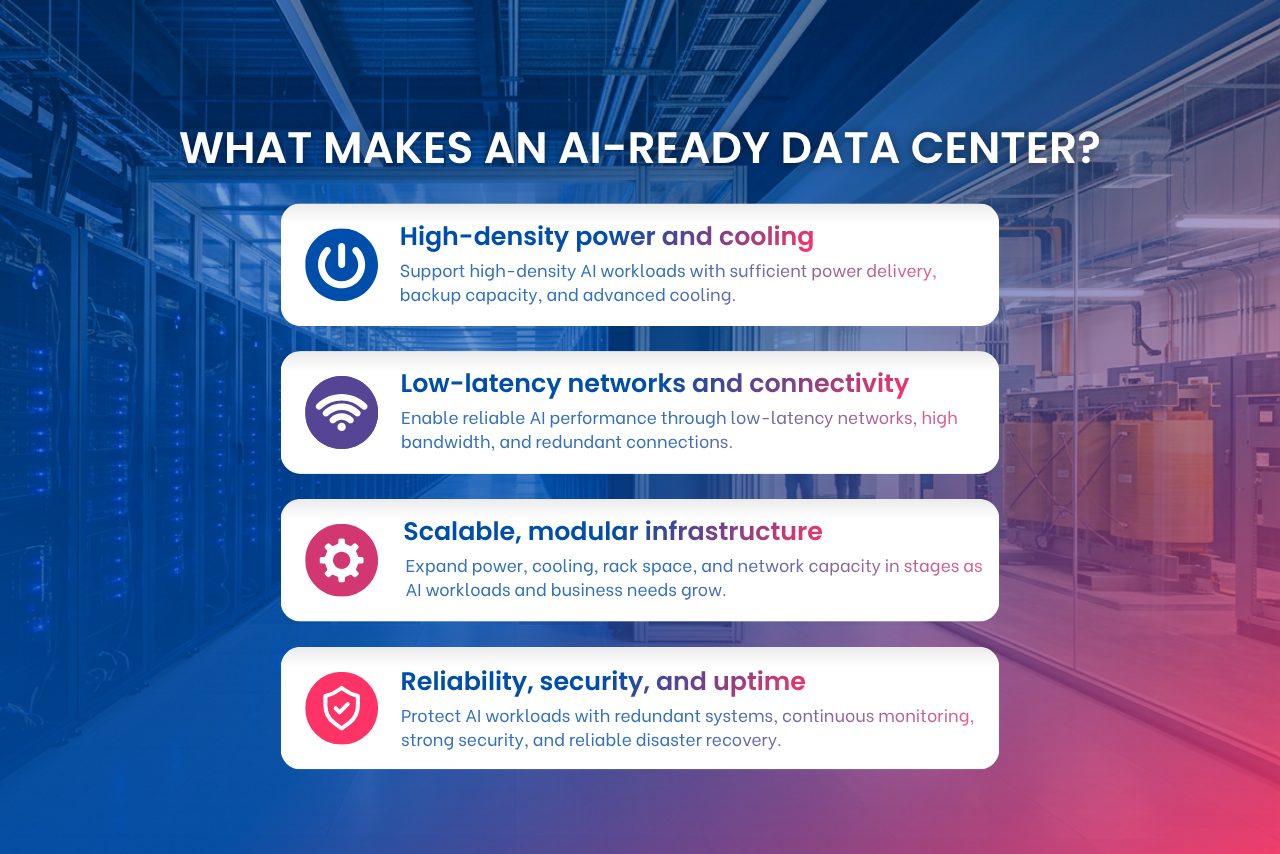
AI-ready data centers combine high-density power, cooling, connectivity, and scalable infrastructure to support demanding computing workloads.
High-density power and cooling
AI workloads can place much higher demands on power and cooling than traditional enterprise applications. GPU-based systems generate more heat, especially when several high-performance servers operate at high rack densities. An AI-ready data center should have enough capacity for:
- Power delivery and distribution
- Rack density
- Backup power
- Cooling systems
The right cooling design depends on the hardware and rack configuration. Advanced air cooling may be enough for some setups, while others may require liquid cooling. Power and thermal capacity also affect operating costs, equipment reliability, and future expansion.
Low-latency networks and connectivity
AI workloads move large volumes of data between computing resources, storage systems, users, and cloud services. Network latency and bandwidth can directly affect performance, especially for real-time AI applications and distributed workloads.
An AI-ready data center solution should provide reliable connectivity across the wider infrastructure environment. Companies should review:
- Network bandwidth and latency
- Connection redundancy
- Data transfer capacity
- Access to cloud and enterprise networks
This is especially important when companies combine local infrastructure with public cloud or regional systems. Weak connectivity can become a bottleneck even when the data center has enough computing capacity.
Scalable, modular infrastructure
Scalable infrastructure gives companies more flexibility as computing needs grow. Modular design allows data centers to add power, cooling, rack space, and network capacity in stages, rather than building the full capacity from the start.
For companies, phased expansion can also improve investment planning. Instead of paying for unused capacity, businesses can expand infrastructure when workloads increase, or projects move into production.
This approach reduces overinvestment risks and leaves room for future upgrades. It also helps avoid major infrastructure changes when existing capacity no longer supports larger or more demanding workloads.
Reliability, security, and uptime
Reliable infrastructure helps keep AI workloads available and stable during continuous operation. Redundant power, network connections, backup systems, and real-time monitoring can reduce the impact of outages and equipment failures.
Security is equally important for protecting infrastructure and data. Companies should assess:
- Power and network redundancy
- Backup and disaster recovery systems
- 24/7 monitoring and maintenance
- Physical and network security
- Access control and incident response
These measures help maintain consistent uptime and reduce operational risk when AI systems support business-critical applications.
How to Assess Data Center Readiness for AI?
When evaluating a facility or comparing an AI-ready data center solution, a structured review helps companies identify capacity gaps before they affect deployment, costs, or long-term operations.
- Power and cooling capacity: Check how much power the facility can deliver per rack and how it manages heat at higher densities. Standard hosting facilities may not support the power and cooling requirements of AI workloads.
- Network performance: Review bandwidth, latency to key cloud regions, internet connectivity, and network redundancy. Weak connectivity can limit workload performance even when the facility has sufficient computing capacity.
- Security and compliance: Check security certifications, physical access controls, data protection measures, and data handling practices. Requirements should match the type of data and workloads processed in the facility.
- Scalability for future workloads: Ask whether the facility can expand power, cooling, and rack space as demand grows. A facility that cannot scale may create costly migration or upgrade needs later.
In practice, data center readiness should match the company’s current workload while leaving enough capacity for future growth.
How Can Companies Prepare for AI Adoption?
AI adoption can create new requirements for computing, data, connectivity, and infrastructure. Companies can reduce unnecessary investment by defining the workload first, checking current readiness, and planning infrastructure around actual business needs.
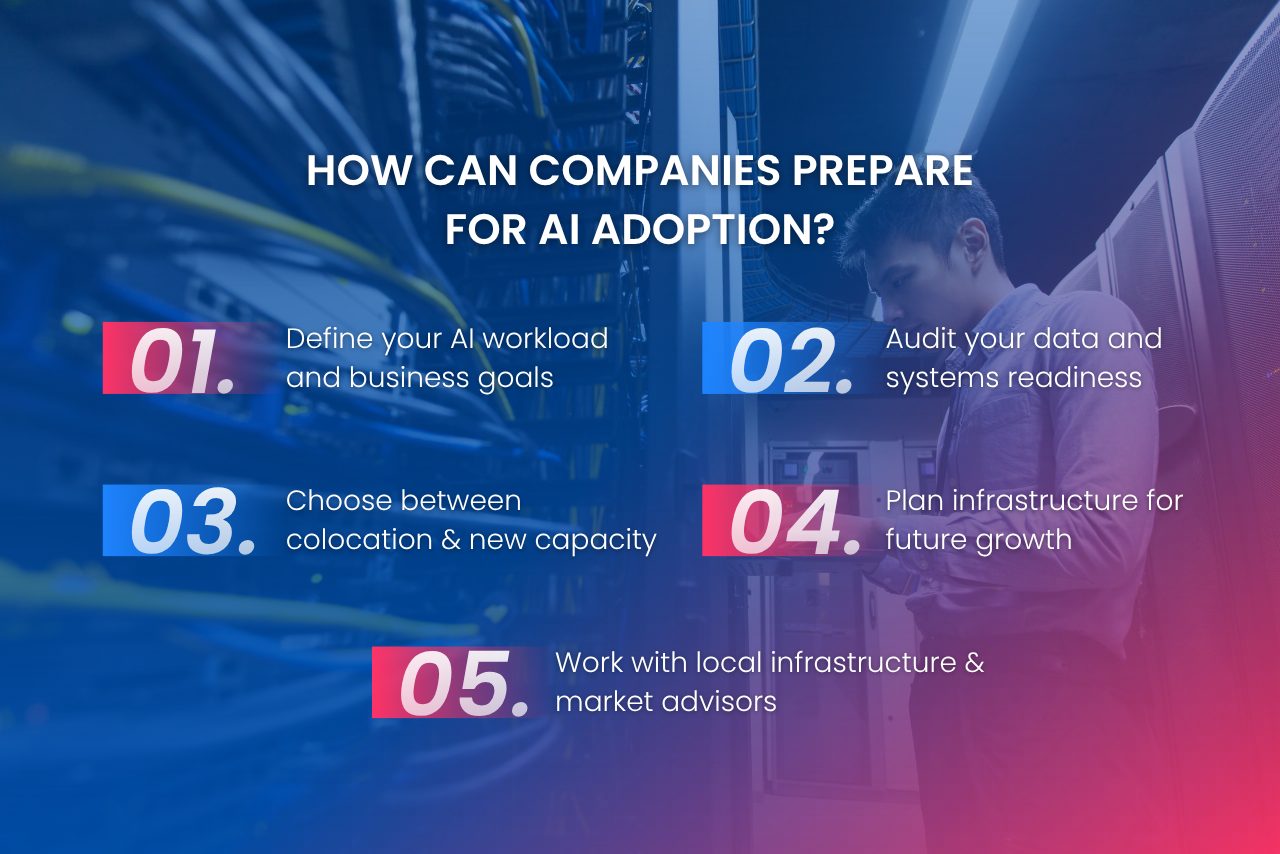
Companies can prepare for AI adoption by assessing workloads, reviewing system readiness, and planning infrastructure around future business needs.
Define your AI workload and business goals
Start with the business problem AI needs to solve. A customer service chatbot, predictive analytics tool, and AI model used for large-scale data processing will not require the same infrastructure.
Companies should define:
- Expected users and workload volume
- Data types and processing requirements
- Performance and response-time targets
- Expected growth and future usage
These requirements help teams estimate the infrastructure needed before comparing providers or capacity options. They also make it easier to distinguish between a small AI pilot and a workload that may need dedicated computing resources.
Audit your data and systems readiness
AI projects depend on reliable data and systems that can support the planned workload. Companies should review data quality, accessibility, storage, integration, network capacity, and security before deployment. A readiness audit can identify technical gaps early and reduce unplanned changes later.
Choose between colocation and new capacity
Companies do not always need to build new infrastructure from the start. When selecting an AI-ready data center solution, two common options are:
- Colocation: Use existing data center power, cooling, connectivity, and facility operations. This can reduce upfront investment and support a faster deployment.
- New capacity: Build infrastructure around specific workload, control, and expansion requirements. This usually requires more capital and longer planning.
The right choice depends on workload, budget, deployment timeline, control requirements, and expected growth.
Work with local infrastructure and market advisors
Companies planning an AI-ready data center solution in Vietnam need to consider more than the facility itself. They also need to understand their current systems, cloud environment, security requirements, and future digital needs. A local advisor can connect these technical requirements with business priorities and help identify gaps before major infrastructure decisions are made.
At Source of Asia, our team can support companies through:
- Digital audit and consulting
- Cloud and DevOps services
- Cybersecurity and SOC services
- IT helpdesk and managed services
- Business automation
- Web, mobile & custom software development
We help businesses assess their digital environment, identify infrastructure and security gaps, and develop a practical roadmap for secure and scalable digital operations in Vietnam and across ASEAN.
| 👉 Explore our Digital Solutions to see how SOA can support your company. |
Plan infrastructure for future growth
A focused pilot allows companies to test an AI workload before making larger infrastructure investments. Teams can measure actual performance, operating costs, and capacity requirements, then use those results to guide wider deployment. This approach helps companies scale based on real usage rather than assumptions.
| 👉 To deepen your preparation, you may also explore our guide to Cybersecurity readiness across ASEAN. |
Final Considerations
Vietnam’s growing AI adoption is increasing demand for AI-ready data centers that can support higher workloads and future growth. Companies should assess capacity, connectivity, reliability, security, and scalability against their actual business needs. The right AI-ready data center solution should fit the workload, deployment model, and long-term digital roadmap to avoid unnecessary infrastructure costs.
At Source of Asia, we provide Digital Solutions to help businesses strengthen infrastructure, improve security, and prepare for scalable AI adoption, whether you are evaluating AI-ready data center solutions for the first time or upgrading existing infrastructure to keep up with growing AI demand.
| 👉 Planning AI infrastructure or digital operations in Vietnam? Speak to our team to discuss your requirements. |
Frequently Asked Questions
An AI-ready data center is a facility designed to support AI and high-performance computing workloads. It combines high-density power, advanced cooling, low-latency connectivity, and strong security, going beyond what standard data centers typically offer.
Assess whether the facility can support your planned workload. Check power per rack, cooling capacity, network performance, redundancy, security, and expansion options. Standard facilities may need upgrades before supporting higher-density AI workloads.
Not all data must be stored in Vietnam. However, certain core and important data have specific requirements for cross-border transfer and processing under Vietnam’s Law on Data and related regulations. Requirements depend on the data type and activity.
Yes. Vietnam offers lower construction and electricity costs than regional hubs like Singapore, along with government incentives and rapidly expanding capacity in Hanoi and Ho Chi Minh City. This combination is attracting hyperscale operators, cloud providers, and AI companies to the market.