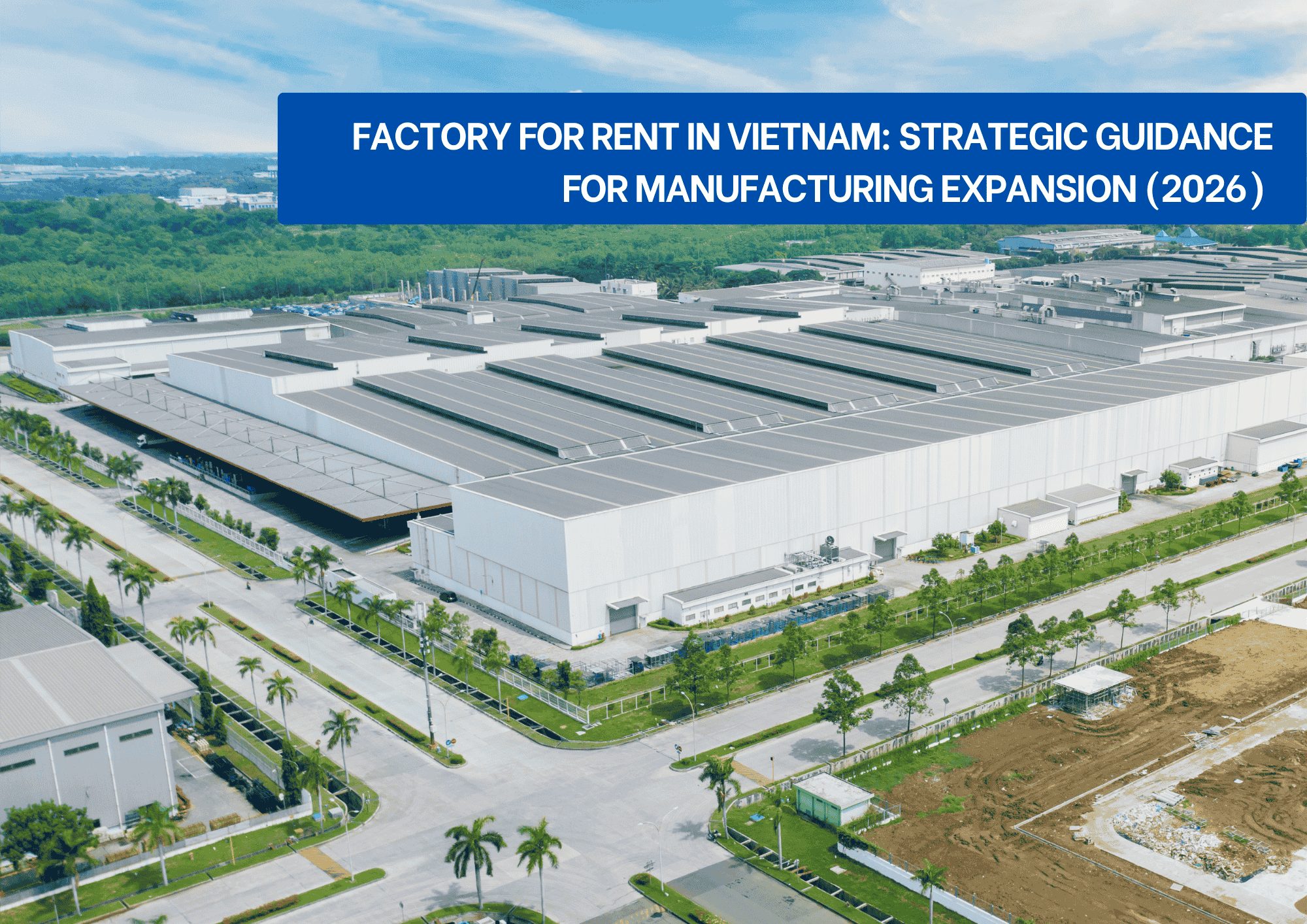
In 2026, demand for a factory for rent in Vietnam continues to rise as foreign manufacturers seek faster market entry with lower upfront exposure. Renting is not simply a shortcut; it is a strategic way to control timing, capital allocation, and early operational risk.
At the same time, factory rental decisions carry long-term consequences on cost structure, compliance, and scalability. Location, legal structure, and site readiness directly shape cost efficiency and execution stability after operations begin. In this article, we – Source of Asia explains why factory rental demand keeps rising and what foreign investors should review before signing a lease, so you can move forward with clarity and fewer risks.
Key Insights
- Renting a factory enables faster market entry, lower upfront capital exposure, and greater operational flexibility than building.
- Labor availability and cost differ by region, so location directly affects hiring stability, not just rental price.
- Industrial zones reduce early risk by offering clearer land-use status, more structured licensing processes, and more reliable utilities.
- Standalone factories may offer lower rent but often increase compliance exposure and coordination complexity.
- Legal status, licensing, fire safety, and utility capacity should be verified before signing, not after operations begin.
Vietnam’s Manufacturing Landscape: What Drives Factory Demand
Factory demand in Vietnam is driven by manufacturing growth, export expansion, competitive labor costs, and strong foreign investment, leading many companies to rent ready-built facilities for speed and flexibility.
Manufacturing growth and export positioning
Over the past few years, Vietnam has become a reliable base for global manufacturing. According to Vietnam Investment Review, the manufacturing and processing sector grew 10.5% in 2025, up from 9.5% the year before. This steady growth brings more production activity into the market and increases demand for factories and ready-to-use space.
Exports from industries like electronics, machinery, textiles, and garments continue to rise, serving buyers in the US, the EU, and ASEAN. As export demand grows, pressure on production space increases. To respond faster, many companies choose a factory for rent in Vietnam instead of waiting to build, allowing them to start production sooner and stay flexible as demand changes.
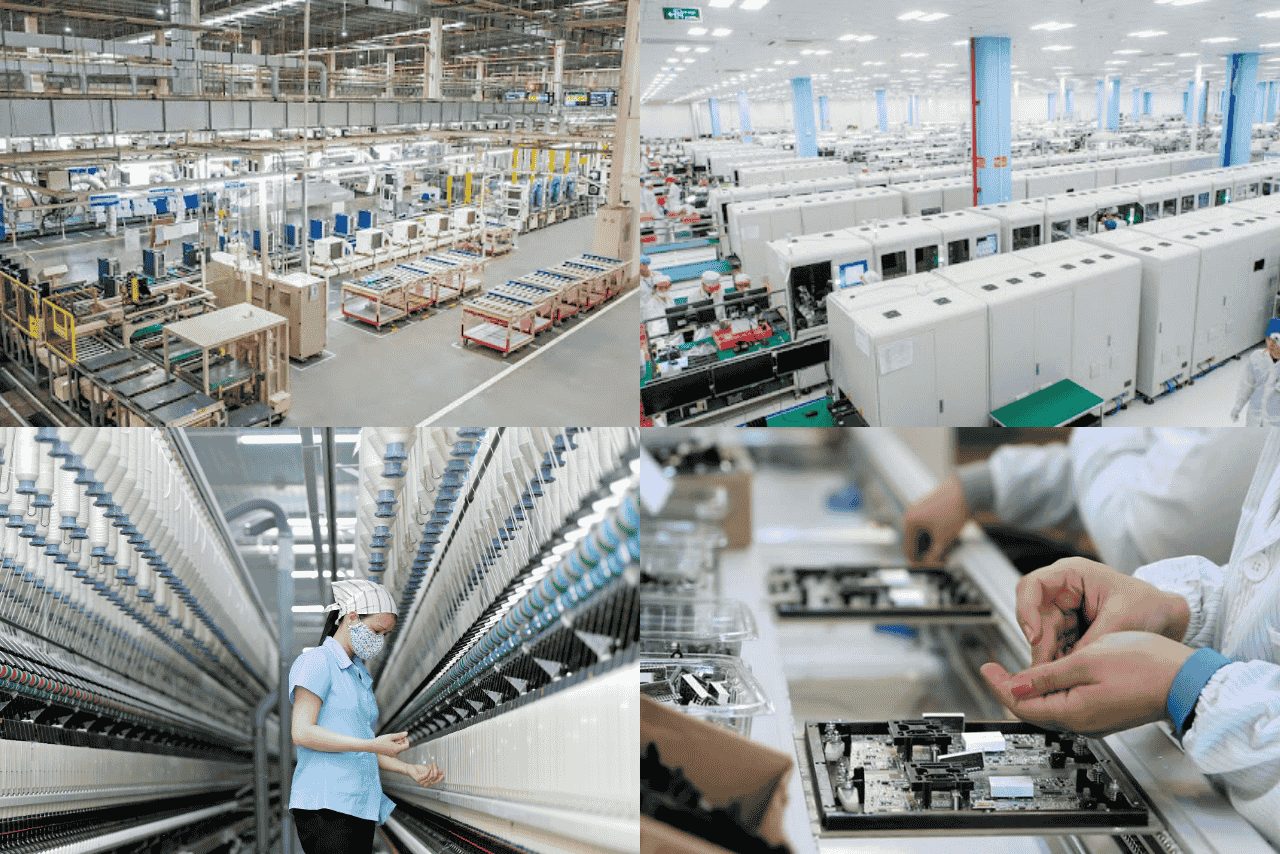
Vietnam’s export growth in electronics, machinery, textiles, and garments continues to drive factory demand.
Workforce availability and cost structure
Another reason demand for a factory for rent keeps growing is Vietnam’s workforce. More people are working in manufacturing each year, and labor costs are still lower than in many nearby countries. For companies entering Vietnam, this makes renting a factory a practical way to manage costs from the start.
That said, labor conditions are not the same in every area. In well-developed industrial zones, workers may change jobs more often, especially in skilled positions. For that reason, it is important to check how easy it is to hire workers nearby, what skills are available, and how wages are changing. A factory that is cheap to rent but hard for staff can create problems very quickly.
Foreign investment and industrial expansion
Foreign investment is another key reason demand for a factory for rent keeps rising. The data from General Statistics Office of Vietnam show that FDI in Vietnam 2025 attracted over $38.42 billion, with more than half going into manufacturing and processing. Many of these projects create new factories, industrial parks, and logistics facilities across the country.
As more foreign companies enter Vietnam, competition for ready-built factories increases. To move faster and lower early risk, many investors choose to rent instead of buying land. In real terms, this means good factories are often leased quickly. If decisions are delayed, choices become fewer and flexibility is harder to keep.
Rent vs. Build Factory: Which Fits Your Strategic Implementation In Vietnam
Renting or building a factory affects speed, cost, and flexibility. This comparison helps your company choose the option that fits your stage of growth and risk tolerance in Vietnam.
| Aspect | Rent a Factory | Build a Factory |
| Time to start | Fast. Move in and begin setup quickly | Slow. Requires land access, permits, and construction |
| Upfront cost | Lower. No major capital tied up early | High. Large investment needed from the start |
| Flexibility | High. Easier to expand, shrink, or relocate | Low. Hard to change once built |
| Risk level | Lower early risk while learning the market | Higher early risk due to long commitment |
| Layout control | Limited to existing building design | Full control over design and workflow |
| Best fit for | First-time entrants, growing businesses | Large, stable, long-term operations |
For most companies entering Vietnam for the first time, a factory for rent is the practical starting point. It lets you operate sooner, manage risk, and stay flexible. Building a factory often makes sense later, once demand is stable and local experience is strong.
Finding A Factory For Rent In Vietnam
Once you decide to rent a factory in Vietnam, the next step is choosing the right type of site and the right location. These choices affect how smoothly setup runs and how flexible your operations can be over time.
Industrial zones vs standalone factories
Industrial zones are often the safer starting point for foreign companies. They are designed for manufacturing and already approved for industrial use. This reduces uncertainty and saves time during setup. Industrial zones usually offer:
- Clear land-use status, which helps avoid legal confusion
- Centralized licensing support, making approvals easier to manage
- Reliable utilities such as power, water, and wastewater systems
Because these zones are managed by professional operators, coordination with local authorities is often simpler.
Meanwhile, standalone factories may look attractive at first, especially when the rent is lower or freedom in layout. They can offer:
- Lower rent in some locations
- More freedom to adjust internal layouts
However, standalone sites often require more work behind the scenes. For foreign companies, they can increase compliance risk, slow down approvals, and add coordination to work with multiple local authorities. What you save on rent can be lost in time and management effort.
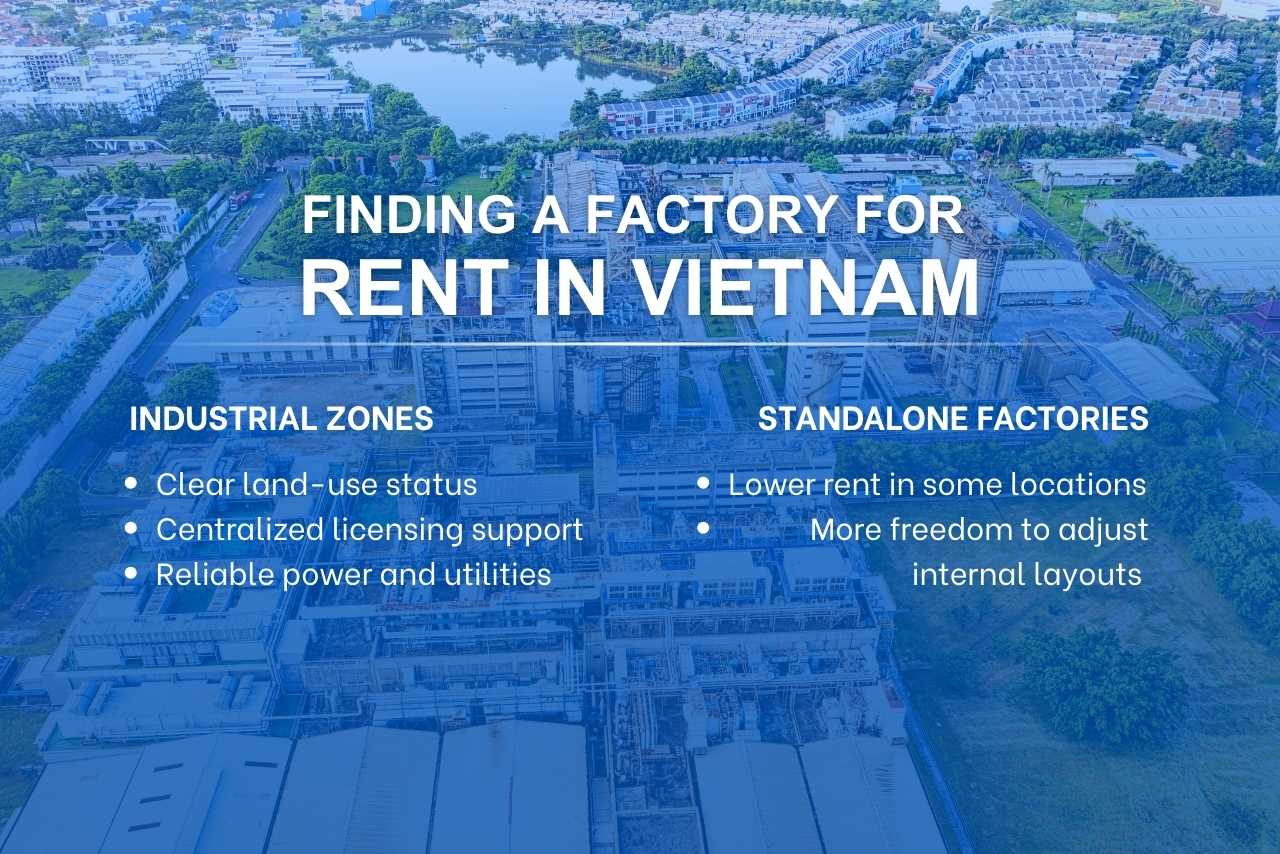
Comparison between industrial zones and standalone factories in Vietnam, highlighting differences in compliance, utilities, and risk.
Regional comparison: North, Central, South
After choosing the factory type, the next question is the location. In Vietnam, the North, Central, and South each offer different trade-offs. A short overview helps narrow your focus before a deeper review.
- The North region: Strong supplier networks and its role in China+1 strategies. It works well for companies that rely on existing supply chains, but labor turnover can be higher and land availability more limited.
- The Central region: Lower costs and more available land. It suits companies with simpler supply chains or longer planning horizons, though supporting industries are thinner.
- The South region: Deep industrial and service ecosystems with experienced workers and strong logistics. Demand for factory for rent in Ho Chi Minh remains high, but wages and competition are higher.
For a deeper regional breakdown and specific industrial locations, you can explore Industrial parks in Vietnam: Where to implement your future factory for more detailed guidance.
Key Factors When Renting A Factory In Vietnam
Once you select a specific factory, small details can affect cost, timing, and operations. Checking key factors early helps reduce risk and avoid delays after the lease is signed.
Legal status and land use rights
Before focusing on price or layout, it is important to confirm that the factory is legally suitable for manufacturing. In Vietnam, land-use rules are strict, and a mismatch between land purpose and actual use can stop licensing or future expansion.
You should always verify:
- The land-use purpose allows manufacturing, not only storage or warehousing
- The lease term matches your investment horizon, including possible extensions
- Sublease rights are clearly stated, especially when leasing through an intermediary
If these points are unclear, authorities may delay approvals, or planned expansion may not be permitted. Resolving land issues after operations begin often leads to higher cost and lost time.
Licensing, fire safety, and environmental compliance
Renting a factory does not automatically mean that all compliance requirements are in place. Many approvals depend on your production process, equipment, and layout, rather than on the building alone.
It is important to review:
- The current fire safety approval status and whether it fits your planned setup
- Environmental requirements, such as wastewater treatment and emissions
- The gap between existing licenses and your actual operations
Problems in these areas often appear during renovation or when installing machinery. Identifying gaps early helps prevent redesigns, additional inspections, and unexpected shutdowns.
Infrastructure, utilities, and technical fit
Beyond legal and compliance checks, the factory must support stable daily operations. Marketing materials often describe ideal conditions, but real performance can differ once production starts.
Key items to assess include:
- Power stability and backup systems, especially in high-load operations
- Water supply and wastewater capacity that match your production needs
- Floor loading and ceiling height, which affect equipment placement and safety
These technical details directly influence uptime, efficiency, and worker safety. A factory that meets these requirements helps keep production running smoothly and reduces management effort over time.
Execution Risks Companies Often Miss
After signing a lease, many companies expect progress to stay smooth. In reality, risks often appear during setup and early operations. Identifying them early helps protect timelines and control costs.
- Set up delays after signing: Licensing clarifications, utility upgrades, or design changes during handover can slow your launch. Planning time buffers early helps you adjust without rushing decisions.
- Hidden costs beyond rent: Fit-out work, fire safety, or environmental upgrades, and ongoing coordination often increases total cost. When planned upfront, a factory that looks affordable on paper is more likely to stay efficient in practice.
Tips For Renting A Factory In Vietnam For Foreigners
Renting a factory in Vietnam can feel complex at first, especially for foreign companies. A few clear steps can help you avoid early mistakes and move forward with more confidence.
- Clarify investment structure before site selection: your legal setup affects who can sign the lease, what licenses you can obtain, and how taxes apply. Confirm this before shortlisting factories.
- Treat site visits as risk checks, not sales tours: during visits, focus on utility capacity, nearby tenants, and access roads at busy hours. Ask how the factory works in daily operations, not just about rent.
- Work with local stakeholders strategically: zone managers, licensing offices, and utility providers for all influence setup speed. Early alignment helps reduce delays later.
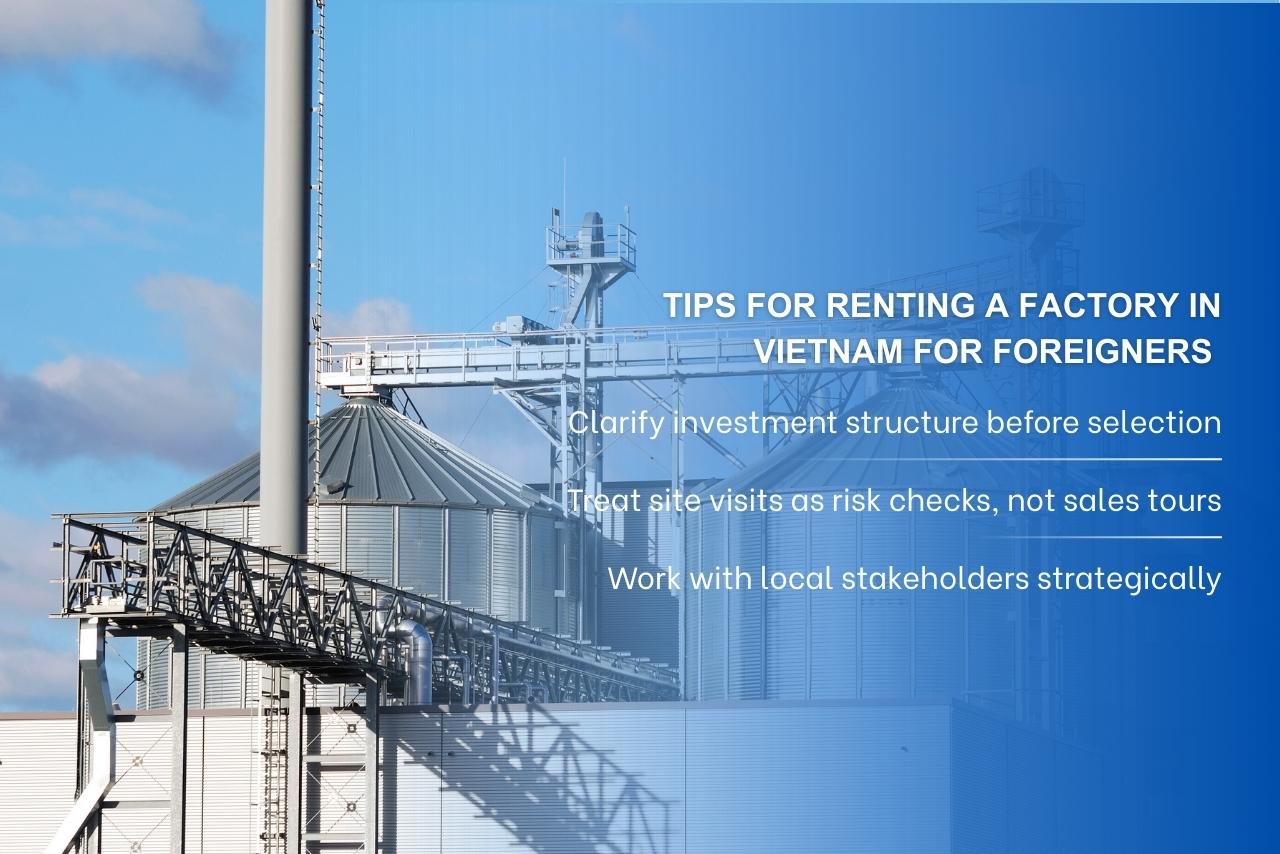
Foreign companies should follow clear checks to avoid delays and compliance risks when renting a factory in Vietnam.
Final Thoughts
Renting a factory in Vietnam is an operational decision that affects cost, compliance, and how easily your business can grow. The right factory for rent in Vietnam helps you start smoothly and stay flexible, while a rushed choice can slow you down later.
At Source of Asia, our sourcing team helps investors manage global supply chains with clearer structure and local insight. We support clients at every stage, from identifying suitable factories and setting up operations to outsourcing manufacturing and coordinating logistics.
To deepen your preparation, you may also explore:
- Our Sourcing Services for your business in Asia.
- Or you can contact us to discuss your sourcing context in more detail.
Frequently Asked Questions
For first-time entrants, rent is usually better. It reduces upfront cost, shortens setup time, and lowers early risk. Building often makes sense later, once demand and operations are stable.
It depends on your needs. The North suits supply-chain-driven manufacturing; the Central region offers lower costs and more land, and the South provides strong logistics and experienced labor but at higher cost.
They should confirm land-use legality, licensing readiness, fire and environmental compliance, and real utility capacity. These checks help avoid delays, hidden costs, and disruptions after operations begin.