Introduction
Many companies operating across ASEAN are discovering that their regional HQ strategies no longer support how they run the business. However, many still approach the region as a cost-efficient production base, separating operational decisions from strategic control. In practice, this often leads to fragmented structures, limited oversight, and growing compliance pressure across multiple markets.
ASEAN is now evolving into a platform where governance, tax structuring, supply chain coordination, and market access are designed together. As operations span several countries, the way you structure your Regional HQ directly affects cost efficiency, risk exposure, and execution speed.
In this article, we – Source of Asia, explain how Regional HQ strategies in ASEAN are evolving and why this shift matters. Understanding these changes helps you design a structure that supports both regional control and operational execution.
Key Insights
- Regional HQ strategy guides leadership and operations across ASEAN, improving cost efficiency, compliance, and execution speed.
- Singapore is the main strategic hub, while Vietnam is growing as an operational HQ with strong manufacturing and talent.
- Thailand, Indonesia, and Malaysia offer sector-specific, market-focused, and shared-services HQ functions.
- Companies increasingly use multi-country or hybrid HQ models for flexibility, cost savings, and supply chain alignment.
- Effective HQs balance strategic control with operational efficiency, enabling faster decisions and stronger regional integration.
What Is A Regional HQ Strategy?
A Regional Headquarters (Regional HQ) strategy defines how a company organizes leadership, control, and coordination across multiple ASEAN markets. In particular, it is not just a matter of choosing a location. The strategy determines how governance, compliance, tax, supply chain, and operational execution are managed at a regional level to support growth and efficiency.
A Regional HQ is a centralized office, often based in hubs like Singapore, designed to oversee and support subsidiaries across Southeast Asia or the broader Asia-Pacific region. Moreover, it serves as a command center, bridging global corporate strategy with local market needs. Unlike a local office, which focuses on operations in a single country, a regional HQ manages multiple country operations, therefore enabling strategic decision-making, resource allocation, and operational efficiency.
Key functions of a regional HQ typically include:
- Strategic planning & regional management: Align country-level execution with broader corporate objectives
- Financial control & tax structuring: Manage cross-border cash flow, optimize taxes, and leverage incentives
- Supply chain coordination: Integrate sourcing, production, and distribution across multiple markets
- Talent and leadership management: Deploy regional teams and build cross-market capabilities
- Business support services: Finance, HR, R&D, and sales support for subsidiaries
Consequently, for C-level leaders, the regional HQ strategy is a critical decision. It directly affects:
- Cost efficiency – tax optimization, incentive access, and operating costs
- Compliance and risk exposure – regulatory complexity, reporting, and governance
- Execution speed – infrastructure, talent availability, and market connectivity
Thus, a well-structured Regional HQ enables centralized control, faster decision-making, and scalable operations, while a poorly designed structure increases fragmentation, delays, and regulatory risk.

Regional HQs coordinate strategic planning, finance, supply chain, talent, and business support to ensure efficient multi-country operations.
Why Regional HQ Strategies in ASEAN Are Changing
ASEAN HQ strategies are evolving as companies adapt to rising costs, complex markets, and supply chain shifts, moving from single-location models toward multi-country, more flexible structures.
From single-HQ model to multi-location strategy
Traditionally, companies placed all regional functions in a single hub, most often Singapore, to centralize management, finance, and strategy. According to the Economic Development Board, this model provides stability, a strong legal framework, and connectivity across ASEAN.
However, rising operational complexity, supply chain diversity, and cost pressures are driving companies to rethink this model. Thus, companies are now:
- Splitting functions across multiple ASEAN countries to better align with operations and local markets.
- Placing support activities where they are most efficient: finance in Singapore, operations in Vietnam, and market access in Indonesia.
- Taking advantage of tax incentives and cost benefits in emerging hubs such as Malaysia, Thailand, and Vietnam.
This multi-location approach allows companies to align cost structures with operations, reduce single-point risk, and improve responsiveness across ASEAN markets.

Companies are shifting from a single centralized HQ to multi-location structures, distributing operations across ASEAN for cost efficiency and agility.
Supply chain rebalancing and China+1 impact
The China+1 strategy is reshaping Regional HQ structures in ASEAN. In 2026, companies are diversifying operations to Vietnam, Thailand, and Indonesia to reduce reliance on China, control costs, and mitigate risk. This drives supply chain rebalancing in ASEAN, requiring careful coordination of management, finance, and market access across multiple countries.
Consequently, supply chains are increasingly multi-country by design, and HQ structures must reflect this fragmentation to remain effective. Regional HQ decisions are now closely linked to supply chain strategy, ensuring greater agility, cost efficiency, and faster decision-making across ASEAN markets.
| To see how these shifts are reshaping the region’s supply networks and creating new opportunities for HQ strategy, explore our full insight: ASEAN’s Role in Global Supply Chain Rebalancing (2026) |
Rising complexity in tax and regulatory environments
ASEAN tax and regulatory systems are becoming stricter with digital compliance and real‑time reporting, requiring more data transparency and accuracy. Deloitte Southeast Asia reports that digital filing requirements are expanding across multiple countries, making minimal presence or simplified structures insufficient.
Companies now face less flexibility in tax planning, a greater need to show substance in HQ locations, and closer scrutiny of intercompany transactions. Aligning your HQ structure with real operational presence is essential, supported by strong governance, integrated tax functions, and clear documentation to manage compliance while maintaining efficiency.
|
As HQ strategies become more complex across ASEAN, many companies reassess their regional structure to align with operations and reduce risk. 👉 Contact our team to evaluate the most suitable HQ structure for your ASEAN expansion. |
New Regional HQ Models Emerging in ASEAN
ASEAN is seeing diverse HQ models emerge as companies balance strategic control, operational efficiency, and market proximity. Understanding these models helps firms choose structures that suit growth and regional execution.
Centralized HQ model (Traditional approach)
The centralized HQ model is typically located in Singapore, where companies consolidate all strategic, financial, and decision-making functions in one location. This setup offers a stable, well-regulated base, providing clear governance, streamlined reporting, and direct access to global financial networks, making it easier to manage regional operations from a single point.
However, this model presents challenges. Operating costs are high, competition for skilled talent is intense, and being distant from key operational markets can reduce agility. Consequently, decision-making and market responsiveness may be slower, requiring careful planning to maintain efficiency across ASEAN. This model is best suited for companies with limited operational complexity or an early-stage ASEAN presence.
Distributed HQ model (Multi-country headquarters)
The distributed HQ model spreads functions across multiple ASEAN countries, leveraging each location’s strengths:
- Singapore handles finance and treasury
- Vietnam oversees operations and supply chain
- Indonesia focuses on market-facing activities
This approach allows companies to optimize costs, align closely with local operations, and access diverse talent pools across the region. At the same time, this model introduces complex governance challenges, requires strong coordination systems, and increases management overhead, but when executed well, it balances strategic control with operational agility in fast-growing ASEAN markets. This model is relevant for companies managing multi-country supply chains and localized market operations.
Hybrid HQ model (Strategic + operational split)
The hybrid HQ model combines centralized strategic control with decentralized operational execution. Typically, high-level strategy, finance, and governance remain in a stable hub like Singapore, while market operations, supply chain, and customer-facing activities are managed closer to local markets.
- Balance between control and flexibility, ensuring strategy is consistent while operations respond quickly to market changes
- Scalable across multiple markets, supporting gradual or rapid regional expansion
- Supports faster decision-making, integrating strategic oversight with operational execution
However, it requires a clear definition to avoid confusion, and poor coordination can create duplication, increasing management complexity. Proper implementation ensures efficient, agile regional HQ performance. This model is increasingly used by firms to balance strategic control with operational proximity.
How ASEAN Countries Position Themselves as Regional HQ Hubs
ASEAN countries are increasingly competing to host Regional HQs, offering varied advantages in tax, legal frameworks, talent, and connectivity. Companies must evaluate each hub for strategic, operational, and cost efficiency.
Singapore as a strategic HQ hub
Singapore continues to be the leading destination for Regional HQ in ASEAN, offering political stability, strong institutions, and connectivity. By late 2025, over 7,000 MNCs had regional offices there, hosting a significant share of regional headquarters in Asia.
Key advantages include:
- Competitive tax framework with incentives for regional HQ operations, including the Regional Headquarters Award.
- Robust legal and regulatory environment supporting enforcement and dispute resolution.
- Advanced financial ecosystem with deep capital markets and banking services.
At the same time, Singapore’s model has practical limitations:
- High operational costs for real estate and corporate services.
- Strong competition for specialized talent in finance, technology, and management.
While ideal for strategic oversight, Singapore is often paired with operational hubs in lower-cost ASEAN markets to balance cost, talent, and execution.
Vietnam as an emerging operational HQ
Vietnam is emerging as a key location for operational and execution-focused HQ functions, complementing strategic hubs like Singapore. Additionally, companies benefit from their strong manufacturing base, growing talent pool, and cost advantage to support regional activities.
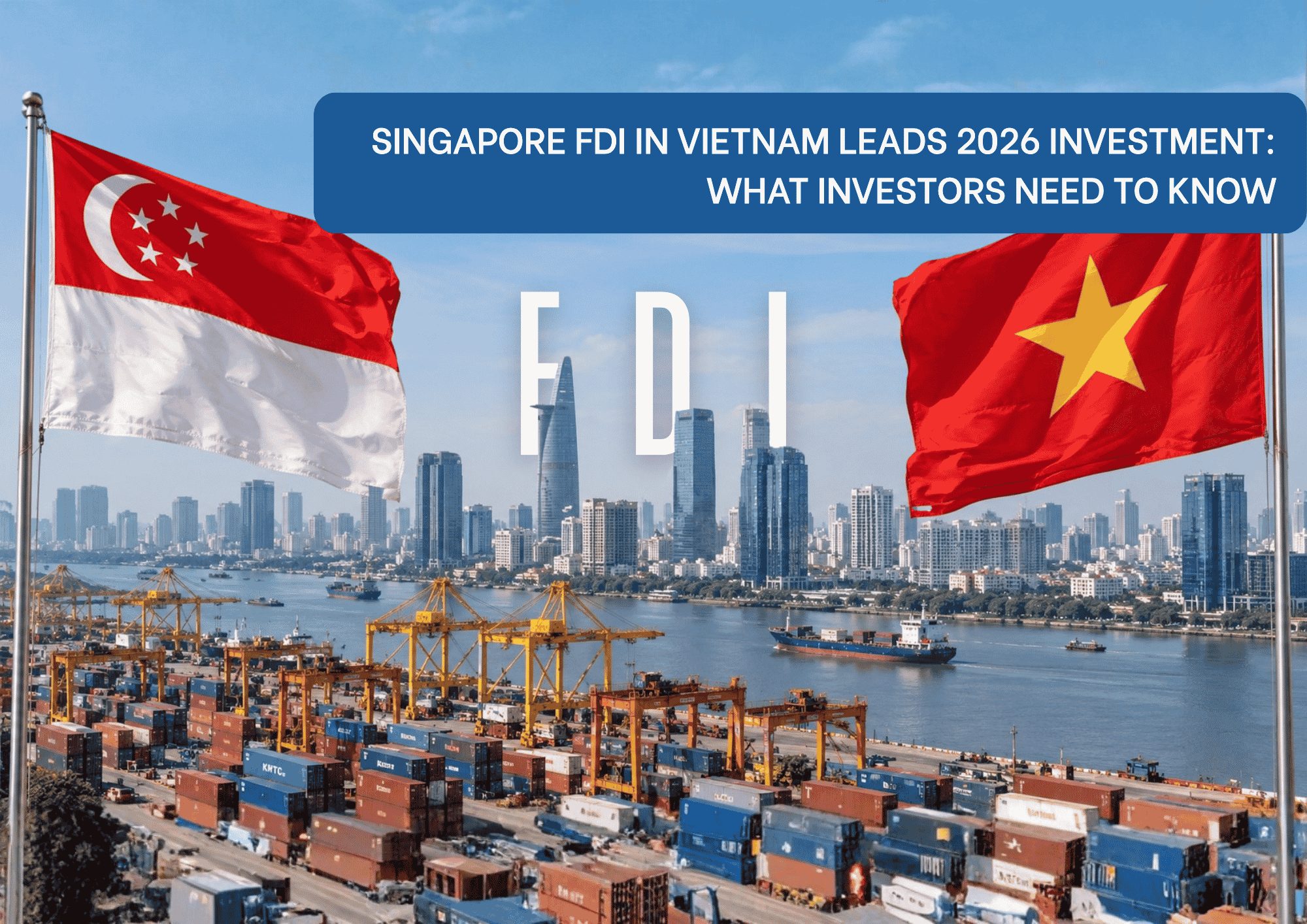
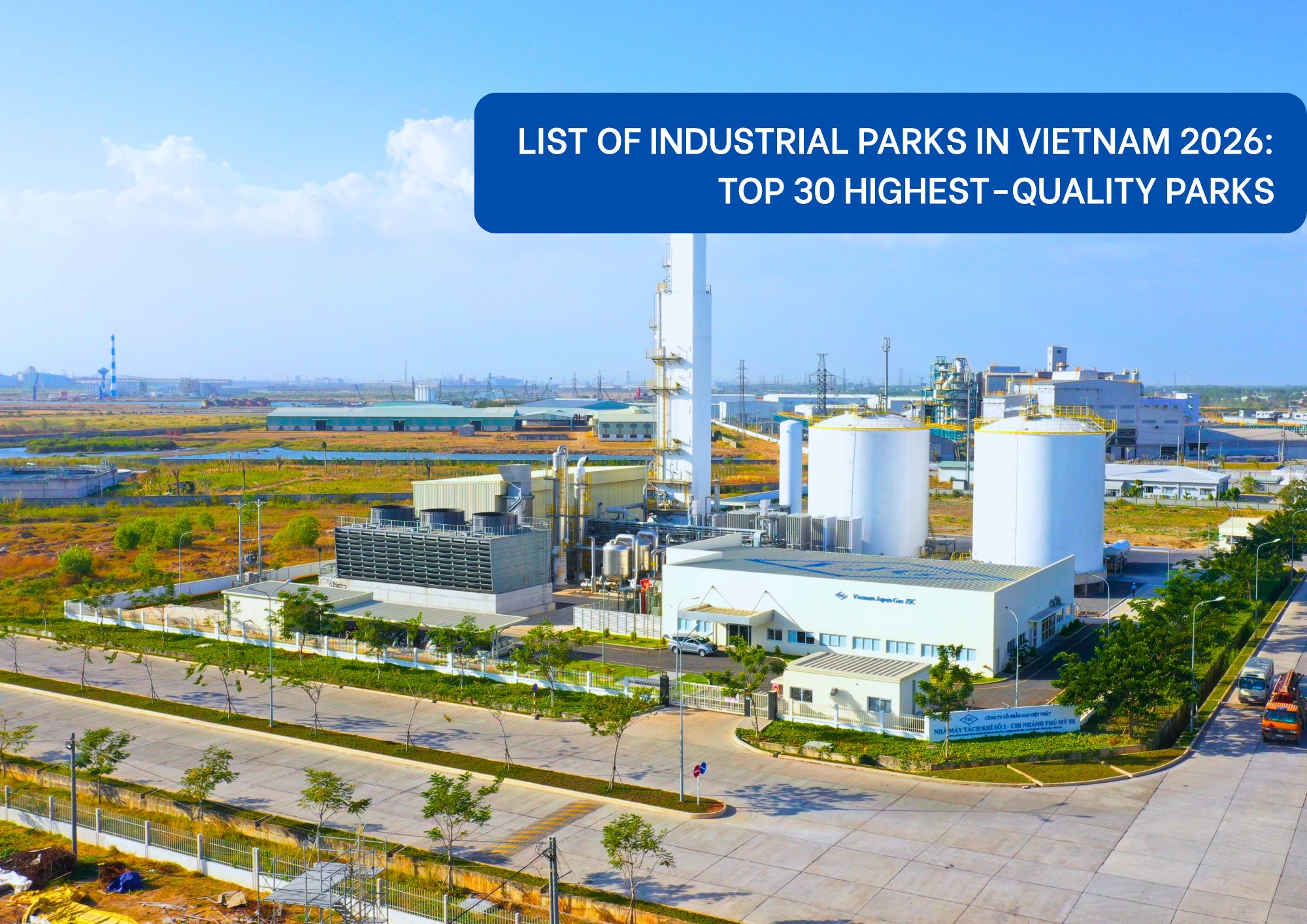
Furthermore, it increasingly drives regional operations and supply chain control, with 292 fully operational industrial parks and Hanoi’s office supply projected at 1.74 million square meters. FDI disbursements hit $27.62 billion in 2025, mainly in manufacturing and processing, thereby reinforcing Vietnam’s role in regional execution and market proximity.
While not replacing Singapore for strategic control, Vietnam offers a cost-effective, operationally focused complement, helping multinational companies balance efficiency, talent deployment, and faster, market-level responsiveness.

Vietnam is growing as an operational HQ hub, supporting regional supply chains, market execution, and cost-effective operations.
Thailand, Indonesia, Malaysia in the HQ equation
Thailand, Indonesia, and Malaysia each play distinct roles in shaping Regional HQ strategies across ASEAN, for example:
- Thailand excels in automotive and industrial sectors, making it ideal for sector-specific HQ functions where operational expertise and industry focus are critical.
- Indonesia offers a large domestic market, supporting market-driven HQ activities that require proximity to consumers and agile local decision-making.
- Malaysia provides an established shared services ecosystem, making it competitive for finance, back-office, and support functions, enabling cost efficiency and access to skilled talent.
Together, these markets complement strategic hubs like Singapore, helping companies optimize operations, talent, and regional responsiveness.
How Companies Should Rethink Their ASEAN HQ Strategy
Before deciding on your ASEAN HQ setup, it’s crucial to assess how your business activities and regional priorities should shape your headquarters structure.
- Align your HQ strategy with supply chain and marketstrategy
Ensure your headquarters reflect key business activities, including sourcing, manufacturing footprint, and go-to-market strategy. Misalignment can cause delays, inefficiencies, and higher costs.
- Evaluate single versus multi-HQ approaches
A centralized strategy is suitable when operations are limited in scale, and governance simplicity is critical. A distributed or hybrid strategy is better when operations span multiple countries; supply chains are fragmented, or cost optimization is a priority.
- Build flexibility into your HQ structure to future-proof your business
Focus on scalability to expand across ASEAN, regulatory adaptability to respond to policy changes, and operational flexibility to shift functions as markets evolve. This ensures your HQ model can keep pace with a dynamic region.
Implications for Investors and Business Leaders
A strategic Regional HQ shapes regional performance, drives faster decisions, improves cost efficiency, strengthens integration, and positions companies to lead multi-market operations across ASEAN.
HQ strategy as a competitive advantage
A well-structured Regional HQ provides a clear competitive edge in ASEAN markets by centralizing strategic oversight while remaining closely connected to operational realities, for example:
- Faster decision-making, allowing companies to respond quickly to market shifts and emerging opportunities
- Better cost control, optimizing expenditures across manufacturing, logistics, and administrative functions
- Stronger regional integration, linking teams, supply chains, and corporate functions for cohesive execution
By aligning HQ roles with operational priorities, companies can streamline execution, reduce inefficiencies, and strengthen cross-border coordination.
Risk of outdated HQ models
Legacy HQ structures pose significant risks for companies operating in ASEAN, as outdated setups often fail to match today’s dynamic market environment. These risks include:
- Over-centralization, which slows decision-making and reduces responsiveness to local market changes
- Slow execution, where operations cannot keep pace with fast-moving supply chains or regional opportunities
- Higher regulatory exposure, increasing the chance of non-compliance and potential penalties
As a result, outdated models can limit growth, reduce competitiveness, and hinder regional agility. Companies must reassess HQ structures to ensure they are flexible, well-coordinated, and aligned with multi-country strategies.
Why ASEAN is becoming a regional command center
ASEAN is evolving beyond a manufacturing base, therefore serving as a coordination layer for regional strategy that enables faster, aligned decision-making across multiple markets.
In addition, the region also acts as a hub for multi-market leadership and a key node in global supply chains, connecting suppliers, logistics, and international customers. This transformation strengthens operational efficiency, regional oversight, and integration, making ASEAN an increasingly attractive location for Regional HQ functions.
| To turn these HQ insights into actionable investment strategies, explore our full guide: Invest in ASEAN 2026: What Foreign Investors Should Know to Succeed |
Final Thoughts
ASEAN is evolving into a strategically critical region, with growing integration, dynamic markets, and expanding operational capabilities. Thus, in 2026, companies that align their regional HQ structures with supply chain, market, and talent priorities can achieve faster decision-making, greater efficiency, and stronger regional oversight.
At Source of Asia, we help multinational companies design and implement ASEAN HQ strategies, from hub selection and operational alignment to regulatory compliance and talent deployment. Our expertise ensures that your regional operations are both scalable and resilient, supporting long-term growth and integration across Southeast Asia.
| Are you planning to optimize or expand your ASEAN HQ? Contact our team to explore tailored strategies and gain actionable insights for your target markets. |
Frequently Asked Questions
Singapore is the top choice for strategic HQs, offering stability, strong legal and financial systems, and global connectivity. Other countries like Vietnam, Thailand, and Malaysia complement it for operational efficiency and market access.
Yes. Multi-HQ models align with supply chains, manufacturing, and markets, enhancing agility and cost efficiency. Centralized HQs suit smaller operations, while distributed or hybrid HQs work when operations span multiple countries or require regional responsiveness.
Tax incentives and compliance shape HQ location. Singapore offers tax concessions for strategic HQs, while other markets may be better for operational functions. Aligning HQ strategy with tax planning ensures cost efficiency and regulatory compliance.