Introduction
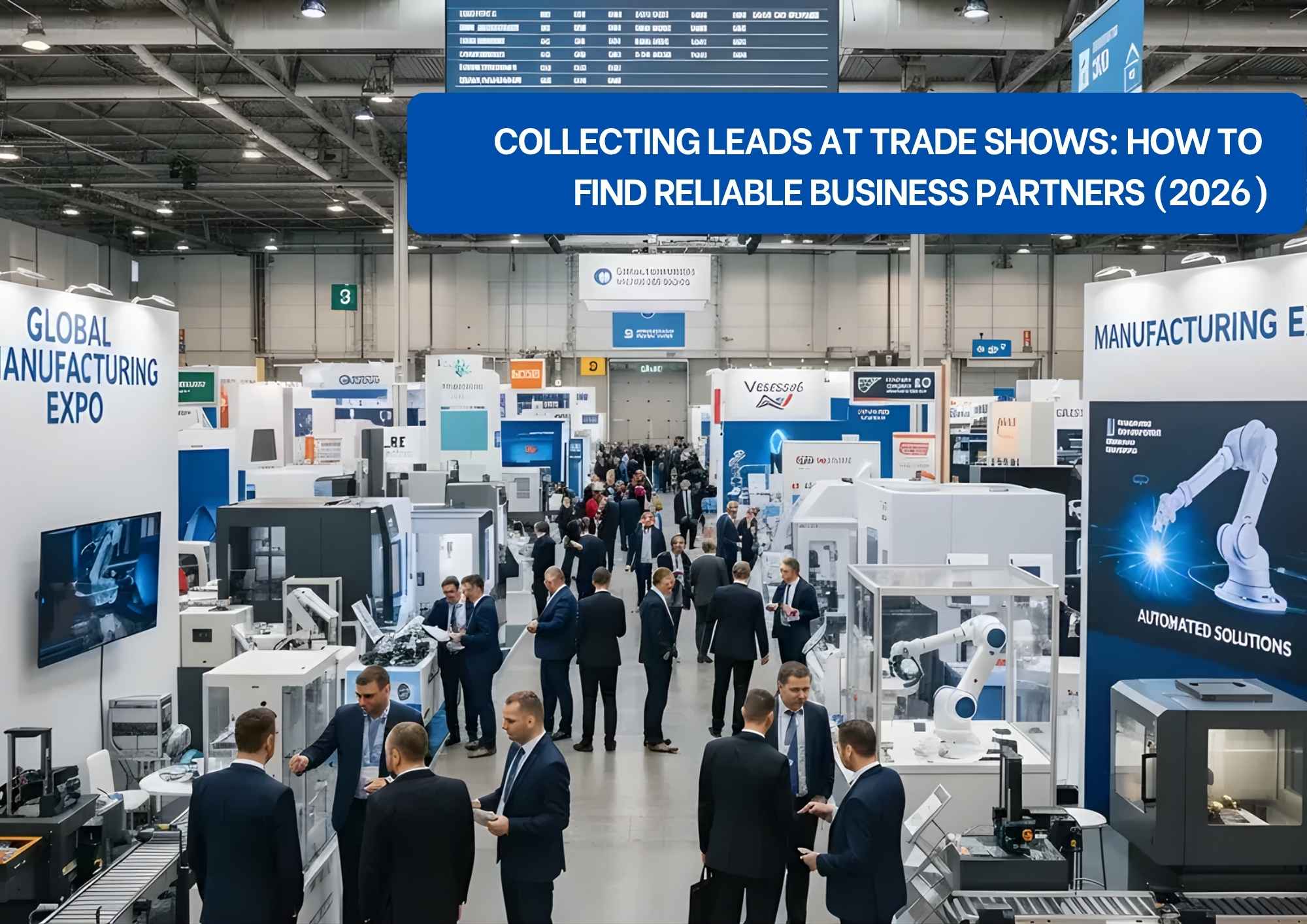
Trade shows are widely used by companies for collecting leads at trade shows, partner search, and market entry in Southeast Asia. They bring together buyers, distributors, and industry stakeholders in a structured environment, allowing direct engagement within a short timeframe. However, many companies face a common issue: collecting a high volume of contacts that do not convert into real business opportunities.
In this article, we – Source of Asia, explain how collecting leads at trade shows works in practice, how to qualify and identify reliable partners, and how companies can turn event interactions into real business opportunities in the region.
Key Insights
- Trade shows remain a top method for collecting leads at trade shows, offering direct access to qualified buyers.
- Face-to-face interactions provide real-time market validation and allow immediate feedback on product relevance and pricing.
- Structured lead management and qualification turn initial contacts into real business opportunities efficiently.
- B2B matchmaking and digital tools enhance engagement, ensuring high-value, targeted meetings before, during, and after events.
Why Trade Shows Remain One of the Best Sources of B2B Leads
Trade shows remain effective for collecting leads at trade shows, offering direct access to qualified buyers and real-time evaluation – something increasingly difficult to achieve through saturated digital channels.
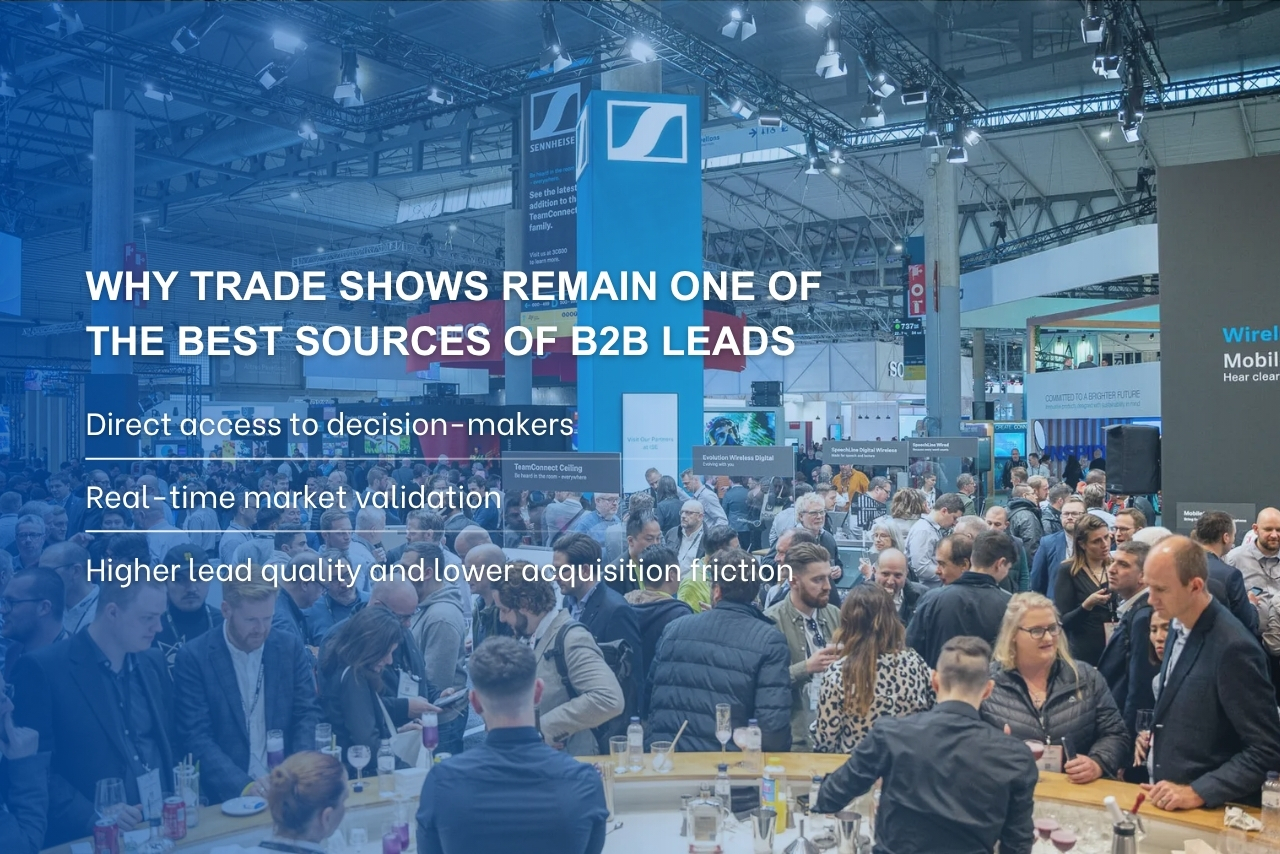
Trade shows allow real-time engagement with decision-makers, providing actionable market feedback and higher-quality leads.
Direct access to decision-makers
Trade shows bring direct access to decision-makers within a short timeframe, making engagement more efficient than remote outreach. In many cases, up to 81% of attendees have purchasing authority or influence, so conversations are more focused and closer to a real decision.
In practice, you can meet distributors, importers, and buyers in one place, which improves efficiency significantly. You are also able to address technical and commercial questions immediately, helping both sides align faster. This allows you to accelerate early-stage discussions that would typically take months through back-and-forth communication.
Real-time market validation
Unlike remote research, trade shows provide immediate feedback under real market conditions, where buyer reactions are direct and unfiltered. Instead of relying on assumptions, you can test how your product performs in front of actual target audiences.
You can assess product relevance, pricing expectations, and buyer interest across segments through real conversations. At the same time, you observe how competitors position similar offerings. This allows you to adjust your approach early, helping reduce market entry risk and avoid misaligned positioning before scaling further.
Higher lead quality and lower acquisition friction
Trade show participants are typically pre-qualified by intent. They invest time and cost to attend, which signals active interest and reduces the need for initial screening. Thus, you engage with contacts who are already exploring solutions, not just responding to outreach.
Compared to outbound sales:
- Lower cost per meeting than field visits or cold acquisition
- More targeted leads, aligned with your industry and offering
- Faster progression, as conversations start at a more advanced stage
This makes collecting leads at trade shows typically generate fewer contacts but more real opportunities when managed with a structured qualification approach.
👉 To maximize the value of trade shows and turn leads into real business opportunities, you can visit this page:
Trade Fairs in Southeast Asia 2026
The Difference Between Leads and Real Business Opportunities
Not all contacts are equally valuable. Understanding the difference helps prioritize follow-up and improve conversion. Key factors that distinguish leads from real business opportunities include:
| Factor | Lead | Real Business Opportunity |
| Decision-Making Authority | Often unclear, may involve junior staff or non-influencers | Confirmed decision-makers or key stakeholders with authority |
| Intent | Casual interest or early inquiry, “window shoppers” | Active need, exploring solutions, budget available |
| Market Relevance | May not match your target market | Fits clearly within your target market |
| Stage | Top-of-funnel, requires nurturing and qualification | Mid-to-bottom funnel, ready for proposals, quotes, or trials |
| Engagement | Minimal or one-off contact | Active dialogue, multiple meaningful interactions |
| Probability of Closing | Low; uncertain outcome | High; signals include interest in pricing, MOQ, or trial agreements |
This comparison helps your team prioritize follow-up, save time, and convert leads into real business opportunities.
Trade Show Lead Generation Ideas That Actually Work
To maximize lead generation at trade shows, companies should combine smart technology, interactive engagement, and structured follow-up. Practical methods include:
1. Leverage technology & digital tools
- QR & badge scanning: Capture leads quickly via scanners, mobile apps, or QR codes linked to forms and materials.
- Event apps & CRM sync: Automatically transfer captured data into your CRM for immediate follow-up.
- Market-specific messaging apps: Use local platforms (Zalo, LINE, WeChat, KakaoTalk) with QR codes to increase post-show contact rates.
- Bilingual digital materials: Provide QR-linked catalogs and brochures in English and local languages for easier internal sharing.
2. Engage Directly & Create Experiences
- Interactive incentives: Use mini games, prize draws, or giveaways to encourage lead submission.
- Product demonstrations: Enable hands-on experience while capturing qualified interest.
- Networking & hospitality: Use coffee, snacks, or informal sessions to increase dwell time and build trust.
- Business card exchange etiquette: Bring at least 3x expected cards and exchange them respectfully as standard business practice.
- Matchmaking: Connect with pre-qualified buyers through structured meetings.
3. Optimize Your Booth for Lead Capture
- Quick Registration Forms: Simple tablet forms improve event data capture by increasing completion rates.
- Bilingual booth staff: Ensure staff can hold real conversations in local language, not just translate.
- Decision-capable staff: Enable on-site discussions on pricing, terms, and timelines to avoid losing interest in buyers.
- Booth design for sharing: Use strong visuals and branding to encourage real-time social media sharing.
- Strategic booth location: Choose central aisles, entrances, or near stages to maximize foot traffic and lead quality.
4. Post-Event Lead Management
- Lead Qualification: Rank leads as Hot, Warm, or Cold to prioritize resources effectively.
- Timely Follow-Up: Send emails with thank you and product details within 24–48 hours to keep leads warm.
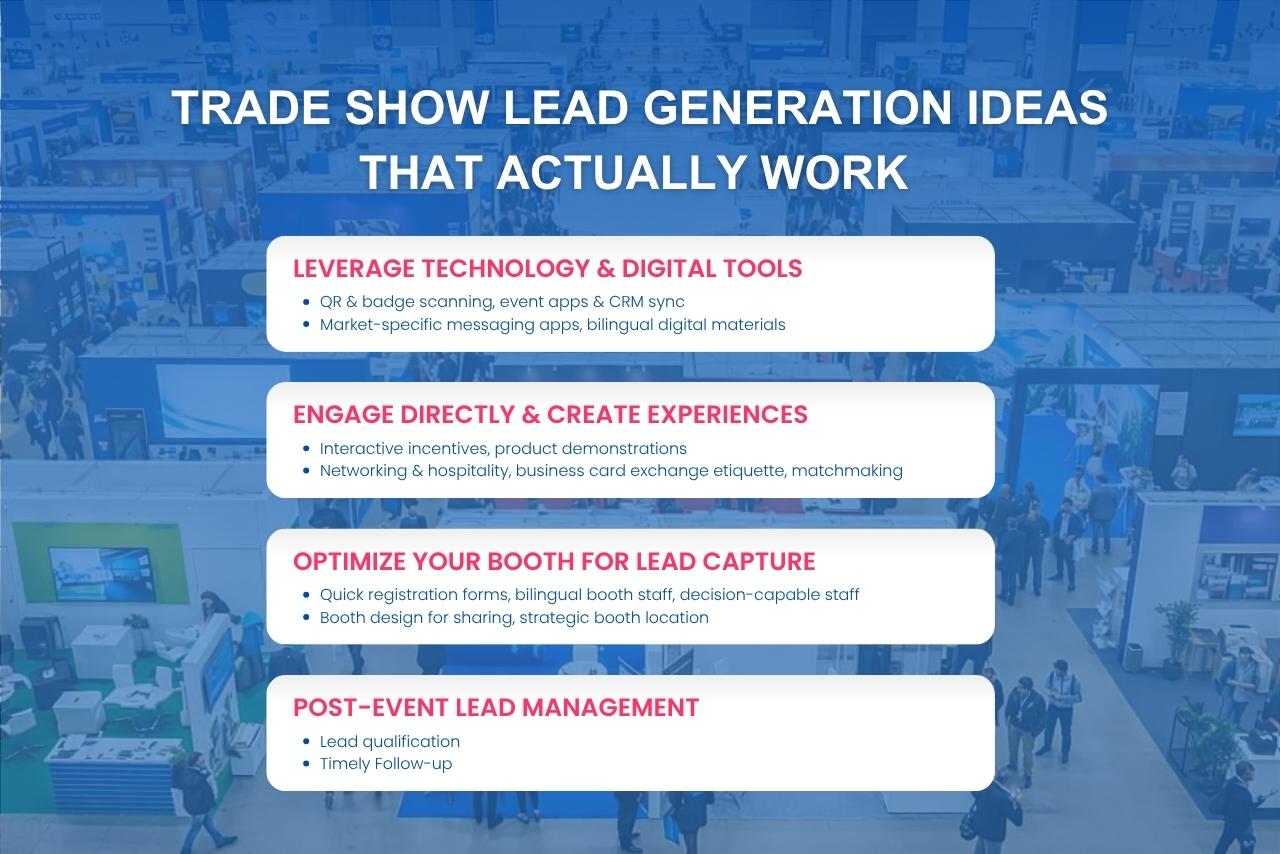
Smart technology, interactive engagement, and structured follow-up maximize lead capture and conversion at trade shows.
How To Identify Reliable Partners at Trade Shows
Successfully finding reliable partners at trade shows requires a structured approach across three key phases: before, during, and after the event.
Pre-show preparation
Before attending, thorough preparation sets out the foundation for identifying reliable partners. Start by analyzing the exhibitor list to shortlist companies aligned with your target market. Schedule meetings in advance with decision-makers using LinkedIn, event apps, or official trade show platforms. Early research helps focus your time on prospects with real potential. Key considerations include:
- Company reputation and past track record
- Existing client portfolio relevant to your market
- Operational capacity and scalability
- Contact information and availability of key decision-makers
Preparing well reduces wasted interactions and positions you to approach only those with genuine potential.
On-site evaluation
During the event, a face-to-face assessment is critical. Visit booths and engage directly with potential partners to verify claims and observe professionalism. Evaluate not only interest but also capability and fitness. Key steps include:
- Ask specific questions about market coverage, distribution channels, and past projects
- Request supporting documentation such as licenses, certifications, or client references
- Compare multiple candidates side-by-side on operational readiness, communication quality, and responsiveness
- Observe behavior for clarity, consistency, and willingness to discuss next steps
On-site interactions allow you to assess the real commitment and credibility of potential partners in real time, reducing the risk of wasted follow-up efforts. You can also look for key indicators of a reliable partner, including:
- Providing references or a demonstrated track record
- Active and professional presence on social media
- Clear, consistent communication and transparency about capabilities
- Possessing necessary industry certifications
Post-show follow-up
After the trade show, timely follow-up is essential to move leads toward actionable partnerships. Engage with qualified contacts quickly to maintain interest and momentum. Effective post-show actions include:
- Sending personalized emails referencing specific discussions
- Clarifying outstanding questions about capabilities or services
- Scheduling follow-up calls or virtual meetings for deeper evaluation
- Tracking interactions in your CRM to prioritize leads by readiness and potential
Prompt follow-up reinforces reliability, demonstrates professionalism, and ensures promising contacts advance toward real business opportunities rather than fading into the lead pool.
|
Once you understand how to identify reliable partners at trade shows, consider participating in upcoming events to build effective connections. 👉 Check out the Top 10 Trade Shows Expo in Southeast Asia for 2026 |
The Importance of B2B Matchmaking at Trade Shows
B2B matchmaking transforms trade shows from broad networking events into highly targeted business opportunities. Rather than relying on random introductions, matchmaking platforms use advanced algorithms to connect companies with partners that align with their market, needs, and decision-making authority.
Key advantages include:
- Pre-event insights and connections: Attendees can review potential matches, request meetings, and start building relationships before the event.
- Efficient, high-value meetings: AI-driven matchmaking ensures introductions are relevant, actionable, and focused on real business potential.
- Extended engagement beyond the show: Platforms support ongoing communication, enabling partnerships to develop well after the event ends.
- Data-driven analysis: Organizers and participants can track meeting confirmations, networking patterns, event performance, and refining future matchmaking strategies.
By integrating digital matchmaking into trade shows, companies can maximize ROI, strengthen partnerships, and accelerate lead-to-opportunity conversion in a structured, measurable way.
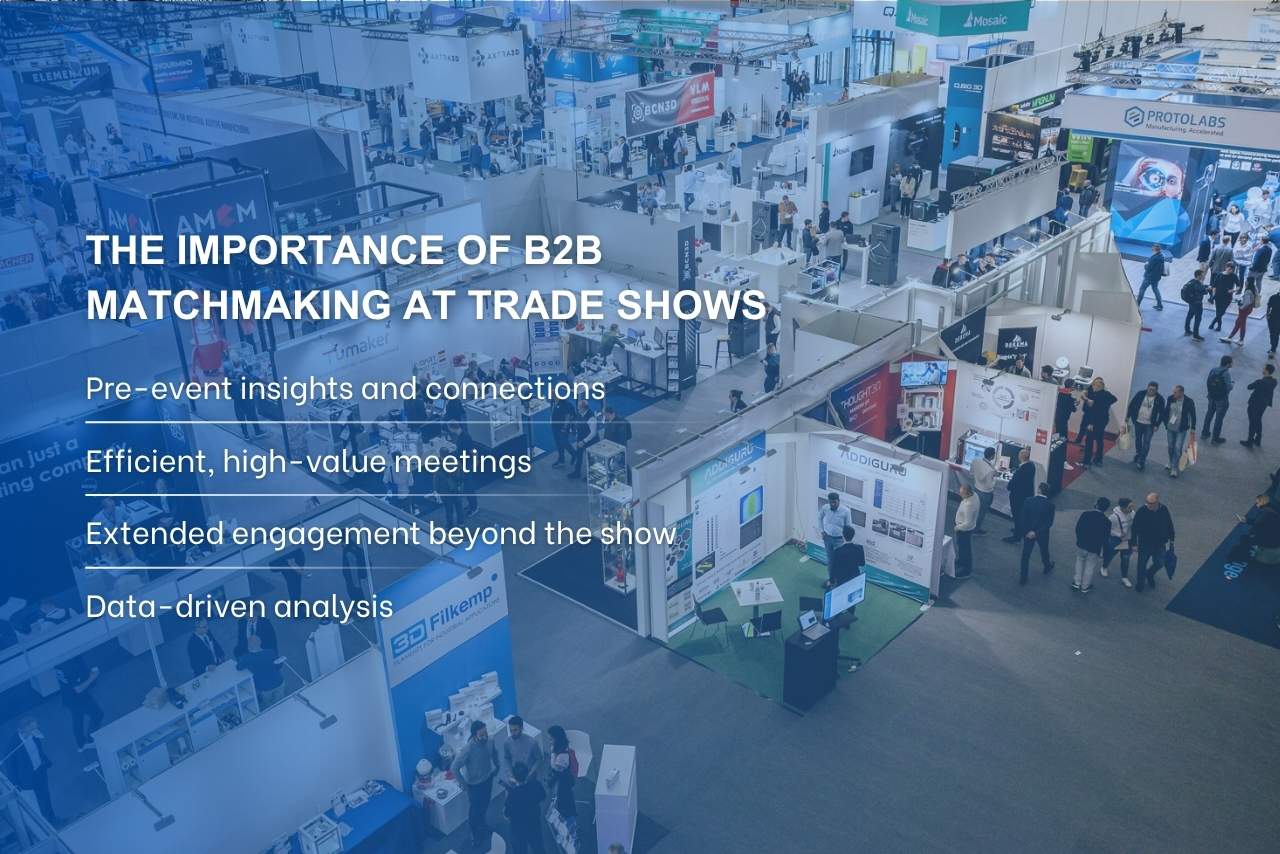
AI-driven matchmaking connects companies with relevant partners, accelerating partnerships and boosting ROI at trade shows.
Conclusion
Collecting leads at trade shows is one of the most effective ways to engage qualified buyers, evaluate market demand, and identify reliable partners efficiently. Success depends on careful preparation, targeted engagement, and prompt follow-up, ensuring interactions turn into real business opportunities.
At Source of Asia, our Trade Mission Services support companies throughout the process: selecting relevant events, arranging pre-qualified B2B meetings, managing on-site logistics, and providing post-show intelligence, including competitor analysis and regulatory guidance to inform market entry decisions across Southeast Asia.
If you are planning to attend a trade show, explore our Trade Mission Services to see how we help companies turn contacts into actionable business opportunities through a structured, data-driven approach.
Frequently Asked Questions
Engage directly with decision-makers, pre-screen attendees, and use technology like QR scanning or event apps. Interactive activities, product demos, and clear messaging help attract genuinely interested participants, ensuring the leads you collect are relevant, actionable, and easier to convert into real business opportunities.
Evaluate leads based on decision-making authority, budget, market relevance, and level of interest. Prioritize those who engage in multiple meaningful interactions, request pricing or product details, and show readiness for proposals or trials. This structured qualification separates genuine prospects from casual or low-value contacts.