Introduction
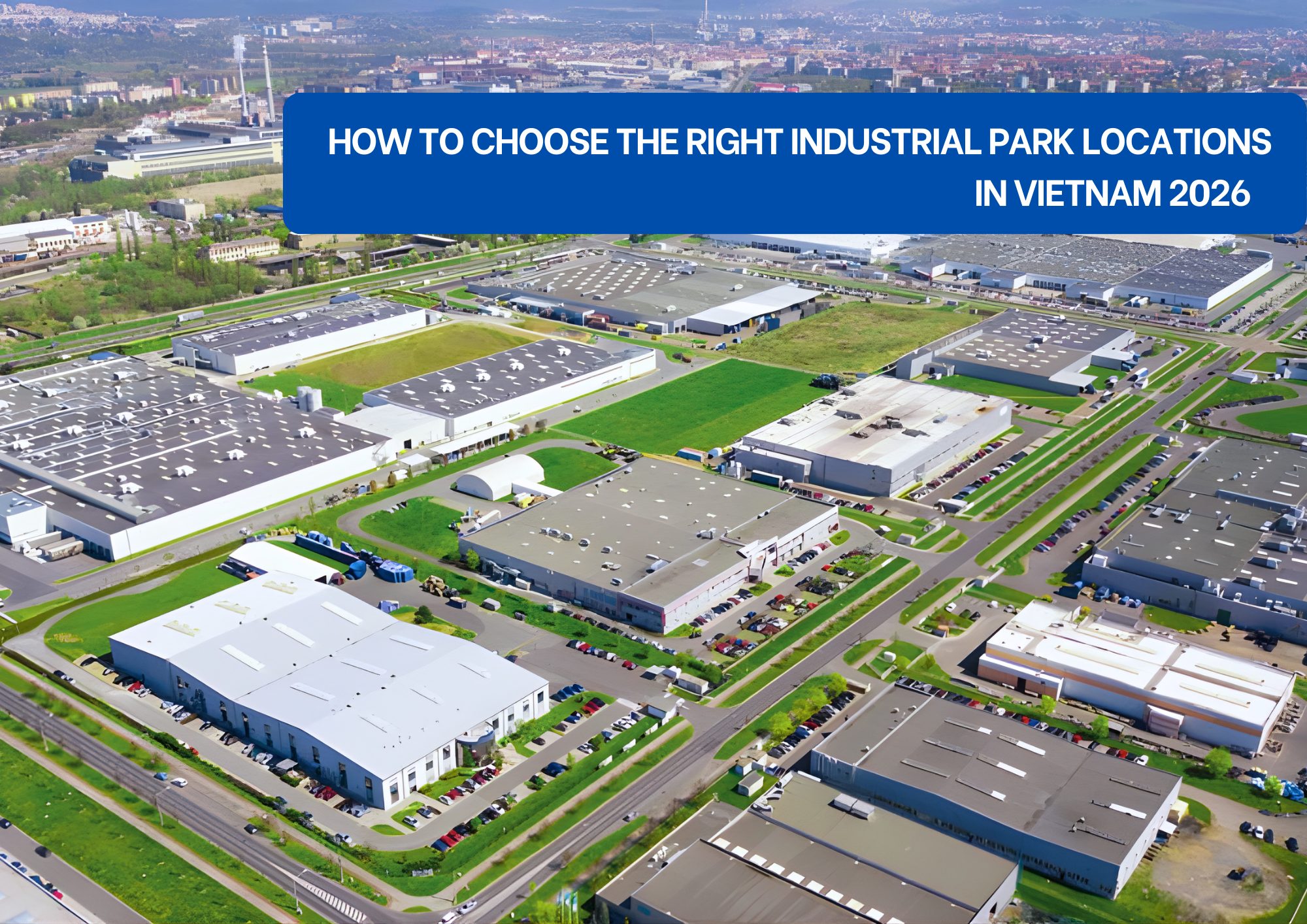
When manufacturers plan a factory in Vietnam, one of the first and most important steps is choosing the right industrial park location. This decision sets out the structural foundation for licensing, construction, daily operations, and future expansion. For many investors, this choice is part of a China+1 or regional diversification strategy, where long-term scalability matters as much as initial setup speed.
It is common to begin by comparing land prices or tax incentives. However, experienced manufacturers evaluate infrastructure reliability, power capacity, developer management, labor access, and the ability to expand over time.
Therefore, the choice of industrial park location directly affects project timelines, operating costs, and long-term growth. In this guide, we – Source of Asia, explain how manufacturers evaluate industrial park locations in Vietnam step by step, based on practical execution experience.
Key Insights
- Manufacturers first remove parks that limit expansion, lack enough power or water, or have unclear management before comparing incentives.
- Lease terms, service fees, and rent increases shape long-term costs, not just the land price.
- Approvals must follow the correct order and match the final factory design to avoid delays.
- Hidden costs such as connection fees, compliance upgrades, and approval delays can raise the real project cost.
- Early support from local advisors helps prevent mistakes that are expensive and hard to fix later.
How Manufacturers Choose The Right Industrial Park
Experienced manufacturers typically approach industrial park selection through elimination rather than attraction. Instead of ranking parks by incentives, they remove locations that introduce structural constraints. The following four steps reflect best practices for selecting an industrial park based on execution experience rather than promotional criteria.
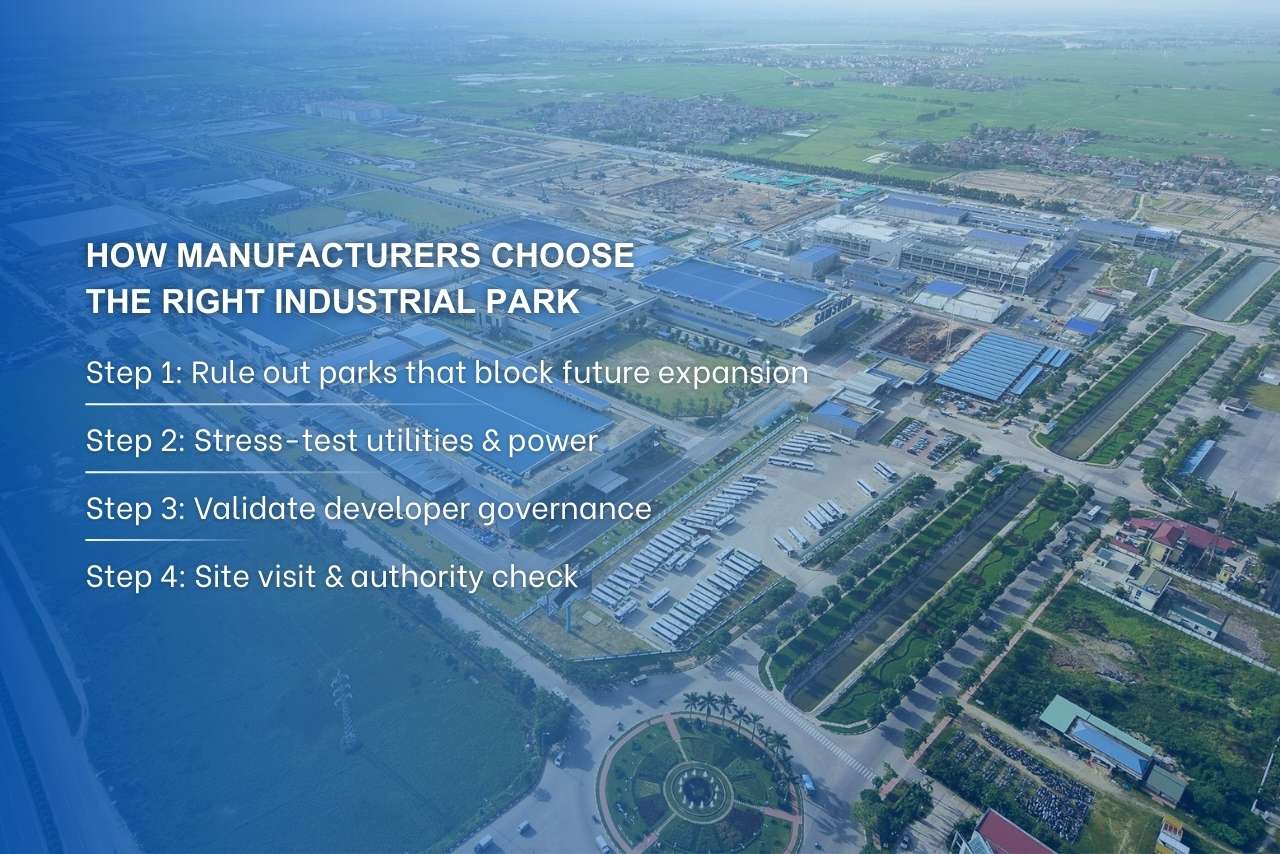
Manufacturers apply a four-step filtering process to select the right industrial park location in Vietnam.
Step 1: Rule out parks that block future expansion
At first glance, many industrial park locations appear sufficient for initial capacity. The constraint usually emerges later, when production volume increases, or process upgrades require additional land or utilities to load.
Manufacturers therefore examine:
- Remaining land bank inside the park.
- Written expansion rights within the lease contract.
- Zoning limitations for higher power or specialized production.
- Whether adjacent plots are already committed.
A park operating near full capacity may support entry but restrict scaling. Once a factory is constructed, relocation becomes operationally disruptive and capital-intensive. Eliminating expansion bottlenecks early protects long-term flexibility and reduces relocation risk.
Step 2: Stress-test utilities & power
Infrastructure differences between parks often appear only after operations begin. For manufacturers, utility stability is a daily execution issue rather than a planning detail.
According to Vietnam Construction, foreign investors now prioritize fully equipped and environmentally friendly industrial parks over simple land price advantages.
Key assessments include:
- Grid capacity formally committed power load approval from the local electricity authority, and outage history.
- Backup power availability and redundancy.
- Water supply consistency and wastewater treatment limits.
- Internal road access and heavy logistics suitability.
Power fluctuation can affect equipment lifespan and product quality, particularly in electronics or precision manufacturing. Reliable utilities reduce management distraction and compliance risk.
Step 3: Validate developer governance
The industrial park developer functions as a coordination bridge between tenants and local authorities. Governance quality therefore affects administrative efficiency and regulatory clarity.
Manufacturers typically review:
- Transparency of fee structures and escalation clauses.
- Responsiveness to tenant documentation requests.
- Experience with foreign-invested enterprises.
- Track record in environmental and fire safety coordination.
Weak governance introduces friction in reporting, inspection preparation, and construction adjustment approvals. These small inefficiencies accumulate over time. A well-managed developer reduces procedural uncertainty and supports smoother implementation.
Step 4: Site visit & authority check
Desktop analysis rarely captures operational reality. On-site evaluation clarifies how infrastructure connects to surrounding logistics and labor pools.
During site visits, manufacturers often:
- Inspect external road and port connections.
- Confirm proximity to workforce hubs.
- Meet local authority representatives to understand how investment registration, construction permits, environmental approval, and fire safety certification are practically sequenced in that province.
- Verify environmental classification and construction of readiness conditions.
Direct engagement reveals how formal regulations translate into practical timelines. Approval speed depends not only on policy but also on documentation of accuracy and local coordination practices.
How To Secure Your Implementation?
After selecting an industrial park location, the next step is securing implementation. Many projects slow down not because of the site itself, but because key terms were not clearly defined at the beginning. Strong documentation protects timelines, cost control, and future flexibility. To reduce risk, focus on four core areas.
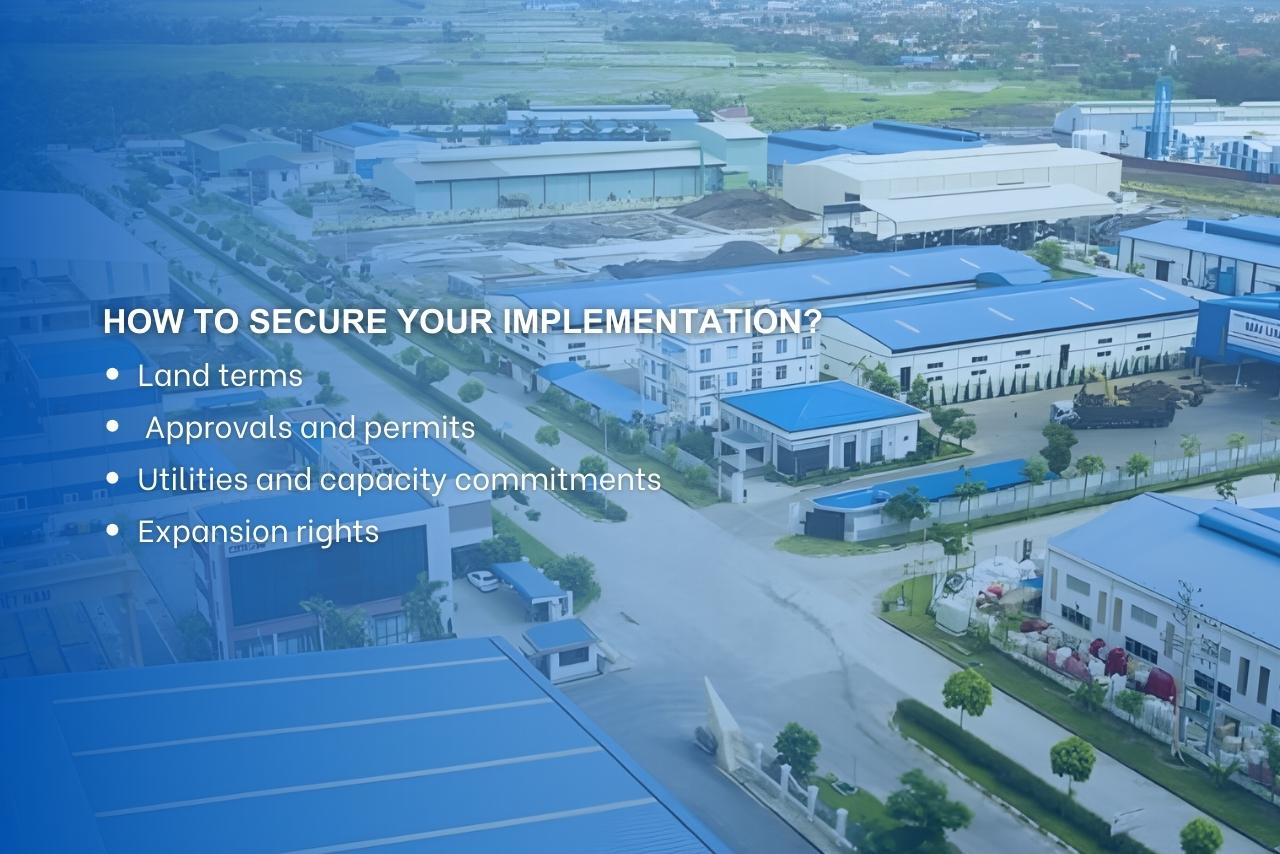
Securing implementation requires clear land terms, approvals, utility commitments, and expansion rights
Land terms
The industrial park lease is the foundation of your project. Before moving forward, review the core legal and financial conditions tied to the land. Small gaps at this stage can limit flexibility later.
- Lease duration and renewal conditions
- Escalation clauses and rent adjustment terms
- Subleasing rights and usage restrictions
- Whether the lease can be used as collateral for financing
If these terms are unclear or incomplete, future expansion, restructuring, or refinancing may become difficult and costly.
Approvals and permits
Factory setup requires several approvals, and the order matters. Each step builds the previous one, so missing or misaligned documents can slow down the entire project.
- Investment registration
- Construction permit
- Fire safety approval
- Environmental approval
All permits must match the final technical design of the factory. If the design changes but approvals are not updated, construction and operations can be delayed.
Utilities and capacity commitments
Operational stability depends on utilities being ready and reliable from day one. Before construction begins, confirm that all capacity commitments are clearly defined in writing.
- Guaranteed power load
- Water supply capacity
- Wastewater treatment limits
- Utility connection timelines
Verbal confirmation is not enough. If capacity levels or timelines are not written into formal agreements, production continuity may be exposed to avoidable risk.
Expansion rights
Growth often requires additional land or higher utility capacity. Even if your initial setup is modest, you should confirm early how future scaling will be handled.
The data from Gilimex Industrial Park show that multiple new industrial park projects were approved in 2025 to expand Vietnam’s industrial land supply and attract more domestic and foreign investment. However, national expansion does not automatically guarantee plot availability inside a specific park.
- Availability of adjacent plots
- Written reservation or right-of-first-refusal clauses
- Conditions and approvals required for scaling production
Without documented expansion rights, future growth may require relocation or complex renegotiation, both of which increase cost and operational disruption.
Cost Structure Inside Industrial Parks
When evaluating an industrial park for lease, it is not enough to compare the land price alone. Some costs are easy to see at the start, while others affect your operations over many years. A clear breakdown helps you avoid surprises later.
To understand the full financial impact, review these main cost areas:
- Land lease structure: Whether you pay upfront or annually, how long the lease runs, and whether rent increases over time. Lease-term and escalation clauses directly affect long-term cost stability.
- Service fees: Ongoing charges for infrastructure maintenance, wastewater treatment, security, and park management. These vary depending on how the park is managed and how mature it is.
- Regional cost differences: Northern and Southern hubs usually have higher land prices, but stronger supplier ecosystems and logistics access. Central regions may offer lower land costs but thinner industrial networks.
- Fixed versus variable costs: Fixed lease payments provide predictability, while utility costs such as electricity and water rise or fall with production volume.
- Hidden costs: Utility connection fees, infrastructure contribution charges, fire safety system installation, environmental upgrades, compliance adjustments, and approval delays that increase pre-operational overhead.
A lower land price does not always mean a lower total cost. A smart comparison considers long-term operations, logistics, and labor availability, not just the initial rent.
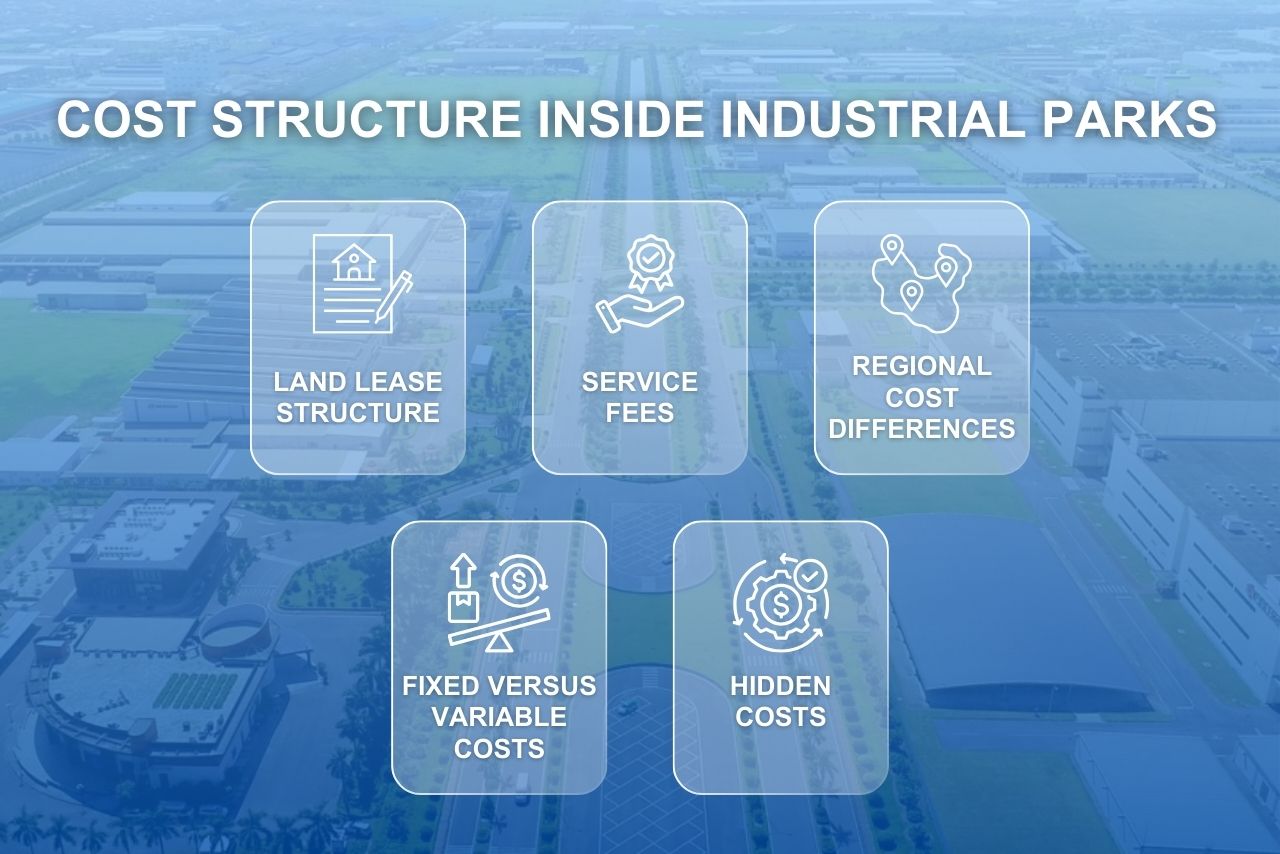
Industrial park costs extend beyond land price to include service fees, utilities, and hidden compliance expenses.
Execution Challenges In Factory Setup
Even after choosing the right industrial park location, most execution risks appear in the first year. Early delays or compliance gaps can affect operations long after construction is completed.
Key challenges include:
- Licensing and approval timelines: Investment registration, construction permits, environmental approval, and fire safety certification must follow the correct sequence. If technical design does not match regulatory classification, approvals can pause, delaying hiring, equipment import, and supplier coordination.
- Compliance and environmental requirements: Reporting obligations vary by industry. Wastewater standards, hazardous material handling, and inspection of readiness must be prepared before operations begin. Compliance gaps often surface later during inspections, increasing disruption and cost.
The Role Of Local Advisors
Industrial park evaluation intersects with legal, regulatory, and operational domains. Local advisors become relevant when decisions affect land rights, environmental classification, utility capacity commitments, or long-term expansion rights.
When advisors add the most value
Local advisors deliver the highest value when they are involved before contracts are signed, and designs are fixed. At this stage, flexibility still exists.
Their contribution is most effective in the following areas:
- Early-stage site screening, helping eliminate industrial park locations that restrict expansion or utility capacity.
- Negotiation of lease terms, especially rent escalation clauses, utility commitments, and expansion rights.
- Approval sequencing, ensuring investment registration, construction permits, environmental classification, and fire safety documentation align correctly.
- Coordination with park developers and local authorities to confirm practical timelines rather than relying solely on formal regulations.
Early involvement helps align technical factory design with regulatory classification. This reduces the risk of approval delays or rework during construction.
What happens when they join too late
When advisors enter after land agreements or designs are fixed, options narrow. Structural assumptions are already embedded in contracts and drawings.
Common late-stage issues include underestimated power capacity, incorrect environmental classification, limited wastewater allocation, or missing expansion rights. Fixing these problems often requires additional capital or regulatory renegotiation, increasing cost, and timeline pressure.
Which decisions cannot be reversed without local insight
Certain decisions made during industrial park selection are structurally difficult to undo without significant disruption. These include:
- Selecting a park with limited long-term land availability.
- Accepting unclear rent escalation mechanisms or service fee adjustments.
- Finalizing factory design before confirming the environmental approval category.
- Choosing a region that does not align with labor supply, wage dynamics, or supplier density.
Once construction begins, reversing these decisions can require relocation, redesign, or major contract amendments.
Final Thoughts
Choosing among industrial park locations in Vietnam is not just about securing land for construction. It is a long-term operational decision that affects cost control, compliance stability, labor access, and future expansion. Manufacturers that apply a structured filtering process and eliminate constraints early reduce the risk of delays and costly adjustments later.
At Source of Asia, we support companies through market expansion, sourcing & supply chain and corporate services across Vietnam and Asia. Our teams and local advisors on the ground provide data-grounded, execution-focused guidance, helping manufacturers align site selection with licensing requirements, compliance standards, and long-term operational goals.
To deepen your preparation, you may also explore the related insights below:
Frequently Asked Questions
Local advisors are not mandatory, but many foreign manufacturers use them to reduce risk. Industrial park setup involves lease negotiation, licensing, environmental classification, and coordination with developers and authorities. Early local support helps prevent delays, design misalignment, and capacity or expansion of mistakes.
Relocation after construction is expensive and disruptive. That is why location selection should be treated as a strategic execution decision. Careful filtering and contract review before commitment reduce the risk of future relocation.
Most projects require an Investment Registration Certificate (IRC), Enterprise Registration Certificate (ERC), a construction permit, environmental approval, and fire safety approval. These permits must follow the correct sequence and match the final factory design to prevent approval delays.