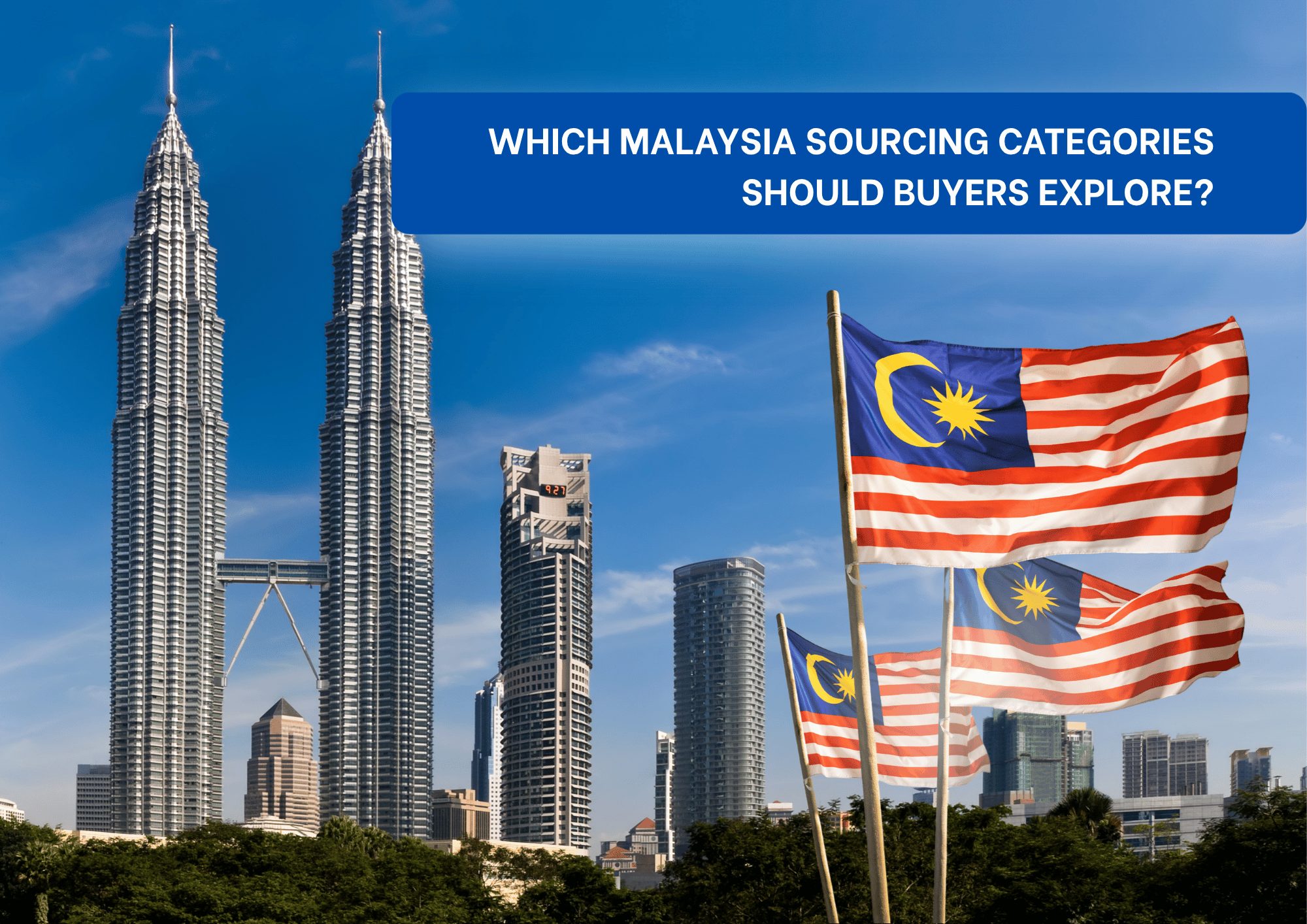
Malaysia’s suppliers are increasingly considered by international buyers seeking reliable sourcing options in Southeast Asia. The country may not always be the lowest-cost sourcing destination in the region. Still, it offers strong value in categories where supplier maturity, export readiness, technical capability, and quality consistency matter.
For companies comparing ASEAN sourcing options, Malaysia sourcing categories can be especially relevant when products require technical capability, compliance readiness, export experience, and quality consistency.
This article explores 8 key Malaysia sourcing categories, which sectors are gaining stronger attention, and what buyers should know before adding Malaysia to their supplier shortlist.
Key insights
- Malaysia sourcing categories are especially strong in technical, regulated, and export-oriented product groups.
- Key product groups include electronics and semiconductors, rubber and plastics, palm-based and halal products, furniture and wood-based products, machinery, packaging, chemicals, and selected medical devices.
- Malaysia is often stronger for strategic sourcing than pure low-cost sourcing.
- Buyers should assess category fit based on supplier maturity, certification needs, export readiness, and total landed value.
- Malaysia can be a strong shortlist market when quality, documentation, and reliability matter.
 Add Source of Asia as a preferred source on Google
Is Malaysia a Good Sourcing Destination for International Buyers?
Malaysia can be a good sourcing destination for international buyers, especially when the sourcing objective goes beyond finding the lowest unit price.
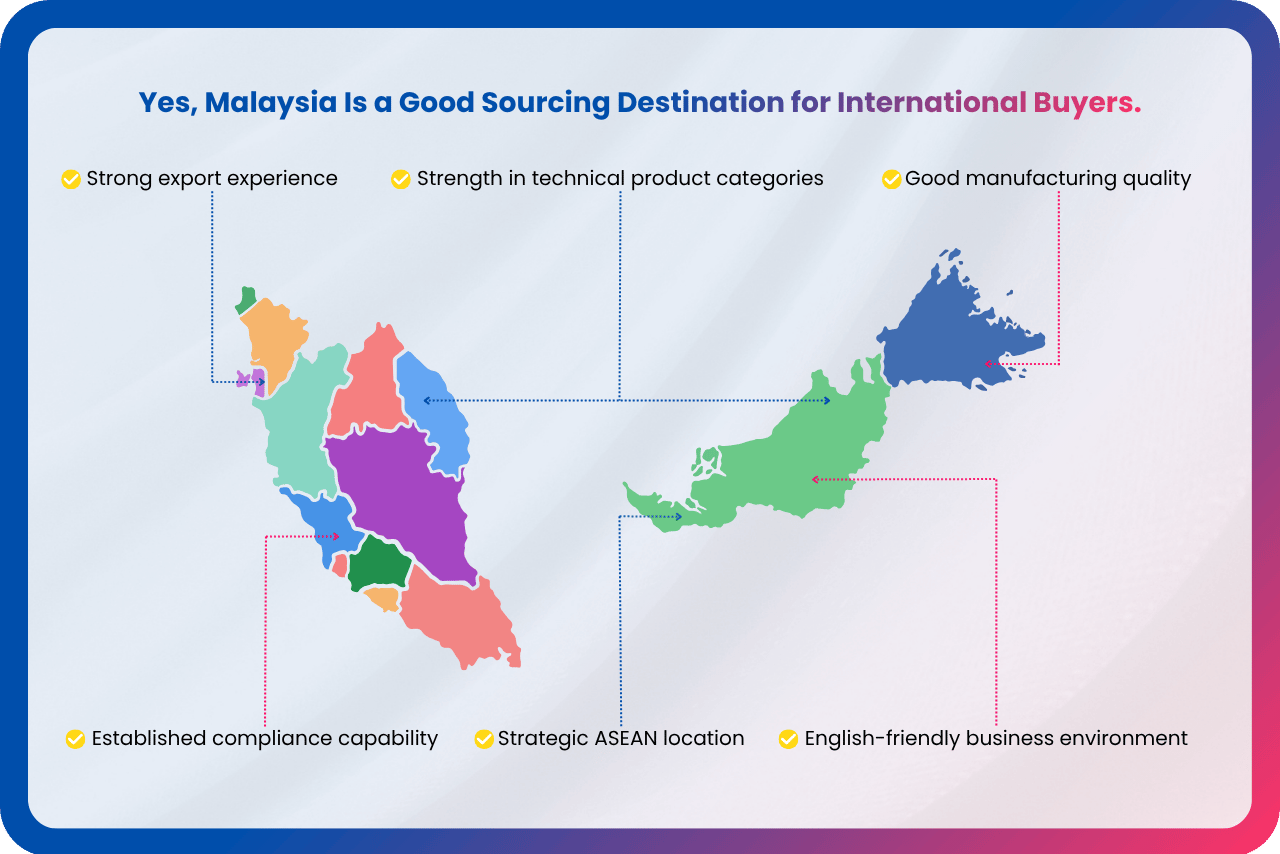
Malaysia can be a strong sourcing destination when buyers need export experience, manufacturing quality, compliance readiness, and regional access.
The country has a relatively mature manufacturing base, established export experience, strong infrastructure, and supplier ecosystems that support several technical and quality-sensitive categories. This makes Malaysia relevant for buyers looking to diversify their supply base within ASEAN while maintaining a certain level of reliability, documentation, and production consistency.
However, Malaysia should not be positioned as the cheapest sourcing market in Southeast Asia. For high-volume, labor-intensive production, other ASEAN countries may offer lower production costs. Malaysia is often more competitive when buyers need supplier maturity, technical capability, compliance readiness, export documentation, and stable quality.
In that sense, Malaysia is usually stronger for strategic sourcing than pure low-cost sourcing. It can be a valuable short-list market for categories where the supplier’s capability, process control, and long-term reliability matter as much as price.
For international buyers, the key question is not only “Can this product be made in Malaysia?”, but also “Does Malaysia offer the right supplier ecosystem and value for this category?”
Which Malaysia Sourcing Categories Should Buyers Explore?
Malaysia suppliers cover a wide range of export-oriented categories. However, the strongest opportunities are usually found in sectors where the country already has industrial depth, technical capability, or established export experience.
Electrical and electronic products
Electrical and electronic products are among Malaysia’s most important sourcing categories. The country has a long-established electronics ecosystem that supports both consumer and industrial applications.
International buyers may explore electronic components, electrical assemblies, connectors, sensors, printed circuit boards, power components, industrial electronics, and selected consumer electronics.
This category is especially relevant for buyers looking for technical sourcing, component sourcing, electronics manufacturing services, or supply chain diversification in Asia. Buyers should pay attention to technical capabilities, testing standards, certifications, production capacity, and lead times.
Semiconductors and precision electronics
Semiconductors and precision electronics deserve separate attention because they represent a higher-value sourcing opportunity in Malaysia.
Malaysia has built a recognized role in semiconductor-related supply chains, especially in assembly, testing, packaging, and related electronics activities. This makes the country relevant for buyers in electronics, automotive electronics, industrial technology, and selected medical technology supply chains.
This category is not usually about simple low-cost sourcing. It is more suitable for buyers looking for specialized suppliers, precision production, reliable quality systems, and long-term technical cooperation.
Rubber and plastic products
Malaysia is also well known for rubber-based products and selected plastic manufacturing. This creates sourcing opportunities for medical, industrial, automotive, consumer goods, and packaging-related applications.
Common rubber-related products may include medical gloves, industrial rubber components, seals, hoses, molded rubber parts, and automotive rubber parts.
Plastic sourcing opportunities may include molded parts, packaging materials, industrial plastics, and selected consumer product components. For products with technical or regulatory requirements, buyers should check material specifications, testing standards, quality consistency, and applicable documentation.
Palm-based, food, and halal products
Palm-based, food, and halal products are distinctive sourcing categories for Malaysia. The country has a strong halal ecosystem and an established base in palm-related products, processed food, ingredients, and consumer goods.
International buyers may explore palm-based ingredients, processed food, halal food products, personal care ingredients, cosmetics-related ingredients, and selected F&B products.
This category is especially relevant for buyers serving Muslim consumer markets or looking for halal-certified products. For food, personal care, and ingredient-related sourcing, buyers should review certification, labeling, ingredient traceability, shelf life, packaging, and destination-market regulations.
Furniture, home décor, and wood-based products
Malaysia can also be relevant for furniture, home décor, and wood-based sourcing. The country has suppliers of wood-based furniture, MDF furniture, upholstery furniture, home furnishing, hospitality furniture, and selected decorative products.
This category can fit buyers looking for export-ready furniture suppliers, private-label home products, medium to higher-quality furniture, or wood-based products with more structured documentation.
For furniture and wood products, buyers’ expectations often go beyond design and price. Quality consistency, finishing, moisture control, packaging, container loading, and wood legality documentation can strongly affect sourcing success.
Textiles, apparel, and accessories
Malaysia is not usually the first choice for the lowest-cost apparel sourcing in Asia. However, it can still be relevant for selected textiles, uniforms, accessories, technical apparel, and higher-compliance production.
This category may appeal to buyers looking for reliability, smaller specialized runs, specific product requirements, or production that requires stronger documentation and buyer coordination.
Potential opportunities may include workwear, uniforms, textile accessories, functional apparel, and selected sewn products. Buyers should compare Malaysia with other regional options depending on volume, price target, fabric sourcing, compliance requirements, and lead time.
Machinery, metal parts, and industrial components
Machinery, metal parts, and industrial components are important categories for B2B buyers exploring Malaysia suppliers. Potential sourcing opportunities include machinery parts, fabricated metal products, engineered components, industrial equipment, automation-related parts, precision parts, and selected mechanical assemblies.
This category is relevant for companies looking for alternative suppliers outside China or building a more diversified industrial supply base in ASEAN. Malaysia’s manufacturing ecosystem can support buyers that require technical drawings, tolerances, production documentation, and quality control.
Chemicals, packaging, and selected medical devices
Malaysia also offers sourcing opportunities in chemicals, packaging, and selected medical devices. These categories should be approached with a clear understanding of regulatory and product requirements.
Chemical and advanced material sourcing may support electronics, rubber, plastics, industrial production, packaging, healthcare, and consumer goods. Packaging opportunities may include paper packaging, plastic packaging, flexible packaging, and export packaging solutions.
Selected medical devices and healthcare-related products can also be relevant, especially where suppliers have appropriate quality systems and documentation.
Which Malaysia Sourcing Categories Are Gaining Momentum?
Some product groups are gaining stronger attention because they align with global supply chain diversification, healthcare demand, halal consumption, industrial upgrading, and sustainability requirements.
- Semiconductor and electronics supply chains
This category is gaining attention as companies diversify electronics supply chains and look for reliable production ecosystems in Asia. Malaysia’s position in assembly, testing, packaging, and electronics manufacturing makes it relevant for buyers connected to industrial technology, automotive electronics, precision components, and regional supply chain diversification.
- Medical devices and healthcare-related manufacturing
Healthcare-related sourcing is supported by demand for regulated manufacturing, quality systems, and reliable documentation. For buyers in this category, Malaysia’s value is less about basic product availability and more about whether suppliers can meet technical, quality, and regulatory expectations.
- Halal food, ingredients, and personal care
Halal-related sourcing is one of Malaysia’s most distinctive opportunities. The growth angle comes from Malaysia’s credibility in halal certification, food ingredients, personal care, and consumer goods for Muslim markets. For international buyers, this can support both product sourcing and market positioning.
- Industrial components and precision manufacturing
As buyers look for alternatives to single-country sourcing, Malaysia can be considered for technical components, machinery parts, and precision manufacturing. This category is gaining relevance where buyers need engineering capability, production consistency, and supplier reliability.
- Sustainable packaging and wood-based products
Sustainability requirements are creating stronger interest in packaging and wood-based products with better traceability, responsible sourcing, and export documentation. Malaysia suppliers in these categories may benefit when they can meet buyer expectations around material origin, compliance, and quality.
What Should Buyers Know Before Choosing Malaysia Sourcing Categories?
Choosing a sourcing category in Malaysia should not only depend on whether a product is available. Buyers should also assess how well the category fits Malaysia’s supplier strengths and their own sourcing objectives.
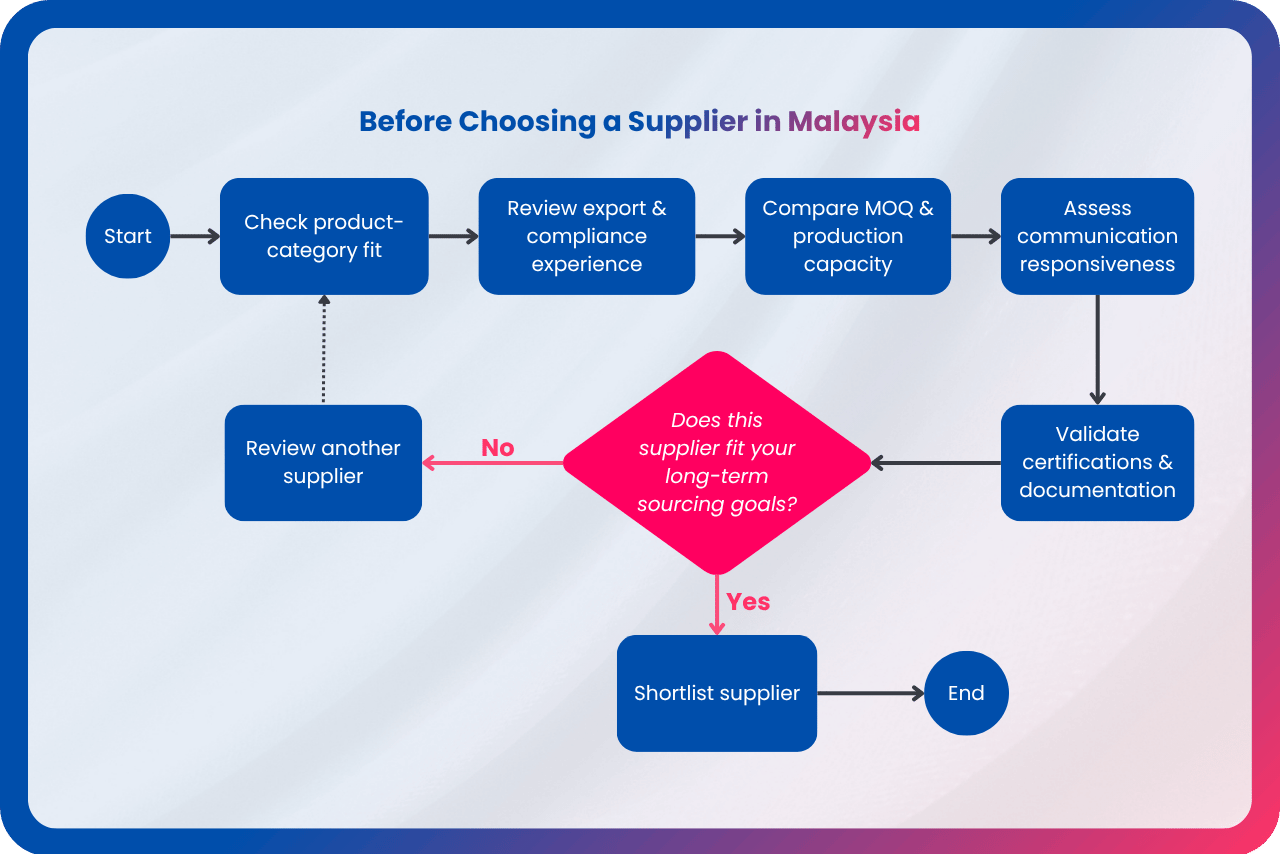
Before choosing a supplier in Malaysia, buyers should assess category fit, export experience, capacity, communication, documentation, and long-term sourcing goals.
- Match the category with Malaysia’s supplier strengths
Not every product category is equally suitable for Malaysia. Buyers should first check whether Malaysia has enough supplier depth, technical capability, export experience, and production maturity for the category they are considering.
Malaysia is generally stronger when the sourcing category requires technical know-how, export documentation, quality control, certification, or supplier reliability.
- Look beyond the lowest unit price
Malaysia should not be evaluated only through unit price. In many categories, the stronger value may come from supplier reliability, quality consistency, documentation, technical communication, infrastructure, and export readiness.
For international buyers, the real question is not always “Which supplier is cheapest?” It is often “Which supplier can deliver the right quality, documentation, and reliability at a competitive total landed value?”
- Check whether the category requires certification or documentation
Some sourcing categories require certification or documentation from the beginning. This is especially important for food, halal products, medical devices, wood-based products, chemicals, electronics, and industrial components.
Depending on the product, buyers may need to review halal certification, ISO standards, food safety documentation, FSC or chain-of-custody documents, material safety data, technical datasheets, medical device documentation, or testing reports.
- Consider Malaysia suppliers when quality and reliability matter
Malaysia suppliers should be considered when buyers need more than basic sourcing capacity. This includes situations where buyers are looking for technical products, regulated categories, export-ready suppliers, or a China+1 sourcing option in ASEAN.
Malaysia can also be relevant when buyers need suppliers with stronger documentation and communication capabilities, or when reliability matters more than the lowest price.
Conclusion
Malaysia is a strong sourcing destination for international buyers looking beyond basic low-cost production. Its strongest opportunities are often found in technical, regulated, export-oriented, and quality-sensitive categories.
For buyers comparing ASEAN sourcing options, Malaysia can be especially relevant when supplier maturity, documentation, reliability, and technical capability matter. The key is to choose categories based on real supplier strengths, total landed value, certification needs, and long-term sourcing objectives.
Understanding the right Malaysia sourcing categories is just the first step. From there, buyers can move into deeper supplier identification, qualification, and sourcing planning.
For a deeper view of the sourcing process, read our full guide on Sourcing in Malaysia to learn how international buyers can identify, qualify, and work with Malaysian suppliers more effectively.
Frequently Asked Questions
The main Malaysia sourcing categories include electrical and electronic products, semiconductor-related components, rubber and plastic products, palm-based and halal products, furniture and wood-based products, machinery parts, packaging, chemicals, and selected medical devices.
Yes. Malaysia is a good sourcing destination for buyers looking for technical capability, export readiness, supplier maturity, documentation, and quality consistency. It may not always be the lowest-cost option, but it can offer strong strategic sourcing value.
Malaysia is usually better for strategic sourcing than pure low-cost sourcing. It is most relevant when buyers need reliable suppliers, technical capability, certifications, documentation, and consistent quality rather than only the lowest unit price.